 |
|||||||||||||||||||||||
 |
|||||||||||||||||||||||
Topics - Airplane Crashes |
|||||||||||||||||||||||
 |
|||||||||||||||||||||||
| Close this window | |||||||||||||||||||||||
Ray Gamma - Remembrance of Narcisco Gutierrez Jr.
|
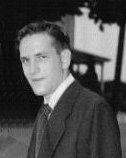 This page of the Korean War Educator is dedicated to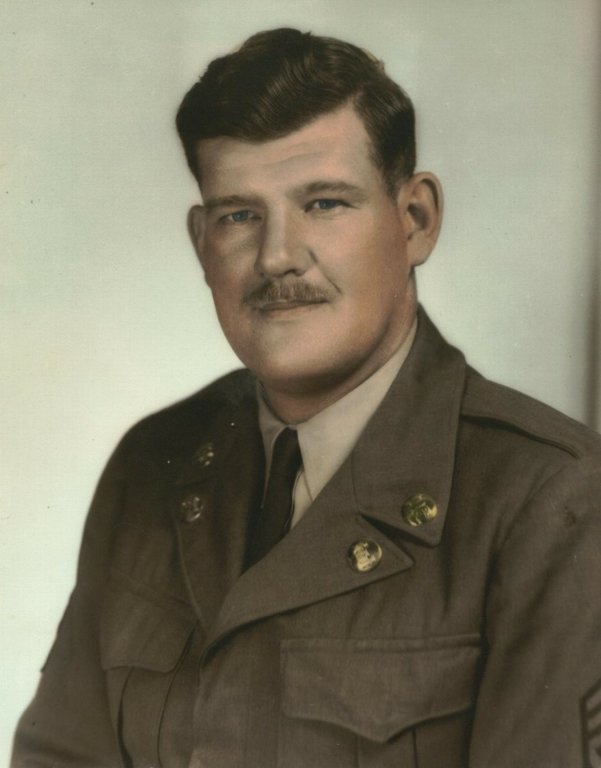
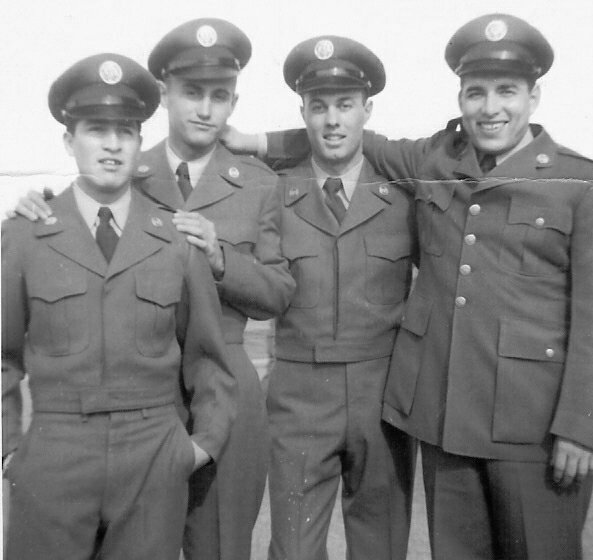
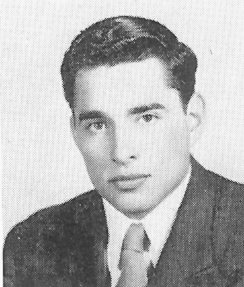
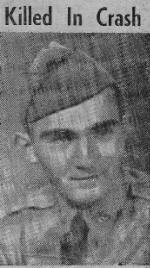 Fred Napp - Remembrance
of Bobby Charles Mixon
Fred Napp - Remembrance
of Bobby Charles Mixon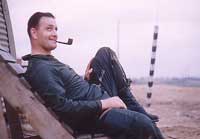 I put the above post on the Korean
War Educator website (
I put the above post on the Korean
War Educator website (|
|

My Internet searches yielded names and websites dedicated to the 36th squadron and its pilots, along with e-mail addresses of those who were there at K-13. I found photos of him I’d never seen, taken by other squadron members. I’ve also made contact with relatives of pilots who were lost or who have since died. One of the relatives shared copies of the flight surgeon’s report from the crash. Knowing that I had read the graphic details horrified my mother, but it gave me a sense of closure. I had even talked to pilot “Wild Bill” Sternhagen, now an attorney in Montana, who said, “Your father had the right stuff. He would have been a general.”
Finding these links on the Internet helped me piece together my dad’s military life. However, nothing prepared me for the phone call I received on Friday evening, March 20, 2009. “Is this Terry Mathews?” a male voice on the other end of the line asked. “Terry Hamilton Mathews?” Once the caller realized he had reached the right person, he said, “You don’t know me, but my name is Kirby Prickett and I was there the day your father died.” Kirby had seen my post on the Korean War Educator website and decided to find me.
Over the course of the next 40 minutes, Kirby and I swapped stories. We laughed and we cried – a lot. “I don’t sleep well at night,” he explained. “I have nightmares about Tachikawa. After reading your post, I kept thinking about the little girl who was missing her daddy.” Kirby was a policeman in the Air Force, stationed in Tokyo. He had just dropped someone off at the Tachikawa air base as the C-124 carrying my dad headed back toward the field.
“I was leaving the air base when an ambulance motioned for me to turn around and follow,” he explained. “We thought this would be a rescue mission. When we realized it was only going to be a recovery, we all hit our knees.” The crash happened about 4:30 in the afternoon. When he returned to his barracks later that evening, Kirby said he burned his clothes.
For almost 56 years, Kirby kept the horrors of the crash and its aftermath to himself. “I didn’t even tell my wife, Sue, until two days ago,” he said. “And we’ve been married 53 years.”
Kirby and Sue have two sons, Dan and Dennis, and one daughter, Linda. “I kept thinking about Linda and my relationship with her,” Kirby said. “It’s what made me search for you on the Internet. It’s what made me pick up the phone and call you.” Kirby said he always felt helpless because he couldn’t do anything for the men on the plane that day. “There’s was nothing we could do to have saved them,” he said. “We were there and we were willing, but there was nothing to be done.”
Kirby left the military in 1956. He worked for Honeywell International in Denver until he retired in 1991. He and Sue then settled in Las Cruces, New Mexico, in 1993. During his free time and with some computer skills learned from Sue, Kirby began surfing the Internet, looking for information about the crash. “I found a list of all the men on the plane that day,” he said. “I printed it out and said a prayer for every one of them.”
|
|
Using Google and other Internet search engines, Kirby was able to find my phone number, but didn’t act on it right away. “Every now and then, I would look at what you wrote,” he said. “But then, I’d put it away. I just didn’t know what to do.” Through the years, Kirby said one of his greatest fears was a chance meeting with someone who had lost a friend or loved one in the crash. “Sue and I travel a lot,” he said. “We work with Habitat for Humanity. We meet new people all the time and I was always afraid of someone saying, ‘I had a relative on that Globemaster crash during the Korean War.’”
As we talked, Kirby also said he was a little worried about my reaction. “I didn’t know what you would say,” he explained. “Maybe you might not want to talk to me. I just didn’t know.” Before we hung up, Kirby said, “I’m glad I made the call. It was very hard for me to do, but I’m glad I did.”
I immediately fired off an e-mail to my mother telling her what had happened and giving her Kirby’s e-mail address because I was in no shape to have another conversation. She and Kirby e-mailed several times and eventually talked on the phone.
After his initial call, I received an e-mail from Kirby saying that he had told his story to his son Dennis, and had plans to tell Dan and Linda soon. Then, he mentioned that he and Sue were going to be in Texas this summer to visit Linda and her family in Burnet. “Could you meet me and my mom for lunch somewhere?” was my immediate response.
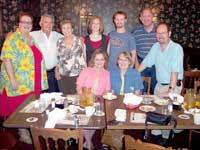
On Monday, July 6, Kirby, Sue, Linda, Linda’s husband Doug and their son Christopher, drove from Burnet to The Stagecoach Inn in Salado to meet my mom, my husband Chip, and me for lunch.
|
|
In getting ready for the visit, my mom went through a box of my dad’s letters – some 200 of them – spanning from their courtship until the night before he died. She shared a few with me on the trip, and began to give me more details about her life with my father. “It was just too painful [when you were young],” she said. “I just shut down.”
When we finally met face to face, Kirby and I hugged. “I don’t have any words,” he repeated. Over the next three hours, however, we all found our voices. We shared photos and family stories. A bond that began with horror ended 56 years later with gratitude and warmed hearts.
While he may have been unable to save the men on that plane, on June 18, 1953, Kirby Prickett reached beyond his fears, picked up a phone and found a way to make things easier for my mom and me. For that, I will always be grateful.
Canney Family & Friends - in Remembrance of Sherman Canney
[KWE Note: The following material was submitted to the Korean War Educator by Connie Canney of Florida on behalf of the family and friends of Sherman Canney, a victim of the Globemaster crash in Japan in 1953.]
Sherman Canney Remembered: Some Comments on the Meaning of His Life and Death
by Robert Canney, a brother – written June 14, 1985
"One of the awards to be given to a member of this year’s graduating class of Nute High School in Milton, New Hampshire is the Sherman Canney award. This award is to be given to 'the pupil who is amiable, friendly, and has done the most to enrich the lives of his (or her) classmates.' Such an award is significant because it is saying, in effect, that we recognize and honor those qualities of character that make for richer lives and for better relations among ourselves and, by extension, between and among the peoples and nations of the world.
My brother Sherman Canney graduated from Nute High School 34 years ago. The passing of so much time suggests that a great many people attending this year’s graduation know very little, if anything, about who Sherman was, and why an award is being offered in his name. It seems appropriate to me, given this consideration, to offer some comments on the meaning, as I see it, of Sherman’s all-too-brief life and tragic death. Although no amount of time will ever lessen the sorrow that some of us carry with us since first learning of Sherman’s death, we can, in some measure, vindicate his loss by telling others about him and persuading them to take what steps are necessary to prevent the loss of more such lives in the future.
The Sherman Canney award suggests that we value a person’s humanity at least as much as we value one’s ability to play basketball or achieve a certain grade point average or excel in some other endeavor. People who knew him often remarked about his ready smile and cheerful disposition. But Sherman was much more than just a friendly or gregarious person. He was warm, good natured and witty. He was sensitive and responsive to the needs of others, and genuinely interested in their concerns. He was thoughtful on an everyday basis in all of his relationships. He seemed to know what would most please a friend or relative on their birthday or holiday and provided it, either as an act of kindness or appropriate gift.
Sherman’s friendships and associations were numerous. Besides the many girls and boys among his peers, he was friendly to and took an active interest in children and the elderly. Sherman was the kind of person that everyone liked. He had a charming and personable way about him that made him easy to meet and enjoyable to know. He was cooperative rather than competitive, and was quicker to share than to acquire. He was, in addition, socially concerned and involved at an early age. It was once reported that he was—at 16—the youngest master of record of the Lewis Nute Grange.
Sherman truly was an extraordinary person. In spite of all the racist and sexist and self-centered ways in which most of us are socialized, Sherman somehow transcended such limitations. He was an active correspondent, for example, with many people in other areas of the world, people of different races, ethnic backgrounds and religious beliefs. Such activity and interest indicate that he was a developing universalist and internationalist.
What was also rare about Sherman was his ability to maintain at all times a high level of sincerity and honesty and integrity of character, so much so that those who knew him were themselves uplifted and ennobled. Sherman was indeed in a constant state of grace. His qualities of character were the best our family had to offer and, I believe, in many ways the best that humanity has to offer.
Sherman’s everyday life was a celebration of being alive. He loved and respected people, he loved and respected animals, and he loved and respected the natural environment. There are numerous photos of him with friends, relatives, pets, and selected landscape backgrounds, all revealing his profound love of life.
My brother Sherman was also patriotic as young women and men are encouraged to be. He took seriously the notion that he “owed a debt to society” and enlisted in the army rather than wait to be drafted. He was anxious to fulfill what he considered to be a public service obligation so that he would then be free to go to college and pursue other personal and creative interests.
On June 18, 1953, two years after graduating from Nute High School, Sherman was killed with 128 other young soldiers in an airplane crash in the Korean theater of war. He was 19 years old.
When Sherman’s broken body was returned home in a coffin a few months after his death, the sharp reality of the Korean War was also brought home to us all. It made some of us think long and hard about why that military involvement by the United States was so necessary that it required the supreme sacrifice of so many people.
A military funeral was held for Sherman in Prospect Hill cemetery in September, a few days after what would have been his 20th birthday. Our mother was presented with an American flag, apparently for consolation. But she never was consoled. She remained deeply distressed by his death until her own death some years later.
If he had lived longer, I’m confident that Sherman would have come to understand the Korean military involvement by the United States not as an action on behalf of human liberation, social justice, or out of a respect for the right of other people to true national independence and self determination. He would have come to understand it for what it was: an action on behalf of corporations, banks, and military interests.
Over 50,000 Americans died in that act of intervention by the United States and more than 100,000 were wounded, maimed and crippled. The Koreans sustained casualties many times these numbers. Today it takes a continuing presence of some 40,000 U.S. military personnel and an arsenal of nuclear and other weapons to prevent the Korean people from uniting their country under a government which represents their interests and not those of a foreign power. The continuing presence of U.S. military forces in Korea prevents those people from building a society where every person has access to necessary health care, education, and the opportunity to make a positive contribution to their own society. It prevents them from being treated with the dignity that all human beings deserve.
Much of the same can be said, of course, with regard to Vietnam, except in that case the Vietnamese, at an enormous sacrifice to themselves and their land, emerged victorious and are now in the process of rebuilding and developing their devastated country. That imperialistic intervention also cost over 58,000 American lives and some 200,000 additional casualties and tremendous amounts of money derived from American taxpayers, money which could have been better used for social programs and services in this country.
For the U.S. Congress to vote to supply any form of aid to the contras is tantamount to a declaration of war. To make what has been a covert war against Nicaragua into an overt war with Congressional approval means that the youth of America once again will be sent to kill—and to die—as my brother Sherman did—in order that profit interests prevail over human needs and environmental preservation.
Let us join together and insist that there be an end to wars that have for their purpose the subjugation of people for the sake of exploitation, the building of careers, and the making of huge profits. Let us insist that there be an end to militarism. Let us demand, instead, that our tax dollars be used to build more and better schools, hospitals, housing, and jobs provided for those who need them. Let us demand that our natural environment be respected and revered, not raped and plundered. Let us put an end to the divisions which keep us divided and stunted as human beings.
Let us have the honesty and courage to acknowledge that the central problem in the world today is the profound injustice that people experience and respond to which stems from: poverty, hunger, illiteracy, disease, brutality, repression, and the foreign domination of a people’s labor and resources. We must prevent our own government, when the occasion requires it, from supporting repressive client regimes which brutalize and murder and terrorize the masses of their own people, as in El Salvador and the Philippines, etc.
By doing this, we can put an end to the killing of tens of thousands of our young men and women. Sherman’s death need not be completely in vain. If, as a result of reflecting upon it, we can learn to find alternatives to such military involvement, we can yet save the lives of countless others who are otherwise destined to die in Central America.
Long live the beautiful spirit of Sherman Canney!"
129 U.S. Servicemen Die in Crash of Giant Plane
TOKYO, Friday, June 19 (AP) – The world’s worst air disaster killed every one of 129 United States service men aboard a giant Globemaster in a fiery crash near Tokyo yesterday. The great, two-decked C-124, its engines failing after a take-off for Korea, was trying desperately to get back to Tachikawa Air Base, 25 miles west of Tokyo. It never made it. The Globemaster went into a flat spin, staggered, and plummeted nose down into a muddy farm.
Japanese farmers said there was a terrific flash and a roar as the 3000 gallons of gasoline aboard burst into flame. Then the dead and dying were incinerated in a towering funeral pyre. “The smell of burned oil and human flesh was terrible,” AP correspondent Stan Carter reported from the scene. “The bodies were terribly burned and mangled. The fire was so hot it ignited magnesium metal in the plane’s framework and part of it burned like a thermite bomb. The rain kept coming down, hissing on the hot steel that was tangled up in giant balls of wreckage.”
Hours later, by searchlight, Air Force crews worked to recover the charred bodies. One victim was found still clasping his rosary as he had been praying. The Air Force said it would hold an immediate investigation into the cause of the crash. The long list of victims will not be released until next of kin are notified.
Of those aboard, seven were crew members and the rest were airmen and Army engineers attached to air bases returning to Korea from rest leave in Japan. All Far East C-124s, four-engined giants capable of carrying 222 passengers, had just gone back into service after being grounded over the week-end with generator trouble. In recent days, flights had been cancelled several times because of mechanical trouble. But the Air Force said there was nothing to indicate coming trouble on the fatal flight. The weather, while rainy and murky, was well within safe flying limits. The crash was by far the worst in the history of aviation. The previous record was the crash of another C-124 last December 20 at Moses Lake, Wash., when 87 died.
8 New Englanders Die in Plane Crash
Mrs. Edna Sorrento, 21, or 104 Ferry St., Everett, a patient at Whidden Memorial Hospital, Everett, received word that her husband, Nicholas, 23, was one of the eight New Englanders killed in Tokyo in the world’s worst air disaster—as she made plans for her third wedding anniversary. Word of his death came less than 24 hours after she had received a letter for him, saying he would be home in August. Sorrento was an airman second class. The other New England dead included:
- Airman Second Class Francis M. Gay, 18, son of Mrs. Mary A. Voner of 14 East Brookline St., South End
- Airman Second Class Kenneth A. Minor, 20, son of Mr. and Mrs. Reignold A. Miner of 1100 West St., Sheldonville
- Technical Sergeant Donald H. Nassif, 23, husband of Mrs. Joanne Nassif of 79 Newland St., Springfield
- Private First Class Sherman C. Canney, 19, son of Mr. and Mrs. Victor C. Canney of Milton, N.H.
- Airman Third Class Raymond H. Peloquin, husband of Mrs. Theresa Peloquin of Mason St., Woonsocket, R.I.
- Army Private First Class Edmond A. Mathieu, son of Mr. and Mrs. Frank Mathieu of 17 Pratt Ave., Taftville, Conn.
- Airman Second Class Bruce S. Heal, son of Mr. and Mrs. Morris Heal of 445 Main St., East Hartford, Conn.
Doctor Broke News
Dr. Benjamin Barton of 107 Ferry St., Everett, a friend of Mrs. Sorrento’s family, broke the news to her at the hospital, where she was taken Tuesday for treatment of acute appendicitis.
A native of Everett, Airman Sorrento was graduated from Everett High School and entered the Air Force in 1951. He had been overseas since last August. Besides his wife, he leaves his mother, Mrs. Jennie Sorrento of 152 Bow St., Everett, and six brothers, Corporal James, now with the Air Force in England; Francis, Joseph, Patrick, Andrew and Anthony, all of Everett; and three sisters, Ann, Carmella and Rose.
Airman Gay enlisted on Feb. 15, 1952, after attending Brighton High School. He received his training at Sampson, N.Y., and Keesler Field, Miss. He left for Korea shortly after spending the Christmas holiday at home last year. He leaves his mother, a sister Roberta, 8, and a brother, Richard, 16.
Airman Miner, one of nine children, would have been 21 years old Sunday. He served as ground crewman with the 36th Fighter Bomber Squadron. His parents had received a letter from him early this week in which he expressed fears that they might have been injured in the tornado.
The father of a daughter, Donna, 1, Technical Sergeant Nassif had served five and one-half years in the Air Force. He had mentioned Airman Miner in one of his letters to his wife, as being with him in Korea.
Private Canney was the master of the Lewis Nute Grange in Milton, N.H., before entering the service on March 26, 1952. In a letter received by his parents Wednesday, he said he expected to be home in August.
Airman Peloquin had been married less than a month when he was sent to Korea in January. His wife had received a letter from him yesterday, shortly before being notified of his death. He told of having a “wonderful time” while on leave in Japan.
Milton Soldier Killed in Plane Crash Near Tokyo
MILTON – A 19-year-old Milton soldier was one of the 129 American servicemen killed Thursday in the crash of an Air Force C-124 Globemaster, near Tokyo. The Defense department last night announced that Pfc. Sherman C. Canney, son of Mr. and Mrs. Victor T. Canney of Main Street, Milton, was one of seven New Englanders among the victims.
Private Canney, since August 1952, had been serving in Korea with the 622nd Engineers Maintenance Company and was returning from an eight-day leave in Japan when the tragedy occurred. He is one of five servicemen sons of the Canneys.
The youth was born in Rochester, but had resided most of his life in Milton, where he was graduated from Nute High School in 1951. He was a member and past master of Nute grange, having held the distinction of being the grange’s youngest master. He entered the Army in March, 1952, enlisting at Rochester and receiving his basic training at Ft. Dix, NJ.
Survivors besides his parents are four brothers, Pfc. Herbert R. Canney, a Korean veteran, now stationed at Mitchel Field, Long Island; Pfc. Vincent P. Canney, attached to the 646th Aircraft Radar Company, Highland, N.J.; Robert B. Canney, paratrooper in World War II, now of Meredith, Conn.; and one sister, Miss June Canney of Milton.
Body of Soldier Arriving Friday: Pfc. Sherman Canney Air Crash Victim in Japan
The body of Pfc. Sherman Canney, 19, of Lebanon, Me., who was killed June 18 in the crash of a huge C-124 Globemaster at Tachikawa, Japan, will arrive at Rochester, Friday evening, in charge of an Army escort. A delegation of local veterans will meet the evening train bearing the body and will accompany the Edgerly funeral coach to his home in Lebanon.
Funeral services for the young man, one of five sons of Mr. and Mrs. Victor Canney of the Lebanon side, Milton, who served in the armed forces, will be held, Monday morning, from the Sacred Heart church, Milton, with the pastor, Rev. Henri Brodeur, officiating. Burial will be in the Prospect Hill cemetery, Lebanon.
Pfc. Canney, who would have reached his 20th birthday this month and was due for an early return to the U.S. was killed while returning to Korea from a leave in Japan. He enlisted in March, 1952 and received his basic training at Fort Dix, N.J. He was a member of the 622nd Engineer Aviation Maintenance Co. at Suwon, Korea, at the time of his death.
Full Military Honors for Pfc. Sherman Canney
Full military honors were accorded Pfc. Sherman Canney whose body arrived here from Japan, Friday night, escorted by M/Sgt. William Jacquest of Oakland, Cal. A high mass of requiem was held at the Sacred Heart church, Monday morning, at 9 o’clock, with Rev. Henri A. Brodeur officiating. Rev. Bernard J. O’Rourke of Jamaica Plain, Mass., a friend of the Canney family, assisted.
Burial was in the Prospect Hill cemetery. A squad composed of members of the Oscar Morehouse Post, A.L., fired a salute and Taps was sounded. The bearers were four brothers of the deceased, Robert Canney, Cpl. Herbert Canney, Edgar Canney and Pfc. Vincent Canney; a cousin, Kenneth Haseltin, and a classmate, EM 3/c Lloyd Perkins. Edgerly and Son was in charge of the arrangements.
The service was attended by service groups, students of Nute High School, members of the Grange, and numerous friends.
Pfc. Canney, the son of Mr. and Mrs. Victor Canney, was killed June 18 near Tokyo when a C-124 Globemaster in which he was flying back to Korea at the expiration of a leave in Japan, crashed. He was nearly due to return to the United States on rotation when the tragedy occurred.
He would have been 20 years old this month. He enlisted in March, 1952, trained at Fort Dix, and then was sent to Korea with the 622nd Engineer Aviation Maintenance Company.
He leaves his parents, Victor and Isadore (Tanner) Canney; four brothers, Robert, Cpl. Herbert, Edgar and Pfc. Vincent, and a sister, June Canney.
Will Miss Sherman
Not included in the regular news account of the tragic end of Pfc. Sherlman Canney, because objective reporting does not allow sentimentality, was the friendly and affectionate regard in which we all held the boy. His quick smile and genuine friendly nature is something not seen too often. Next to the youngest among five boys, he yet seemed to be the personality upon whom the remainder of the group hinged. I am sure all of Milton and all who knew him will join in offering to the family, “May God help you in your sorrow.”
In Memoriam
Pfc. Sherman C. Canney
Killed in Japan Air Crash
June 18, 1953 – 1961
World’s Worst Air Disaster 129 GI’s DeadSomewhere back of the sunset
Where loveliness never dies,
He lives in the land of glory
Mid the blue and gold of the skies.
And those who have known and loved him,
Whose passing has brought sad tears,
Will cherish his memory always
To brighten the drifting years.
Sadly missed and lovingly remembered by –
Mr. and Mrs. Victor T. Canney, Robert, Captain Herbert, Edgar, Vincent and June, and Friends
Canney Photo Album
Sherman Canney's Photo Album
(Click a small picture for a larger view. If you want, click the first picture, or any picture, and sit back and watch a slideshow... pictures will automatically change in 10 seconds.)
Jean Madsen - In Remembrance of Her Brother, Dale Nellermoe
"In remembrance of Airman 1/c Dale Nellermoe with the 8th Maintenance Squadron stationed at the air base near Suwon, Korea. Dave Madsen (nephew of Dale) was browsing the internet and came across the C-124 Globemaster crash at Tachikawa on June 18, 1953.
Dale was a graduate of Granite Falls, Minnesota high school in 1947. He enlisted in the Air Force in December of 1950, married in 1953, and was sent to Korea in March 1953. He was scheduled for the next R&R to Japan, but filled in for somebody unable to go. He sent letters from there telling us how much he enjoyed his five days and had sent gifts home for all of us.
Dale was a fun loving, friendly guy with a great sense of humor. Everyone enjoyed his company because he always had a smile and a cheerful disposition."
(Click picture for a larger view)
(Click picture for a larger view)
Thurman "Joe" Howerton - in remembrance of Ulrich Myller
|
|
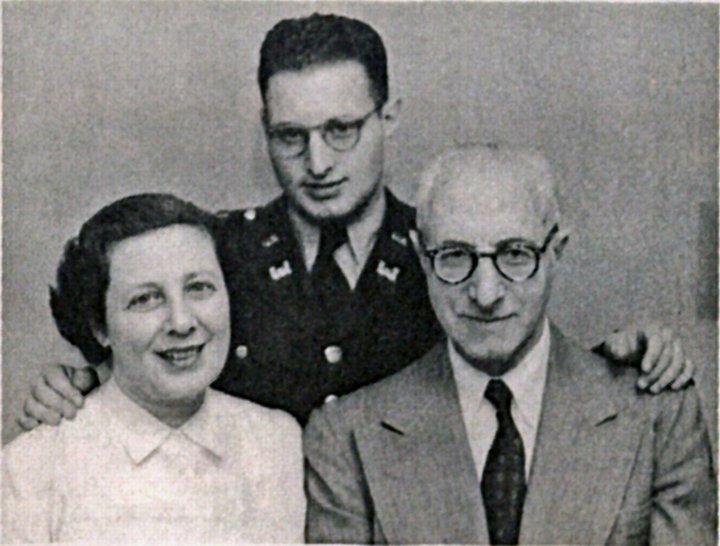
"There is not a single day now that I don’t think of Ulrich Myller! Most days I drive by the large and beautiful red brick buildings where we trained in OCS. There is no outward change in the buildings during the past 60 years at Fort Belvoir, Virginia.
Myller was my best friend during the Korean War! We had been officer candidates at Fort Belvoir and were commissioned 2nd Lieutenants on 26 August, 1952 in the Army Corps of Engineers. Myller had been last in the class and I close to it, but we never let this bother us. We had seen over 70 individuals come and go, and only 36 of us had survived.
When Myller and I received orders for Korea, we were on the same ship that left Oakland for Yokohama, Japan. It was a 16-day voyage in early January of 1953. We always addressed each other using last names. During this voyage I really got to know Myller and found him to be a very talented individual. I can still see him now playing the piano in the ship’s hole with it going from side to side.
Myller and I got lucky on arrival in Tokyo. We were able to spend an additional 10 days there before shipping out to Korea. Myller spent the latter part of January, 1953 eating sushi in Tokyo. I hated sushi! On arrival in Korea I was located at K-55 and Myller only 17 miles north of me. I saw and talked with him frequently. In May, 1953 he told me he was returning to Tokyo in June and asked me to go with him. I declined to go saying I was very busy, but would see him when he returned. When I arrived at his unit on the day of his expected return, I discovered that the plane had crashed killing all aboard. The unit lost 2 officers and 16 enlisted men. Myller was one of the officers."
Bettie C. Overcash - In Remembrance of Her Brother, Calvin Ray Castor
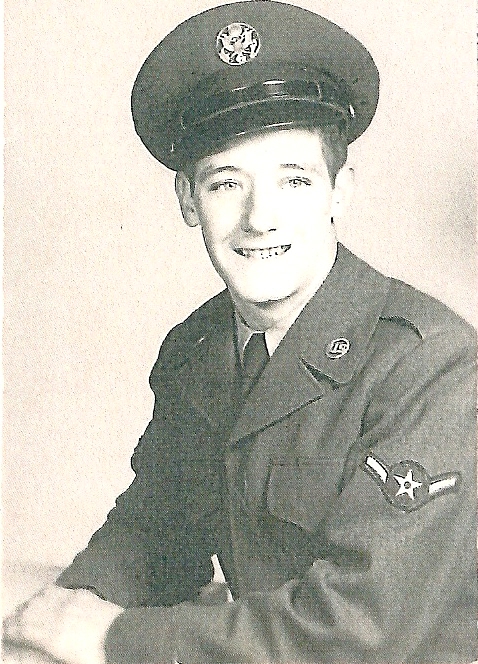
I was Calvin's oldest sister and he had one sister younger than he was. Our father died when Calvin was seven years old. The Air Force wanted him to go to Florida (Cape Canaveral). It was top secret, but he did not want to say that he would stay on after his enlistment was over. So they sent him to Korea. He was the soul surviving male in our family. He could have stayed stateside during his enlistment. Calvin was a radar tech and worked on radar in air planes. He could not talk about his job.
The telephone call that came into Kannapolis the day the military was to let my mother know, came into this area, came to the switchboard at Cannon Mills (where my mother worked). My sister's sister-in-law was on the switchboard and took the call. They had to take her off the switchboard until after they told my mother about Calvin.
About two years ago, my husband and I were in a doctor's waiting room when we overheard two men talking about the plane crash that killed my brother. What we heard was this. They had been in the Korean War. They said there were about 250 people on that plane when it crashed and it was supposed to carry 50. That it took off and the load was too heavy and took a nose dive straight down into a rice paddy and burst into flames. I do not know if this is true or not.
 (Click picture for a larger view) |
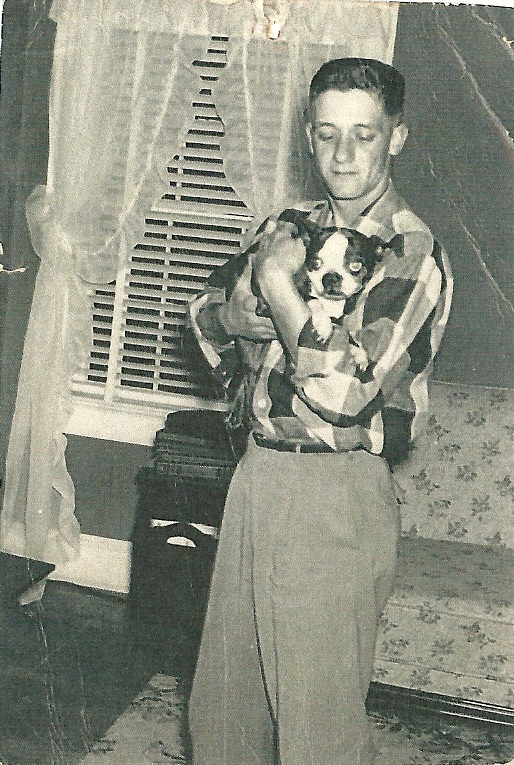 (Click picture for a larger view) |
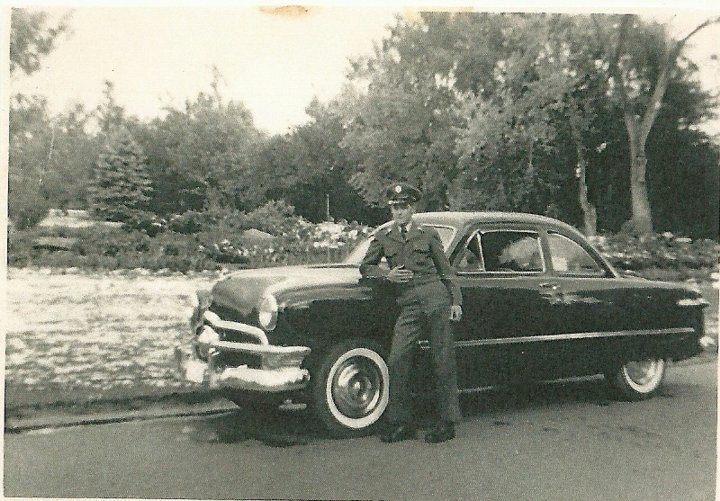 (Click picture for a larger view) |
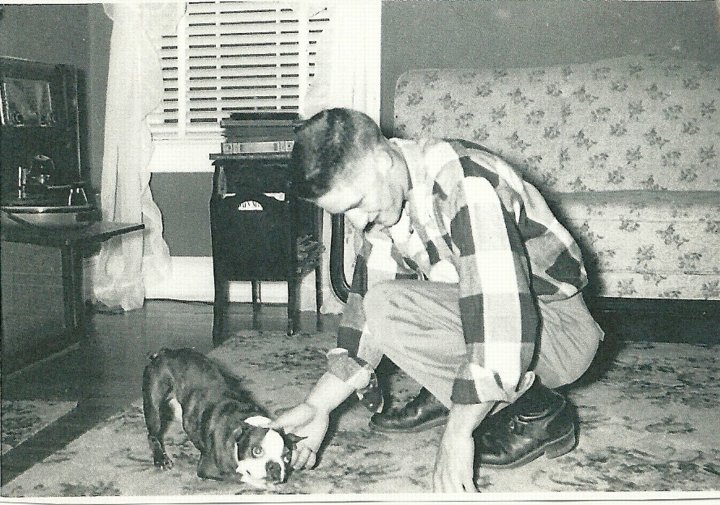 (Click picture for a larger view) |
||
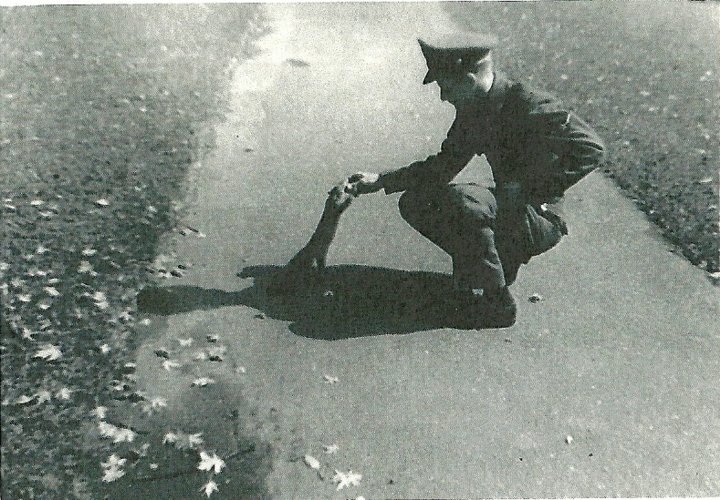 (Click picture for a larger view) |
 (Click picture for a larger view) |
 (Click picture for a larger view) |
Stacy Bates - In Remembrance of Uncle George H. Kissell Jr.
George is buried at the Blair Memorial Park in Bellwood, Pennsylvania. He was the brother of my Pap, James Kissell. I saw his grave once, but only in passing. I can remember asking why he had a flag on his grave. My cousin told me he had died in a plane crash in the war. As a kid I imagined it was during combat and did not know that it was the Korean War or any other details. Your website was most helpful. My Pap, his brother, did not fight in the war; however, all three of his sons were a part of the Vietnam War. All three survived. Again, thank you for your great website. Such a terrible tragedy. Thank you for remembering him!
Passenger List
[The KWE would like to post information about each of the following persons who perished in the Globemaster crash. If any family members or friends have information to share about any of the crash fatalities, we encourage you to contact Lynnita@thekwe.org.]
- Agnew, Arthur W. - Airman First Class Agnew was a member of the 8th Field Service Squadron, U.S. Air Force. Airman First Class Agnew was awarded the Korean Service Medal, the United Nations Service Medal, the National Defense Service Medal, the Korean Presidential Unit Citation and the Republic of Korea War Service Medal. He was 70 inches tall and weighed 152 pounds. He was the husband of Martha Agnew and son of Mr. and Mrs. Wiley Agnew, Greensboro.
- Anderson, Donald James - Airman First Class Anderson was a member of Headquarters, 51st Fighter Interceptor Group, U.S. Air Force. Airman First Class Anderson was awarded the Korean Service Medal, the United Nations Service Medal, the National Defense Service Medal and the Korean War Service Medal. He was 74 inches tall and weighed 147 pounds. Born April 15, 1929, he is buried in Mount Tabor Cemetery, Kane, Pennsylvania. He was the son of Mr. and Mrs. George P. Anderson of Kane.
- Arnold, Richard D. - Airman Second Class Arnold was a member of the 35th Fighter-Bomber Squadron, 8th Fighter-Bomber Group. Airman Second Class Arnold was awarded the Korean Service Medal, the United Nations Service Medal, the National Defense Service Medal and the Korean War Service Medal. He was 69 inches tall and weighed 135 pounds. His wife was Geraldine Arnold of Omaha, Nebraska.
- Athey, Verl C. - Verl C. Athey was born November 24, 1916, a son of Harvey Everett and Mina Aletha Theobold Athey. He was in World War II and Korea. Major Athey was a member of Headquarters, 51st Fighter Interceptor Group, U.S. Air Force. Major Athey was awarded the Korean Service Medal, the United Nations Service Medal, the National Defense Service Medal and the Korean War Service Medal. He was survived by his wife, Alice M. Athey, his brother Marvin S. Athey, and sisters Eunice Isabelle and Myrna Ardith. He is buried in Wauneta Cemetery, Chase County, Nebraska.
- Atkins, Robert C. Jr. - Airman First Class Atkins was a member of the 35th Fighter-Bomber Squadron, 8th Fighter-Bomber Group. He was 73 inches tall and weighed 167 pounds. Born June 01, 1931, he was the son of Robert C. Atkins Sr. and Matilda M. "Til" Ziegler Atkins (1909-1960). He is buried in Baltimore National Cemetery, Baltimore, Maryland.
- Basham, James Ray - Airman Third Class Basham was a member of the 8th Supply Squadron, 8th Fighter Bomber Group. He was 67 inches tall and weighed 135 pounds. He was born in 1934 in Salyersville, Kentucky. His mother was Mrs. Virgie Risner of Salyersville.
- Bass, Phillip Edwin - Private First Class Bass was a member of Headquarters and Service Company, 802nd Engineer Aviation Construction Battalion. He was 66 1/2 inches tall and weighed 113 pounds. He was born May 22, 1928 in Nash County, North Carolina, son of Peyton Edwin Bass and Leslie Lyon Jenkins Bass. He married Louise Gay on June 18, 1950. He is buried in Forest Hills Cemetery, Nashville, North Carolina.
- Battani, Geno A. - Airman First Class Battani was a member of the 80th Fighter Bomber Squadron, 8th Fighter Bomber Group. He was 22 years old, 68 inches tall, and weighed 149 pounds. Geno was survived by his father, Adolph, employed by Woods Bros., Des Moines; a sister, Mrs. Ray Girton of Madrid, Iowa; and a brother, George, also of Madrid.
- Bell, Earl Henry - Private First Class Bell was a member of Company B, 802nd Engineer Aviation Construction Battalion. He was 72 inches tall and weighed 152 pounds. Born May 29, 1927, Pfc. Bell was buried in Ft. Snelling National Cemetery, Minneapolis, Minnesota. He was from Minneapolis and the husband of Myrtle J. Bell, Minneapolis.
- Boston, John T. - Airman Third Class Boston was a crew member of a C-124A Globemaster transport with the 22nd Troop Carrier Squadron, 374th Troop Carrier Group stationed at Tachikawa Air Base, Japan. He was from Brooklyn, New York. Age 21, he was the son of Mr. and Mrs. Thomas J. Boston of Brooklyn. He attended St. Agatha's Roman Catholic Church in Brooklyn, where he was an altar boy. He attended St. Agathas School and then St. Michael's High School, where he was on the track team. He planned to be a history teacher after completing his military term. He was a former route boy for the Brooklyn Eagle newspaper.
- Bottelberghe, Richard R. - Private First Class Bottelberghe was a member of Company B, 802nd Engineer Aviation Construction Battalion. He was 68 inches tall and weighed 165 pounds. Born June 13, 1930, son of Mr. and Mrs. August Bottelberghe of Minneota, he is buried in Saint Edwards Cemetery, Minneota, Minnesota.
- Braswell, Charles L. - Private First Class Braswell was a member of Company A, 802nd Engineer Aviation Construction Battalion. He was 70 inches tall and weighed 112 pounds. He was born February 28, 1934. He is buried in Bremen City Cemetery, Bremen, Georgia.
-
 Brennan, Mark J. - In Greenwich, Connecticut, Mark Brennan from Kiltimagh,
Co. Mayo joined his sister Helen, brother Martin and John (Gerry) Gannon, a neighbor from home. Two
and a half years after emigrating, Mark was drafted in August 1951. Trained as an antiaircraft artillery
gunner in Ft. Bliss, Texas, Brennan was assigned to the 78th AAA Battalion stationed at Suwon Air Force
Base, South Korea. He died, age 23, in the June 1953 crash of a C-124A Globemaster cargo plane ferrying
him back to his base in Korea after a week of R&R leave in Japan. Sgt. Brennan was 69 inches tall
and weighed 159 pounds.
Brennan, Mark J. - In Greenwich, Connecticut, Mark Brennan from Kiltimagh,
Co. Mayo joined his sister Helen, brother Martin and John (Gerry) Gannon, a neighbor from home. Two
and a half years after emigrating, Mark was drafted in August 1951. Trained as an antiaircraft artillery
gunner in Ft. Bliss, Texas, Brennan was assigned to the 78th AAA Battalion stationed at Suwon Air Force
Base, South Korea. He died, age 23, in the June 1953 crash of a C-124A Globemaster cargo plane ferrying
him back to his base in Korea after a week of R&R leave in Japan. Sgt. Brennan was 69 inches tall
and weighed 159 pounds. - Brinegar, Rufus Leonard - Technical Sergeant Brinegar was a member of the 35th Fighter-Bomber Squadron, 8th Fighter-Bomber Group. He was 73 inches tall and weighed 183 pounds. He was from Davie County, North Carolina.
- Brown, Thomas W. - Private First Class Brown was a member of the 919th Engineer Aviation Maintenance Company. He was 71 inches tall and weighed 142 pounds. Born in 1927, he was the son of Mr. and Mrs. James S. Brown of Charleroi, Pennsylvania and is buried in Charleroi Cemetery.
- Broyles, Gerald D. - Private First Class Broyles was a member of Company B, 802nd Engineer Aviation Construction Battalion. He was 71 inches tall and weighed 185 pounds. Born November 08, 1929, he is buried in Mount Olive Cemetery, Pittsburg, Kansas. He was the husband of Norma D. Broyle, Pittsburg, Kansas.
- Burke, James Edward - Private First Class Burke was a member of Company B, 802nd Engineer Aviation Construction Battalion. He was 75 inches tall and weighed 195 pounds. He was born April 25, 1931, son of Edward M. Burke (1900-1976) and Anna M. Burke (1899-1978). He is buried in Saint Mary's Cemetery, Galena, Illinois.`
- Burt, George B. - George B. Burt, Schroon Lake, New York, was born in 1931. He was 65 1/2 inches tall and weighed 128 pounds. When he died in the airplane crash, he left a wife and a baby he never saw. Private First Class Burke was a member of Company B, 802nd Engineer Aviation Construction Battalion.
- Bushong, Robert -
-
Robert & Doris Bushong
Wedding Day
(Click picture for a larger view)
Hq & Sv Co Hq 802d Engr Avn Bn APO 970. He was 70 1/2 inches tall and weighed 154 pounds. PFC Robert Bushong, son of A.W. and Edna Bushong, was married to the former Doris J. Shelley of Lititz, Pennsylania. His widow remarried and had two sons. Robert Bushong is buried in the Lititz Moravian Cemetery.
-
- Canney, Sherman C. - 622d Engr Avn Maint Co APO 970. PFC Canney was 68 inches tall and weighed 135 pounds. See Remembrances section.
- Canyon, Peter - Airman First Class Canyon was a member of the 31st Air Police Squadron, U.S. Air Force. On June 18, 1953, he was a passenger on a C-124A Globemaster transport traveling from Tachikawa Air Base, Japan to Korea. He was killed when the aircraft crashed about three miles from Tachikawa. Airman First Class Canyon was awarded the Korean Service Medal, the United Nations Service Medal, the National Defense Service Medal, the Korean Presidential Unit Citation and the Republic of Korea War Service Medal. He was 64 inches tall and weighed 118 pounds.
- Caforio, Louis Victor - 35th Ftr Bmr Sq APO 970. He was 65 inches tall and weighed 136 pounds. Born July 15, 1931, he was a son of Joseph Caforio (1886-1966) and Gilda Antonelli Caforio (1901-1974). His siblings were Salvatore Vincent "Sam" Caforio (died 2009), Nicholas Caforio (1926-2015), Rose A. (1927-2014), Joseph (1937-1998), and Norma. He is buried in Calvary Cemetery, Johnson City, New York.
- Case, James Walter - Staff Sergeant Case was a member of the 319th Fighter Interceptor Squadron, U.S. Air Force. He was 67 inches tall and weighed 130 pounds. Born April 15, 1932, he is buried in Garden of Memories Cemetery, Tampa, Florida. His home of record was Baltimore, Maryland.
- Castor, Calvin Ray - Airman First Class Castor was a member of the 319th Fighter Interceptor Squadron, U.S. Air Force. He was 68 inches tall and weighed 125 pounds. He was born April 17, 1931, son of Joe Ray and Esther Lowder Castor. After his father's death, his mother married Clinton T. Wagoner of Center Grove. He was the brother of Bettie Joelene Castor (Overcash) and Patsy Castor, and the grandson of Mr. and Mrs. C.H. Castor of the Center Grove, North Carolina community.
- Church, William Loomis - 12th Ftr Bmr Sq APO 970. First Lieutenant Church was a crew member of an F-86F Sabrejet fighter with the 12th Fighter Bomber Squadron, 18th Fighter Bomber Wing. Funeral Services for Lt William Loomis Church, who was killed in an airplane crash at Tachikawa, Japan, June 18 will be at 1 pm Tuesday at A J Rose & Son mortuary. Burial will be at Belle Passi cemetery, Woodburn. Lieutenant Church, an Air Force jet pilot, was the son of Mr. and Mrs. George J Church. He was born in Lincoln, Nebraska, June 22, 1929. He attended Franklin High School and Willamette University before enlisting in the Air Force in September 1950. After being shipped overseas in March 1953, he served with the 12th fighter bomber squadron of the 18th fighter bomber group, completing 24 missions n the front lines in Korea, June 10 he went to Japan for rest and recuperation: the fatal crash occurred on the return trip to Korea. His body was escorted home by Lt. James W. Cooksey of Oakland, California. - The Oregonian, Monday, September 21, 1953
- Cottle, Edward K. - Airman First Class Cottle was a member of the 39th Fighter-Interceptor Squadron, 35th Fighter-Interceptor Group. He was 66 inches tall and weighed 140 pounds. Born November 07, 1929, he is buried in Huse Memorial Park, Fayetteville, West Virginia.
- Crenshaw, Horace Jr. - Airman Third Class Crenshaw was a member of the 39th Fighter-Interceptor Squadron, 35th Fighter-Interceptor Group. He was 64 inches tall and weighed 128 pounds. Born May 10, 1932 in Butler County, Alabama. He is buried in Bragg Hill AME Zion Church Cemetery, Forest Home, Alabama.
- Cross, Raymond - Corporal Cross was a member of the 51st Installation Squadron, U.S. Air Force. From Philadelphia, Pennsylvania, he was born on December 27, 1933. He was 70 inches tall and weighed 164 pounds.
- Crouch, James N Jr. - "C" Co Hq 802d Engr Avn Bn APO 970. Pfc. Crough was 72 inches tall and weighed 159 pounds. "James N. Crouch Jr. was the only son of Mr. and Mrs. James N. Crouch, who were natives of the Aromas area of the Pajaro Valley. He was born in Santa Cruz County on September 18, 1930, and attended elementary school in Aromas and high school in Salinas, California. After leaving school, he worked in the area and married Sally Milner of Manteca, California. James Crouch was inducted into the US Army on February 29, 1952, and sent to army training facilities for basic and advanced instruction. In August he was shipped to Korea and Sally moved into the home of her in-laws on the San Miguel Canyon Road near Watsonville. Upon arrival in Korea, Private First Class Crouch was assigned as a cook in Company C of the 802nd Engineer Aviation Battalion. The 802nd was an army unit attached to the US Air Force to enlarge and expand Korean airfields. In June 1953 Crouch received an eight-day leave in Japan. At the conclusion of his leave he boarded a C-124A Globe- master Transport at Tachikawa Air Base in Japan for his return flight to Korea. Shortly after takeoff on June 18, the plane developed engine trouble and crashed into a rice field killing Private First Class Crouch and the other 128 passengers. Newspaper accounts noted, "Most of the victims were still strapped to their seats indicating they were either stunned or killed by the crash impact." The remains of James Crouch were returned to Watsonville and following a service conducted by the local VFW post, were interred in the Hambey Cemetery near Aromas." [Source: Robert L. Nelson, Santa Cruz Public Libraries]
- Daman, David Elton - 319th Ftr Intcp Sq APO 970. Airman First Class Daman was 68 inches tall and weighed 116 pounds. Born December 2, 1933 in Oakland, California, son of George Herbert and Nola Fern "Lola" Miller Daman. he is buried in Evergreen Cemetery, Oakland, California. The youngest of six children, his sisters were Mildred Louise, Helen, Lorraine, and Nola. His brother was Airman First Class George H. Daman, Jr.
- Dawson, Norman L. - Private First Class Dawson was a member of the 662nd Engineer Aviation Maintenance Company. He was 69 inches tall and weighed 154 pounds. Born August 19, 1931, he is buried in Lakeview Cemetery, Eastport, Michigan.
- Evans, Wayde Daryl - Sgt. Evans was 72 inches tall and weighed 150 pounds. Born January 1, 1921, Wayde Daryl Evans was from Ottumwa, Kansas. Sergeant Evans was a member of the 78th Anti-Aircraft Artillery (Automatic Weapons) Battalion, U.S. Army. He was survived by wife Lena and three children. The eldest child was Gary Evans. He is buried in Graceland Cemetery, Burlington, Kansas.
- Everhart, Roy Jr. - 1993d AACS Mob Comm Sq APO 970. T/Sgt. Everhart was 65 1/2 inches tall and weighed 137 pounds. Sergeant Everhart was the son of Mr. and Mrs. Roy Everhart Sr., 1330 Grace Avenue, Cincinnati, Ohio.
- Ferguson, Kenneth E. - 219th Ftr Intcp Sq APO 970. Airman Second Class Ferguson was 67 inches tall and weighed 154 pounds. He was from Herrin, Illinois. Born September 09, 1933, he is buried in the Herrin City Cemetery. His father was Edwin A. Ferguson of Herrin.
- Fitzgerald, Mac Lee - Hq 319th Ftr Intcp. Sq. APO 970. First Lieutenant Fitzgerald was a member of Headquarters, 319th Fighter Interceptor Squadron, U.S. Air Force. Born June 19, 1930, he was from Abilene, Texas and is buried in Elmwood Memorial Park there.
- Fletcher, Johnnie R. - Private First Class Fletcher was a member of Company A, 802nd Engineer Aviation Construction Battalion.
- Floyd, Walker Ellis - Staff Sergeant Floyd was a member of the 319th Fighter Interceptor Squadron, U.S. Air Force. He was 71 inches tall and weighed 140 pounds. Born March 9, 1932, son of Walter Ellis Floyd Sr. and Myrtle Agnes Nolan Floyd, he is buried in Parker Memorial Cemetery, Grapevine, TX.
- Fogelhut, Marvin Jerome - Sergeant First Class Fogelhut was a member of the 78th Anti-Aircraft Artillery (Automatic Weapons) Battalion, U.S. Army. Born May 15, 1931, he was the son of Samuel Fogelhut (died 1954) and Dorothy "Dottie" Levinger Fogelhut (died 1982). Marvin is buried in Cypress Hills National Cemetery, Brooklyn, New York.
- Folks, James Jackson - From Inverness, Florida, James was born on May 9, 1930. Private
-
James Jackson FolksFolks was born on May 9, 1930. Private First Class Folks was a member of Headquarters and Service Company, 802nd Engineer Aviation Construction Battalion. Born May 9, 1930, he is buried in Pleasant Hill Cemetery, Blitchton, FL.
- Gardiner, Raymond W. - Airman First Class Gardiner was a member of the 51st Communications Squadron, U.S. Air Force. He was 66 inches tall and weighed 142 pounds. Born December 21, 1932, he is buried in Cypress Hills National Cemetery, Brooklyn, New York.
- Garza, George G. - Airman First Class Garza was a member of Headquarters Squadron, 51st Air Base Group, U.S. Air Force. He was 69 inches tall and weighed 145 pounds. His home of record was San Antonio, Texas.
- Gay, Francis Milton - Airman First Class Gay was a member of the 8th Communications Squadron, U.S. Air Force. He was 70 inches tall and weighed 136 pounds. He was from Boston.
- Goodroe, Herman G. - Airman First Class Goodroe was a member of the 319th Fighter Interceptor Squadron, U.S. Air Force. He was 68 inches tall and weighed 136 pounds. He was from Macon, Georgia.
- Groff, Robert E. - Staff Sergeant Groff was a member of the 51st Fighter Interceptor Wing, U.S. Air Force. He was 67 inches tall and weighed 133 pounds. Born October 14, 1931, he was the son of Clay Logan Groff (1900-1988) and Mary Murray Willard Groff (1903-1995). His sister was Marilyn Groff Larsen (1930-2004). He is buried in Englewood Cemetery, Clinton, Missouri.
- Gutierrez, Narcisco Jr. - Airman First Class Gutierrez was a member of the 51st Field Service Squadron, U.S. Air Force. He was 71 1/2 inches tall and weighed 180 pounds. He was from Sunnyvale, California.
- Hadley, Raymond E. - Airman Third Class Hadley was a member of the 8th Maintenance and Supply Group, U.S. Air Force. He was 69 inches tall and weighed 162 pounds. Born January 04, 1933 in Fairport, New York, he is buried in White Haven Memorial Park, Pittsford, New York.
- Hallas, Robert Edward - Airman First Class Hallas was a member of Headquarters Squadron, 8th Air Base Group, U.S. Air Force. He was 71 inches tall and weighed 174 pounds. He was born January 04, 1928 in Chicago, Illinois, son of Edward J. Hallas (1897-1966) and Pauline Szmaszek Hallas (1898-1993). He is buried in Resurrection Catholic Cemetery U Mausoleums, Justice, Illinois.
- Hamilton, Albert Randall Jr. - Pilot, 36th Ftr Bmr Sq APO 970 - His home of record was Dallas, Texas. In Korea, he was an F-86 Sabre fighter pilot with the 36th Fighter Bomber Squadron, 8th Fighter Bomber Group. His widow was Madeline A. Hamilton. "My father was Lt. Albert R. Hamilton, Jr. I was 18 months old when he was killed in the C-124 crash in June of 1953. I never knew him and my mother never spoke of him. I have gaping holes in my heart where his memory should be." - Terry Mathews, Winnsboro, Texas
- Hardy, Henry Louis - Airman First Class Hardy was a member of Headquarters Squadron, 51st Air Base Group, U.S. Air Force. He was 73 inches tall and weighed 172 pounds. He was born in 1932 in Kansas City, Missouri, son of Otto Lewis and Mary A. McLochlin Hardy. He is buried in Bremen Municipal Cemetery, Bremen, Indiana.
- Harrington, John M. - Airman First Class Harrington was a member of the 35h Fighter-Bomber Squadron, 8th Fighter-Bomber Group. He was 72 inches tall and weighed 164 pounds. He was from Bradshaw, Nebraska. He was the son of Mr. and Mrs. Harry M. Harrington of Bradshaw.
- Hartzler, Thomas - Corporal Hartzler was a member of the 662nd Engineer Aviation Maintenance Company. Born September 3, 1929, he is buried in Rock Island National Cemetery, Rock Island, IL. He was the son of Mr. and Mrs. Melvin E. Hartzler of Downer's Grove, Illinois.
- Heal, Bruce Samuel - Airman Second Class Heal was a member of Headquarters Squadron, 51st Fighter Interceptor Wing, U.S. Air Force. He was 69 inches tall and weighed 149 pounds. He was from Hartford, Connecticut, but entered the service at East Millinocket, Maine. Born July 20, 1933, he was the son of Maurice R. and Francis Heal.
- Hollis, Andy Jr. - Airman Second Class Hollis was a member of the 51st Motor Vehicular Squadron, U.S. Air Force. He was 60 1/2 inches tall and weighed 148 pounds. He was from Brownsville, Pennsylvania, and was the son of Mr. and Mrs. Andrew Hollis of Brownsville.
- Hora, August William - Corporal Hora was a member of the 662nd Engineer Aviation Maintenance Company. Born August 22, 1931 in Stickney, Illinois, he was the son of August and Agnes Hejduk Hora. His sisters were Beatrice and Laverne Hora. He was drafted into the Army on January 04, 1952. He is buried in Mount Auburn Memorial Park, Stickney.
- Hornsby, Walter Frederick - Airman First Class Hornsby was a member of the 8th Motor Vehicular Squadron, 8th Fighter Bomber Wing. He was 72 inches tall and weighed 150 pounds. Born June 10, 1930, his next of kin was Minnie A. Hornsby of Gallagher, West Virginia.
- Hunter, Samuel William - Airman First Class Hunter was a member of the 25th Fighter Interceptor Squadron, 51st Fighter-Interceptor Group. He was 67 inches tall and weighed 147 pounds. Born December 16, 1930, he is buried in Quoque Cemetery, Quoque, New York. His next of kin was Inez Hunter of New York.
- Hyde, Samuel Forrest - 12th Ftr Bmr Sq APO 970. First Lieutenant Hyde was a crew member of a F-86F Sabrejet fighter with the 12th Fighter Bomber Squadron, 18th Fighter Bomber Wing. He was 72 inches tall and weighed 170 pounds. Born March 22, 1927, he is buried in Blandford Cemetery, Petersburg, Virginia.
- Ives, Richard Eugene - Crew member. Airman Third Class Ives was a member of the 36th Fighter-Bomber Squadron, 8th Fighter-Bomber Group. He was 70 inches tall and weighed 138 pounds. Born April 30, 1933, son of John H. and Louise F. Ives, he is buried in Enid Cemetery, Enid, Oklahoma.
- Jones, Ernest Dean - Airman Third Class Jones was a member of the 16th Fighter Interceptor Squadron,
51st Fighter Interceptor Group. He was 68 inches tall and weighed 140 pounds. He was the son of Homer
Gailey and Evelyn Anthony Dabbs Jones.
"Funeral services will be held at 2:30 Tuesday afternoon in the Baptist Church, Stella, (Missouri) for A-2c Ernest (Jack) Jones, 21, who was killed June 18 in the wreck of the Globemaster. He was returning to Suwon, Korea, after a rest period in Japan. Airman Jones had been in service since April, 1952, overseas since January, 1953. He was born and raised at Stella, but had been at home in Joplin prior to entering service. He was a member of the McKinley Baptist Church in Joplin. His body will arrive in Neosho at 1:35 a.m. Tuesday. Rev. W. E. Darby of Chickasha will officiate. Military rites will be conducted at the graveside. Interment will be in Macedonia cemetery under direction of Culver-Shewmake Funeral Home of Granby. Survivors are his widow, Mrs. Donna Sue Jones, and two-months old baby son, Bobby Dean, of the home; his parents, Mr. and Mrs. Homer Gailey of Stella; two sisters, Mrs. Howard Haddock of Pueblo, Colo., and Mrs. Lewis Farley, Stark City; a brother, Kenneth, of Joplin; four half-sisters, Mrs. Robert Turner of Stella, and Dean, Jean and Joan Gailey of the home; and a half-brother, William Gailey Stella. (The Neosho Sunday News, Neosho, MO, Sunday, September 20, 1953, p. 1, Col. 5)" - Jordan, John H. Jr. - Airman 3c Jordan Jr. was from Chicago, Illinois.
- Kelley, Thomas Patrick - Staff Sergeant Kelley was a member of the 8th Air Police Squadron, 8th Fighter Bomber Wing. He was 66 inches tall and weighed 147 pounds. Born August 6, 1932, he is buried in Calvary Cemetery, Pittsburgh, Pennsylvania.
- Kennedy, Paul E. (Co-pilot). Major Kennedy was a veteran of World War II. In Korea, he was the co-pilot of a C-124A Globemaster transport with the 22nd Troop Carrier Squadron, 374th Troop Carrier Group stationed at Tachikawa Air Base, Japan. Born September 22, 1918, he is buried in Arlington National Cemetery, Arlington, Virginia. His home of record was Beaver, Pennsylvania. His wife was Leota B. Kennedy, West Palm Beach, Florida, and his parents were Mr. and Mrs. Crawford Kennedy.
- Kirsnis, Raymond Jan - 1993d AACS Mob Com Sq. APO 970. First Lieutenant Kirsnis was a member of the 1993rd Airways and Air Communications Service Mobile Communications Squadron, U.S. Air Force. He was 66 inches tall and weighed 140 pounds. Also a World War II veteran, he is buried in Arlington National Cemetery, Arlington, Virginia. His home of record was Pittsburgh, Pennsylvania. His father was John Kirsnis.
- Kissell, George H. Jr. - Staff Sergeant Kissell was the engineer of a C-124A Globemaster transport
with the 22nd Troop Carrier Squadron, 374th Troop Carrier Group stationed at Tachikawa Air Base, Japan.
BELLWOOD SOLDIER AMONG VICTIMS IN ARMY PLANE CRASH
Daily Herald, Tyrone, Pa., June 20, 1953, page 1
Among the 129 American soldiers killed in the crash of an Army transport plane in Japan Thursday was Staff Sgt. George H. Kissell, Jr., Tyrone R.D. 2, whose father, George H. Kissell Sr., and a sister live on the back road between Tipton and Bellwood. Kissell was among the group of American soldiers returning to Korea from a rest period in Japan. After serving three years in the U. S. Navy, Kissell enlisted in the Army, on December, 1950, and had been in Korea nearly a year. He graduated from Bellwood-Antis High school in 1949.
Surviving are the father and these sisters and brother: Mrs. D. O. Simmers, Altoona; Mrs. Harry Taylor, Heston, Huntingdon County; Mrs. Blair Estep, Bellwood; Miss Pauline Kissell, at home, and
James C. Kissell, Tyrone R.D. 2. During the past four years the mother, a brother and a sister have died.
Seven other Pennsylvania men were killed in the accident. The Defense Department identified them as: Lt. Raymond J. Kirsnis, Pittsburgh; Staff Sgt. Thomas P. Kelley, of Stowe Township; Pfc. Thomas W. Brown, Charleroi; Maj. Paul E. Kennedy, Beaver; Airman 1-C Donald J. Anderson, Kane; Lt. Vernon W. Miller, Johnstown, and Airman 2-C Andrew Hollis, Jr., Brownsville. - Klein, Robert J. - Airman First Class Klein was a member of the 319th Fighter Interceptor Squadron, U.S. Air Force. He was 68 inches tall and weighed 175 pounds. He was the son of Mr. and Mrs. Joseph Klein, Cleveland, Ohio.
- Knotts, James R. - Staff Sergeant Knotts was a member of the 8th Air Police Squadron, 8th Fighter Bomber Wing. He was 76 inches tall, weight unknown. Born May 12, 1928, he is buried in Arlington National Cemetery, Arlington, Virginia. His mother was Sally Knotts, South Carolina.
- Kolb, Isidore Elmer - Private First Class Kolb was a member of the 662nd Engineer Aviation Maintenance Company. Born April 25, 1931, he was the son of Isidore Leonard Kolb (1899-1970) and Anna Mary Wensmann Kolb (1895-1988) of Austin, Minnesota. He is buried in Calvary Catholic Cemetery, Austin. His siblings were Dennis Kolb, LaVerne Kolb, Evelyn Josephine Downey (1922-1977), Viola Theresa Anderson (1924-2008), Raymond Casper Kolb (1925-1934), Duane Joseph Kolb (1929-2016), Mary Jane Baier (1934-2001) and Bernice Ritenour.
- Lee, Clarence M. Jr. - Airman Third Class Lee was a member of Headquarters Squadron, 51st Air Base Group, U.S. Air Force. He was 68 inches tall and weighed 180 pounds. He was from Orange, New Jersey.
- Leicht, Donald E.C. - Hq 319th Ftr Itcp. Sq. APO 970. First Lieutenant Leicht was a member of Headquarters Squadron, 319th Fighter Interceptor Squadron, U.S. Air Force. He was 68 inches tall and weighed 135 pounds. His home of record was Waco, Texas, but he was actually from Kokomo, Indiana. He was the son of Mr. and Mrs. Sylvester R. Leicht of Kokomo, and the husband of Ima R. Leicht. His children were Donald Leicht Jr., age 8; Sheryl Ruth, age 5; and Janet Elaine Leicht, 18 months. His brothers were Arthur, Robert and William, and his sister was Mrs. Virginia Glover. Donald was a radar-navigator on an F-94 all-weather jet inceptor that protected B-29s in Korea. He served two and a half years in World War II and returned to his job at Continental Steel Corporation. He was recalled to service in April of 1952 and received training as a radar observer in F-94 jets at Waco, Texas and Panama City, Florida. He had gone on 37 missions in Korea.
- Lenhardt, Leroy W. - Airman First Class Lenhardt was a member of the 319th Fighter Interceptor Squadron, U.S. Air Force. He was 71 inches tall and weighed 166 pounds. Born November 25, 1931, son of Mr. and Mrs. Frederick Lenhardt of Mukwonago, Wisconsin, he is buried in Oak Knoll Cemetery, Mukwonago.
- Lockwood, Maurice G. - Private First Class Lockwood was a member of Company A, 802nd Engineer Aviation Construction Battalion.
- Lowery, William Douglas - Airman First Class Lowery was a member of the 8th Maintenance Squadron, U.S. Air Force. He was 71 inches tall and weighed 151 pounds. Born January 6, 1931, he is buried in Greenwood Cemetery, Ruston, Louisiana.
- Lowry, Donald E. - 8th Maint. Sq APO 970. He was 66 inches tall and weighed 139 pounds. He was the son of Mr. and Mrs. Doyt Putman, Rockford, Ohio.
- Lucas, Leonard J. - Airman First Class Lucas was a member of the 8th Supply Squadron, 8th Fighter Bomber Group. He was 68 inches tall and weighed 170 pounds. He was the son of Mr. and Mrs. Julius Klaus of Mt. Carmel, Pennsylvania.
- Marshke, Lawrence B. - Private First Class Marshke was a member of the 919th Engineer Aviation Construction Battalion. He was the son of Mr. and Mrs. Bernard Marshke of Detroit, Michigan.
- Mathieu, Edmond A. - Private First Class Mathieu was a member of the 78th Anti-Aircraft Artillery (Automatic Weapons) Battalion, U.S. Army.
- Mayo, Kenneth P. - First Lieutenant Mayo was a member of the 8th Medical Group, 8th Fighter Bomber Wing. He was one of two Iowans to die in the air crash. He was a flight surgeon. According to an Iowa paper, Dr. Mayo's mother was Mrs. Edna C. Mayo, an employee of the registrar's office at Iowa State College. The only child of parents who were separated, Dr. Mayo was reared in Ames, Iowa by his mother and grandmother, Mrs. Ed Coe. He was 27 years old on June 3, 1953. He was married on October 18, 1952 to Carolyn Ann Flodin of Burlington, Iowa, a member of his graduating class at S.U.I. She was employed at Iowa Ordnance plant in Burlington. The newspaper stated, "Gordon Gammack, Des Moines Register and Tribune war correspondent who returned recently from Korea, said Friday he had visited several times with Lieutenant Mayo at a Korean jet air base. Gammack characterized Mayo as 'an exceptionally fine youthful medical officer.'" He was 72 inches tall and weighed 162 pounds. His father was Ralph Mayo of Omaha, Nebraska.
- McAninch, Darrell E. - Airman Third Class McAninch was a member of Headquarters Squadron, 51st Fighter Interceptor Wing, U.S. Air Force. He was 74 inches tall and weighed 155 pounds. His home of record was Seattle, Washington.
- McCorkle, Robert D. - Major McCorkle was the pilot of a C-124A Globemaster transport with the 22nd Troop Carrier Squadron, 374th Troop Carrier Group stationed at Tachikawa Air Base, Japan. Born November 30, 1923, he was the son of Ernest Edward McCorkle (1892-1933) and Ruby Mae Speed McCorkle (later Conoly) (1902-1994). His wife was Alice Dolores Newell McCorkle (1923-1956) and his brother was William Clay McCorkle (1921-2003). Robert served in World War II as well as in the Korean War. He is buried in the Mobile National Cemetery, Mobile, Alabama.
- McCurtain, Isaac M. - Airman Third Class McCurtain was a member of the 80th Fighter Bomber Squadron, 8th Fighter Bomber Group. He was 65 1/2 inches tall and weighed 149 pounds. Born April 22, 1924, he is buried in Stigler Cemetery, Stigler, Oklahoma.
- McHenry, John A. - John McHenry was from Canton, Ohio. He was born on March 21, 1929, the son of Mr. and Mrs. Joe J. McHenry, 912 Fourth Street, Southwest, Canton, Ohio. He is buried in Sunset Hills Burial Park, Canton, Ohio.
- McLaird, Paul R. - 51st Air Police Sq APO 970. Airman Third Class McLaird was 71 inches tall and weighed 218 pounds. Born July 14, 1933, he was the son of John Augustus and Della May Ayres McLaird. His home of record was Laird, Missouri. He is buried in Zion Cemetery, St. Louis, Missouri.
- Mihalic, Raymond M. - 36th Ftr Bmr Sq APO 970. Airman Third Class Mihalic was 71 inches tall and weighed 141 pounds. His home of record was Trenton, New Jersey.
- Miller, Vernon W. - 1st Lieutenant, Hq 8th Ftr Bmr Wg APO 970. He was 71 inches tall and weighed 190 pounds. Born September 11, 1910, he is buried in Ft. Sam Houston National Cemetery, San Antonio, Texas. He was stationed at Holloman Air Force Base, New Mexico.
- Milner, Obie Eldridge - 8th Maint Sq APO 970. M/Sgt. Milner was 72 inches tall and weighed 240 pounds. Born October 23, 1913, he was also a World War II veteran. He is buried in the Odd Fellows Cemetery, Ponca City, Oklahoma.
- Miner, Kenneth A. - Crew member. 36th Ftr Bmr Sq APO 970. Airman Second Class Miner was 66 1/2 inches tall and weighed 120 pounds.
- Mixon, Bobby W. - 8th Comm Sq APO 970. Airman Second Class Mixon was 64 inches tall and weighed 115 pounds. Burial services were held Tuesday, September 22 at 2:30 p.m. in Laurel Heights Baptist Church for Airman 1/C Bobby Charles Mixon, victim of a military airplane crash in Japan on June 18. A/1/C Mixon, the son of Mr. and Mrs. Elton Mixon of Winnfield, Route 2, had been in the Far East since February 24 and was returning from a leave in Japan after duty in Korea, when the fatal crash occurred. Ministers officiating the funeral were Rev. Waynon Mott, pastor of the Laurel Heights Baptist Church, Rev. H. J. Mott of Monroe, a former pastor of the church, and Rev. D. W. McDaniel of Winnfield, pastor of the Walker Baptist Church in Jackson Parish. Burial was in Gorham Cemetery, Joyce, Louisiana, under direction of Hixson Funeral Home. Pallbearers were James Guin, Glyn Guin, G. W. Jones, David McCartney, Walter Ross, Buddy Foster, M. J. Foster, and Manson Howard. Young Mixon, 22 years old, is survived by his parents, one brother, David Mixon, two sisters, Nedra and Cynthia Marie Mixon, and his grandparents, Mr. and Mrs. Bobby Gorham. [Published in The Winn Parish Enterprise, September 24, 1953]
- Modenese, Eugene M. - Hq Sq Sec 8th AB Gp APO 970. Airman First Class Modenese was 68 inches tall and weighed 152 pounds. Air Force, Airman 1/c. 22 years of age. Next of kin – Mr. And Mrs. M.A. Modenese (parents), sister, Diane, 2816 Eddy St., Seattle, WA; Dorothy Lynch Modenese (wife)Place of birth – Seattle, WA. Place of burial – Seattle, WA. Eugene Modenese was born and brought up in Seattle. He attended Georgetown Elementary School and graduated from Cleveland High then went to Seattle University. He was interested in Mountaineering and Skiing and was a champion at this sport. At Cleveland he was a member of the All-City Ski Team. He planned to make photography his life work and had been employed at Boeings as a photographer. He joined the Air Force in 1951 and was due home a month before his death.
- Moran, Francis E. - Hq 51st Ftr Intcp Wg APO 970. Airman Second Class Moran was 65 inches tall and weighed 136 pounds. The son of Mr. and Mrs. William J. Moran of York, Nebraska, his home of record was York.
- Mouton, Raoul P. Jr. - Pilot, 36th Ftr Bmr Sq APO 970. A 2nd Lieutenant, he was 72 inches tall and weighed 145 pounds. His home of record was Jennings, Louisiana. He was born June 27, 1930, son of Raoul Paul Mouton Sr. and Aline Fleming Mouton. He is buried in Saint Mary Magdalene Cemetery & Mausoleum, Abbeville, Louisiana.
- Myller, Ulrich - "C" Co. Hq 802d Eng Avn. Bn. APO 970. Second Lieutenant Myller was 65 inches tall and weighed 150 pounds. Born March 1, 1931, he is buried in the San Francisco National Cemetery, San Francisco, California.
- Nassif, Donald H. - 1993d AACS Mob Comm Sq APO 970. T/Sgt. Nassif was 67 inches tall and weighed 145 pounds. Born July 29, 1929, he is buried in Massachusetts Veterans Memorial Cemetery, Agawam, Massachusetts. His home of record was Springfield, Massachusetts.
- Nellermoe, Dale L. - 8th Sup Sq APO 970. Airman First Class Nellermoe was 68 inches tall
and weighed 149 pounds. His wife was Mrs. Clarice P.
Nellermoe of Granite Falls, Minnesota. See Jean Madsen Remembrance.
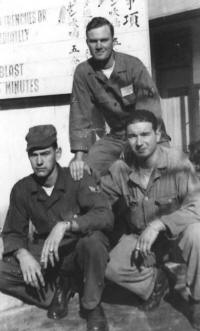
Leonard Riles (top)
(Click picture for a larger view) - Painter, Donald Irving - Airman Second Class Painter was a member of the 319th Fighter Interceptor Squadron, U.S. Air Force. On June 18, 1953, he was a passenger on a C-124A Globemaster transport traveling from Tachikawa Air Base, Japan to Korea. He was killed when the aircraft crashed about three miles from Tachikawa. Airman Second Class Painter was awarded the Korean Service Medal and the United Nations Service Medal. He was 65 inches tall and weighed 116 pounds. Born June 4, 1933, he is buried in Woodbury Memorial Park, Woodbury, New Jersey. His home of record was Brooklawn, New Jersey.
- Peloquin, Raymond H. - 8th H & S Gp APO 970. Airman Third Class Peloquin was 65 inches tall and weighed 146 pounds. Born April 23, 1932, he is buried in Precious Blood Cemetery, Woonsocket, Rhode Island.
- Pool, Warren Randolph - 622d Engr Avn Maint Co APO 970. He was also a World War II veteran. Born July 19, 1921 in Ft. Worth, Texas, he is buried in Wyuka Cemetery, Lincoln, Nebraska.
- Powell, Archie Lee Jr. - 51st Comm Sq APO 970. Airman Second Class. Born in Oconee
County, South Carolina on July 15, 1932, he was the son of
Archie Lee Powell Sr. (1912-2006) and Henry Louie Green Powell
(1910-2001).
Crash Is Fatal To Westminster Boy
Airman 2-C Archie L. Powell, 21, of Route 1, Westminster, was killed in the crash of C-124 Globemaster transport plane in which 128 other servicemen were killed. The crash occurred 25 miles West of Tokyo Thursday morning, June 18. Powell , a native of Oconee County, graduated from Westminster High School in 1951, and entered the Air Force shortly after. He was the son of Mr. and Mrs. Archie L. Powell, Sr., of Westminster. He received his basic training at Lackland Air Force Base in Texas and was later stationed at Wyoming. He had been assigned to duty in Korea since September, 1952.
The Powell family did not know that Airman Powell was on the Globemaster, according to the Sandifer Funeral Home in Westminster. They knew only that he had been on a short vacation to Japan. The family was notified of his death by an official War Department telegram last week.
Powell's mother is the former Henry Lou Green, a native of Georgia. His father is employed by the Excelsior Mill at Clemson. A Member of the Westminster Baptist Church, Powell had been active in church work.
Airman's Body On Way Home
WESTMINSTER - The body of Airman Second Class Archie L. Powell, Jr., native of Westminster, is scheduled to arrive in Westminster Friday morning for funeral rites and burial. The popular young airman, whose parents are Mr. and Mrs. Archie L. Powell, Sr., well-known residents of Westminster, was killed June 13 when a C-124 Globemaster transport crashed in Japan. A spokesman from Sandifer Funeral Home said that Airman Powell will be buried with full military honors, performed by Donaldson Air Force Base men from Greenville, Sunday, 2:30 p.m., at Westminster Baptist Church. The Reverend Jim Tannery will be in charge. Burial will be in Oconee Memorial Park, Seneca, South Carolina. Pallbearers will be taken from the ranks of the Air Force Base, while honorary pallbearers will be members of the Young Men's Bible Class of the church. Surviving young Powell besides his parents are one brother, William Powell, and three sisters, Rachel, Thelma, and Linda all of the home. He is also survived by his paternal grandparents, Mr. and Mrs. A. B. Powell of Westminster. - Powers, Michael F. - 8th H & S Gp APO 970. Airman Second Class Powers was 67 inches tall and weighed 122 pounds.
- Rensashe, Joseph - "C" Co. Hq 802d Engr Avn Bn APO 970
- Riles, Leonard Leon - 35th Ftr Bmr Sq APO 970 - A/1C Leonard L. Riles was 73 1/2 inches tall and weighed 170 pounds. He enlisted in the Air Force in February of 1952 and was sent to Korea in November 1952. He was survived by his widow, Sally Scobey (formerly Sally Henfling) from San Rafael, CA. They were married in February of 1952. Riles was a native of Sebring, Florida. Born June 1, 1931, he is buried in Pinecrest Cemetery, Sebring, Florida.
- Roberson, David Jr. - 16th Ftr Intcp Sq APO 970. Airman Second Class.
His home of record was Dallas, Texas. Born August 06,
1933, he was the son of David Roberson Sr. and Lavera W. Jones
Roberson (1921-2006). He is buried in Lincoln Memorial
Park, Dallas.
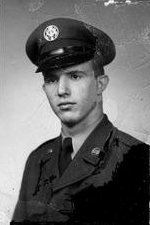
James Andrew Rose - Rose, James Andrew "Jim" or "Red" - 25th Ftr Intcp Sq APO 970. Airman Third Class Rose was 69 inches tall and weighed 157 pounds. Born November 24, 1930, he was an artist. He was from Cincinnati, Ohio and was known as "Red" because of his red hair. He was the son of Mr. and Mrs. John Rose Sr., Cincinnati, Ohio. According to the family, "He was on leave in Japan and sent his mother a beautiful collection of china with a message that if anything happened to him to remember how much he loved her. The china arrived AFTER she was notified of his death."
- Rudolph, Donald R. - 39th Ftr Intcp Sq APO 970. Airman First Class Rudolph was 67 inches tall and weighed 127 pounds. He was the son of Mr. and Mrs. Louis P. Rudolph, Saint Matthews, Kentucky. A 1950 graduate of St. Xavier High School, he was a gun-sight mechanic in Korea for six months prior to the airplane crash. He joined the Air Force in October 1950. His brother was Henry L. Rudolph.
- Schaeffer, Warren J. - 35th Ftr Bmr Sq APO 970. M/Sgt. Schaeffer was 67 1/2 inches tall and weighed 155 pounds. He was a veteran of World War II, where he served in the Pacific Theatre. He also served in the Korean War when he was killed. His occupation in the Army Air Corps was Aviation Mechanic. He was born in Pottsville, Pennsylvania and eventually moved to Farmingdale, New York where he met his wife, Mary Butler. They had two children, Cynthia and Warren.
- Schrock, David A. - 80th Ftr Bmr Sq APO 970. Airman Second Class Schrock was 67 1/2 inches tall and weighed 137 pounds. He was born October 5, 1931, son of Mr. and Mrs. Clarence D. Schrock of Muskegon, Michigan. He is buried in Restlawn Cemetery, Muskegon.
- Sheets, Richard Lee - 39th Ftr Intcp Sq APO 970. Airman Third Class Sheets was 66 inches tall and weighed 135 pounds. The son of Mr. and Mrs. Theodore Sheets, Rt. 1, Covington, Ohio, he was born June 9, 1933. He is buried in Riverside Cemetery, Troy, Ohio.
- Simpson, Edwin J. Jr. - 1993d AACS Mob Comm Sq 970. Airman 1-C Simpson was the son of Mr. and Mrs. Edwin J. Simpson Sr., Norwood, Ohio. He was born December 21, 1927. He is buried in Gate of Heaven Cemetery, Montgomery, Ohio.
- Simpson, Thomas S. 8th Sup Sq APO 970. Airman First Class Simpson was 70 inches tall and weighed 162 pounds. He was born October 05, 1930 and is buried in Pine Hill Cemetery, Emerson, Arkansas.
- Smith, Burton Bernard - 919th Engr Avn Maint Co. APO 970. He was born December 1, 1933, son of Verl Smith, rural route, Red Wing. There are two references to his place of burial: Oakwood Cemetery, Red Wing, Minnesota and Immanuel Lutheran Church Cemetery, Hay Creek, Minnesota.
- Smith, Charles Curtis - "A" Co Hq 802d Engr Avn Bn APO 970. Born November 02, 1928 in Dunn, North Carolina, he was the son of Alonzo and Hattie Barefoot Smith, rural route, Dunn. He is buried in Smyrna FWB Church Cemetery, North Carolina.
- Sorrento, Nicholas S. Jr. - 8th Sup Sq APO 970. Airman Second Class Sorrento was 69 inches tall and weighed 143 pounds. He was the son of Nicholas Sorrento Jr. and Jenny Sorrento of Everett, Massachusetts.
- Stacy, William P. - Pilot, 36th Ftr Bmr Sq APO 970. A 2nd Lieutenant, he was 70 inches tall and weighed 168 pounds.
- Staring, John Hillman - 18th Fighter Bomber Wg APO 970. Captain Staring was 72 inches tall and weighed 180 pounds. Born September 18, 1918 in Texas, he was the son of George Henry Staring III (1894-1946) and Minna Mary Venturine Staring (1895-1976). His widow was Janet "Netta" Steele Staring (9/25/1922-8/11/1991). He had three sisters and two brothers. He is buried in Calvary Hill Cemetery & Mausoleum, Dallas, Texas.
- Steele, Carl Cole - Carl Steele, son of Andrew Preston Steele (died 1945) and Mary Cynthia Steele (died 1954), was a graduate of Winchester, Kentucky High School and served in the Air Force for five years. After serving in Japan for eighteen months as an Airman First Class, he was killed on June 18, 1953, in an airplane crash near Tokyo, Japan, that claimed 129 lives. Steele had been flight engineer of a C-124A Globemaster transport with the 22nd Troop Carrier Squadron, 374th Troop Carrier Group Awarded many medals for his service in Korea, he was survived by his wife, Mrs. Beatrice McGuire Steele, his mother, Mrs. O.F. Baxter, his sisters, Betty Joan Steele (Berger) and Georgia Steele (Barnett), as well as five brothers, Fred Eugene, Charles William, John David, Travis Edward, and Billy Darrell.
- Stopyra, Bartholomew - 36th Ftr Bmr Sq APO 970. Airman Third Class Stopyra was 67 inches tall and weighed 133 pounds. He was the son of Mr. and Mrs. Joseph Stopyra, 143 Miami Avenue, Youngstown, Ohio.
- Sturdevant, James Lewis - 1993d AACS Mob Comm Sq APO 970. Born 15 August 1931, Airman Second Class Sturdavant was 69 1/2 inches tall and weighed 155 pounds. He was the son of Mr. and Mrs. Orley Sturdevant, Route S, Napoleon, Ohio.
- Taft, George C. - 78th AAA Gun Bn APO 970 (SCARWAF). Born March 26, 1931, son of Mr. and -Mrs. W.B. Taft of Elkmont, Kentucky, he is buried in Arlington National Cemetery, Arlington, Virginia.
- Tartaglione, Samuel J. - 8th Comm Sq APO 970. Airman Third Class Tartaglione was 64 inches tall and weighed 202 pounds. His home of record was Buffalo, New York.
- Thompson, Premas Jr. - 61st Fd Sv Sq APO 970. Airman Second Class Thompson was 64 inches tall and weighed 170 pounds.
- Tupper, Donald P. - 8th Air Police Sq APO 970. Airman First Class Tupper was 67 1/2 inches tall and weighed 150 pounds. Born September 25, 1927, he is buried in Acacia Memorial Park, Modesto, California. His home of record was Ceres, California.
- Van Alen, Robert G. - 25th Ftr Intcp Sq APO 970. Airman Third Class VanAlen was 72 inches tall and weighed 155 pounds. Born July 2, 1931, Robert is buried in Arlington National Cemetery, Arlington, Virginia.
- Voruz, Herbert G. Jr. (pilot) - Major Reg. Air Force, born April 20, 1916. Assigned to Tachikawa Air Base, FEAF, 215th A Div, 374th TCWg (H), 374th TCGp(H), 22nd TCSq (H). A World War II and Korean War veteran, he married Dortha Emma West in Glendale, Arizona on January 10, 1943. He is buried in Hillcrest Cemetery, LaGrande, Oregon. He had children Gary, Nancy and Sharon West.
- Wade, Thomas E. - Hq & Sv Co Hq 802d Engr Avn Bn APO 970. He was the husband of Mrs. Virginia Lee Bennett Wade, Scottown, Lawrence, Ohio, daughter of Earl and Opal Dunfee Bennett, who was born 19 July 1930 in Lawrence County, Ohio. Thomas was buried in Lawrence County, Ohio, Perkins Ridge. Tom graduated from Windsor High School in 1945. While there he was a member of the Dukes basketball squad. Following graduation he engaged in farming with his father. On April 7 1952 he entered the Army where he served in the Korean War.
- Weaver, Franklin E. - Hq Sq 51st AB Gp APO 970. S/Sgt. Weaver was 72 inches tall and weighed 146 pounds. Born September 6, 1930, he is buried in Roselawn Cemetery, Marion, Virginia.
- Wickman, John Rudolph - 319th Ftr Intcp Sq APO 970. Airman Second Class Wickman was 68 inches tall and weighed 162 pounds. He was the son of Edith Wickham, Bronx, New York.
- Wilcox, John Bennett - Hq 8th Ftr Bmr Wg APO 970. S/Sgt. Wilcox was 70 inches tall and weighed 140 pounds. Born July 28, 1930, he is buried in Golden Gate National Cemetery, San Bruno, California. He was the son of Mr. and Mrs. Milton J. Wilcox, Fairbanks, Alaska.
- Wilkie, John V. "Johnny" - 919th Engr Avn Maint Co APO 970. Born January 10, 1934, Private Wilkie is buried in Calvary Cemetery, Cherry Hill, New Jersey.
- Wilson, George Visscher - 919th Engr Avn Maint Co APO 970. Born September 5, 1951, he was the son of Joseph H. Wilson, Barclay, Maryland.
- Wright, James R. - Hq Sq 51st Ftr Intcp Sq APO 970. Airman Second Class Wright was 68 inches tall and weighed 140 pounds. Born April 5, 1933, he was the son of Renwick H. and Marion Wright of Detroit, Michigan (later Florida).
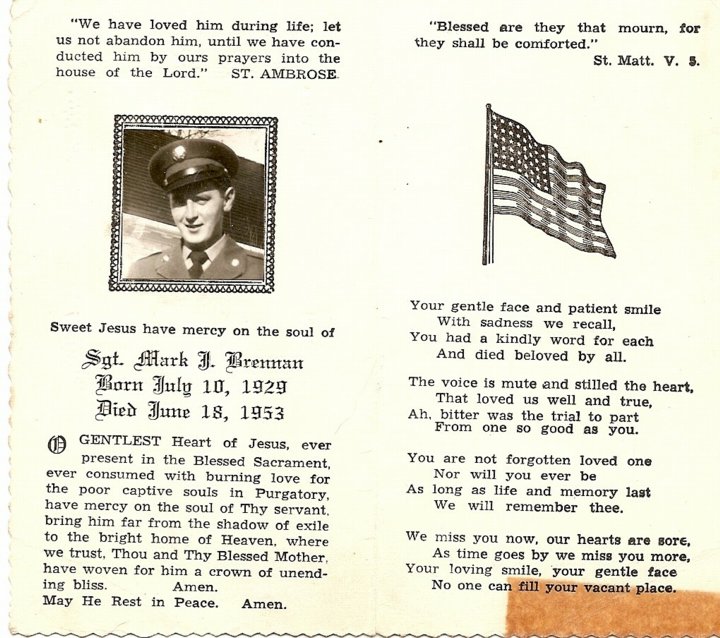
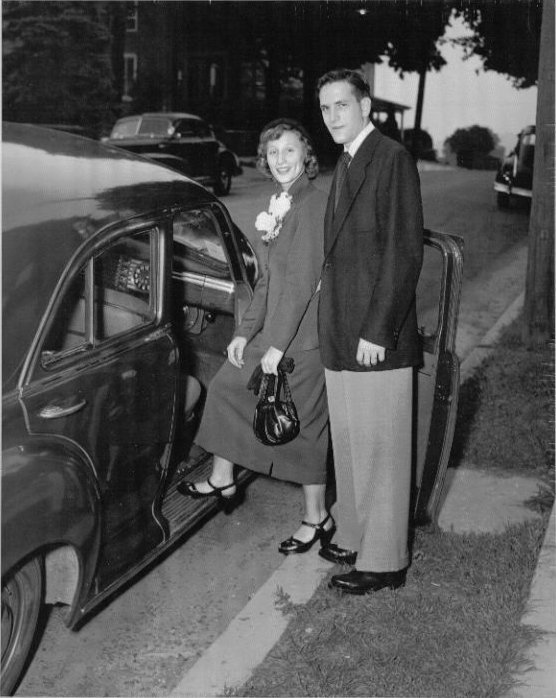
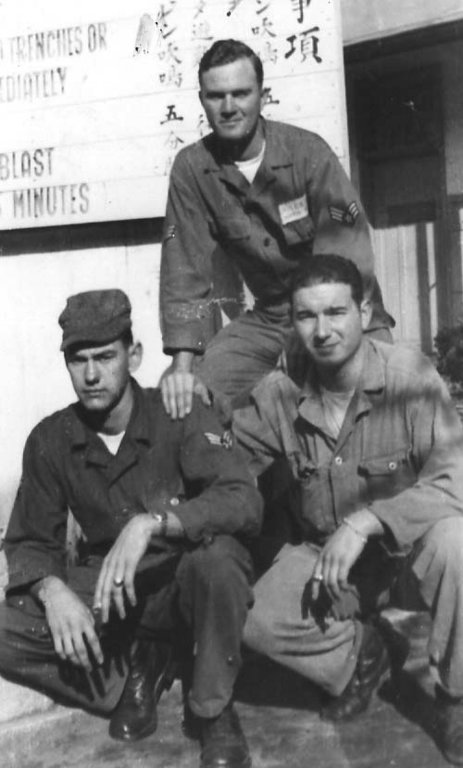
Flight Surgeon's Report - Medical Officer's Recommendations
I. Participation of 374th Medical Group in C-124, 51-137 Aircraft Accident, 18 June 1953
A crash call was received by the Medical Officer of the Day, Lt. Pfrommer, at approximately 1710 hours, 18 June 1953 on crash phone located in Base Dispensary, Building 192. A/1C Borek, the C.Q., notified the Medical Officers and airmen to report to the Dispensary immediately. An airman who was a witness of the crash site reported to the Dispensary for the purpose of escorting the medical convoy to the scene. The convoy consisted of six (6) ambulances; five (5) field type and one (1) metropolitan. Four (4) Medical Officers (Lt. Col. Bourke, Capt. Haworth, Lt. Free, and Lt. Pfrommer, and approximately thirty (30) medical airmen departed from building 192 at approximately 1720 hours and arrived at the scene of the crash at approximately 1740 hours. Upon arrival seventeen (17) bodies had previously been removed from the plane. By 2015 hours fifty-five (55) bodies had been extricated and at this time it was decided by Lt. Col. Kennedy, Operations Officer, Lt. Col. Bourke, Wing Surgeon and Capt. Haworth, Flight Surgeon, that because of the rain and burning of the plane further attempts to recover additional bodies would be futile at that time, and the operation would continue again at 0500 hours the 19th of June 1953.
At approximately 2145 hours a convoy consisting of five (5) bus type ambulances carrying the fifty-five (55) bodies which had been recovered were transported to Camp Omiya, accompanied by Lt. Col. Bourke, Capt. Haworth, and Lt. Free. This convoy arrived at Camp Omiya at 0050 hours on 19 June 1953.
Resumption of recovering bodies from the crash began at 0500 hours on 19 June 1953 and continued until 0925 hours at which time the last and 129th body was recovered. The 74 bodies recovered on the morning of the 19th June 1953 were also transported to Camp Omiya. Bodies, as they were recovered, were transported by field type ambulances to highway Route 7 where bus type ambulances were stationed to further transport the bodies to Camp Omiya.
Bodies were found throughout the plane, a group were found up against the forward bulkhead, and none were found at any distance from the plane. They were gently extricated from the ashes and other debris, placed on litters or canvas sheets together with any adjacent personal effects or potential identification aids.
For purpose of extricating some of the bodies imprisoned under the wreckage it was necessary to lift the plane structure at two points with the aid of a crane hoist. After removal of the bodies the plane structure was lowered back to its original position.
Organizations which contributed medical personnel and equipment other than the 374th Medical Group were 32nd Medical Holding Detachment, Fuchu Dispensary, Johnson Air Force Base, FEAMCOM Hospital, and 801st MAES.
II. Observations and Recommendations
It is to be emphasized that nothing in the way of safety features could have in all probability prevented the total loss of life in a crash of this impact. However, the Flight Surgeon presents these observations and recommendations for what they’re worth: (Attention, AMC)
Observations:
Crews compartment: None of the crew on the flight deck were burned. All had shattering skull fractures and multiple, total bodily injuries, any one of which could have been fatal. The pilot and co-pilot were in their seats with the upper part of their trunks thrown forward and their heads shattered against the instrument panels. In a crash of lesser impact could they have survived?
Recommendations:
- Crash pads: Something must be devised to give the head a “fighting chance” in this, and all aircraft.
A. Permanent type pad:
(1) Instruments counter sunk in a rubber panel – this probably will result in instrument visualization difficulties but to my way of thinking would be highly effective if at all possible.
(2) Compressible rubber “fingers” at the corner of all individual instruments-these at least would tend to lessen skull impact.
B. Mobile type pad:
Could not a system be devised whereby a tough, thick rubber pad be released by button, that would drop from the ceiling like a roller window shade to intervence between the skull and the instrument panel the moment before impact? Or, would crash pillows (rubber) be feasible: Pillows that the crew could have available beside them and which could be raised before their face the instant prior to impact.
C. Safety harnesses:
It is felt by the Flight Surgeon and all those assisting in medical evaluation of the remains that the pilot was wearing his harness. This was determined by the nature of his injuries i.e.: (1) The tearing type wounds to both shoulders as the trunk was thrown forward and the shoulders held back—even the large, powerful chest muscles (pectoralis majors) were traumatically ruptured (separated) in the area of the gaping wounds of the shoulders. (2) The complete transaction of the spinal column and cord (spine was completely severed) between T4 & T5, the cephalic segment being displaced posteriorly as it was held there by the harness, and the caudal segment being displaced anteriorly as though continuing due to inertia. (3) The tearing type wound of the left anterior chest with evisceration of the apex of the heart and lower lobe of the left lung. (4) Abrasion of the deltoid areas (the roundness) of the shoulder made, we believe, by the harness as it slipped from the shoulders as they were forced back and practically torn off. I.e., (See Voruz, Pilot).
The point of this discussion is, of course, that the Flight Surgeon feels that this harness was responsible for more injuries than it prevented. Again, this impact was apparently too great for anything to have been of value as a safety measure. But in accidents of lesser impact the Flight Surgeon still can’t justify in his mind this type of harness. With any impact of major significance, what is to prevent the shoulders from being held against the back of the seat while the upper part of the body continue its forward motion till the shoulders “tear” and the harness slips from them, as he feels sure happened in this accident? In other words the upper trunk continues forward as the shoulders are held back, to such a point that the harness slips from the shoulders, and of course, when this point is reached bodily injury has been created by that very safety device that was supposed to have prevented injury. This Flight surgeon chooses to call this type of harness the “suspender” type, and as such, he feels, it is valueless. However, would it be at all feasible to take this same “suspender harness” and make an “N” type harness out of it: The simple technique of adding a wide horizontal band of nylon to the vertical straps of the harness, at the mid-chest level, it would seem to this observer, would alleviate the major faults and dangers of this harness. This would tend to take the impact force off of the shoulders alone and would spread it out over a wider area by including the chest itself as a large area for absorbing the shocking force. This horizontal portion of the harness would thus tend to help prevent the upper trunk from continuing forward on impact until the shoulders tear, and, also would tend to prevent the shoulder strap portion of the harness from slipping off of the shoulders. The Flight Surgeon hopes he has not been verbose and realizes he is not trained along these lines, but he sincerely believes that the simple addition of the horizontal wide chest strap to the harness would greatly improve it and help to prevent the type of injuries described above. In addition, would it be feasible to have a head harness-it could be of a type which could be left off during routine flying but at the first evidence of a serious emergency could be slipped around the head, thus preventing the “snapping forward” movement the head undergoes at the instant of impact. It seems to the Flight surgeon that it would have to be allowed to “give” a few inches (to allow some forward head movement) and that some device, such as a thick rubber pad, would have to be placed in the seat at the back of the head level to prevent fatal skull injury on the “snap back”. Such a harness in conjunction with the “H” type harness already verbosely described, it would seem to this observer, would prevent, or help to prevent, the totally demolished heads as seen in the pilot and co-pilot of this aircraft accident.
Passenger Decks:
Observations:
The two immediate observations were that everyone in the passenger decks were grossly burned and were clumped together in piles. The Flight Surgeon has no suggestions to offer in regards to the prevention of the burns and it must be remembered that, of course, the burns occurred subsequent to the killing impact. However, can anything be done to prevent this piling of bodies together? It is universally recognized that the individual sitting at the rear of the aircraft has a better chance at survival than does the one sitting in front, and one of the factors that makes this so is the fact that the further towards the rear of the aircraft that one is, the less weight in the human form there will be to compress him. Or, conversely, the further forward that one is, the more weight there will be to literally crush him at the time of impact. Bodies will be thrown forward and this will produce an increasing weight increment. Thus, the further forward one is the greater will be the crushing force. In the large volume passenger carrying aircraft, then, the weight factor of human bodies becomes of extreme importance if one is to survive.
What can be done to increase the chances for survival of those individuals sitting toward the front of the aircraft? The bucket seat type of arrangement with passengers facing towards the center of the aircraft, of course, is not ideal but presumably is necessary and facilitates greater passenger and cargo loads. But, why can’t the aircraft be what the Flight Surgeon, for lack of a better term, calls semi-compartmentalized. Between every third or fourth seat there could be a tough wall or curtain anchored to the ceiling and deck by a pipe running through it. It could extend out to the knee distance from the wall or slightly farther. This would not interfere with a passenger-cargo load. When the load is all cargo, the “free-edge” pipes could be “unshackled” from the ceilings and deck, and the “compartment wall” “accordion pleated” to the sides of the aircraft. If cargo were to be unloaded and passengers taken aboard it would be an extremely easy matter to semi-compartmentalize within a matter of 10-15 minutes. The tough cloth walls would be pulled out and anchored and the aircraft completely sectionalized. To this Flight Surgeon’s way of thinking this would be one fairly simple way of giving these individuals sitting in the front section of the aircraft at least a fighting chance of survival, for if these “semi-compartments” each contained four (4) men, as an example, and, if the walls did not break through, no individuals would have more than three (3) bodies pressing against him. There would not be the “hay stack” of human remains that the Flight Surgeon witnessed in this crash. Is this idea feasible, A.M.C.?
Reverse Seating:
The Flight Surgeon wishes to interject one thought at this point. It is not a new idea but one to which he’d like to throw his entire and whole-hearted support. That is reverse seating in passenger carrying aircraft. Seats facing the rear of the aircraft, he is firmly convinced, would be one of the greatest single advancements towards furthering the safety of the individual passenger in an air crash yet devised. Even in this crash, had seats of this type been available, he feels certain that there might have been survivors remaining to tell the story. He can think of nothing else mechanically so simple to do that would, singly, so immeasurably increase the individual’s chance of survival. This medical observer is firmly convinced that if the human body is to withstand our advancement in aviation and the tragedies which inevitably will occur, then we must design into our aircraft those safety factors which will help rather than hinder its “fight for life”. Reverse seating can and will help. It would have helped in this crash in the Flight Surgeon’s opinion.
Identification:
Observations:
(1) The majority of the bodies did not have dog tags about their necks. The dog tags were found in disassociated fragments of clothing.
(2) St. Christopher medals and “good-luck” charms were worn. It was interesting to note here that these chains with their attached medals stayed in place around the neck at the time of the crash. The chains, being stronger, did not break as did many of the dog tag chains.
Recommendations:
(1) It must constantly be re-emphasized that dog tags must be worn about the neck on all flights. Their presence in this crash would have greatly facilitated identification. of the remains.
(2) It is felt by this observer and many others who witnessed the results of this accident that the dog tag chain is not of sufficient strength. Had they been of the strength of the “St. Christopher” chains, it is felt that definitely more tags would have been found around the neck.
Areas of Identifications:
Observations:
One of the striking things to the Flight Surgeon is what he chooses to call “The Triad of Identification Areas.” As the task of identifying the remains progressed and drew to completion, and the [two words illegible] of what had been seen and done during this identification process became crystallized in the Flight Surgeon’s mind, one observation became of paramount importance. There are three areas of the body of which greatly increased emphasis should be placed as a site for identification. They are, in brief, the wrist, the waist, and the foot. It was noted that all of those who had worn “crash bracelets” had these bracelets intact upon their wrist when the identification process began. This is an excellent site for identification and the Flight Surgeon feels definitely that the Air Force should emphasize its importance.
Of perhaps even greater importance was the waist area. This area is of extreme importance in offering a site for identification. Had it been utilized to a greater extent by the victims in this crash, it is felt definitely that it would have speeded positive identification. And of course it becomes of utmost importance when fire is involved as it was in this crash. The waist becomes a “protected area”. There seem to be two factors that make it such: One is the automatic flexion of the trunk at the hips in an apparent attempt to protect the abdominal-genital area at the time of impact—the individual has the tendency to “double up.” Secondly, the area is protected because of the “layering” affect of the clothes which act as a “fire wall.” Thus, it cannot be emphasized greatly enough that the shorts, undershirt, shirt, pants and belt should all be marked with indelible ink at the waist level. If this is done, the vast majority of crash victims of the future will be more readily positively identified, and particularly, if fire is involved.
Further, the Flight surgeon feels that we are overlooking one excellent potential site of identification at the waist and that is the belt buckle. It was of interest to note that the vast majority of remains had an intact belt buckle. Even the fire did not destroy them. If each and every buckle was used as an “identification tag” then the process of identification would be greatly simplified. The name and serial number could be stamped on either the front or back surface of the buckle. This is an excellent site for identification if this crash can be used as a criteria!! Incidentally, it is suggested by the Flight Surgeon that it is definitely better to use small print in inking the name on the clothes because of the fact that in any one area more of the name will be visualized than if large “sprawling” print is used.
The third member of the triad, and of equal importance, is the foot area. Again, like the waist and the wrist this area is an extremely valuable site for identification and had it been utilized more frequently in this crash, identification would have progressed more easily. Again, the factor here is that the shoe or boot acts as protection for the foot. The inner sole of the shoe should be stamped with indelible ink (name, etc.)—this ink will stay on!! (The Flight Surgeon conducted his own personal experiment and his feet perspire a lot!)
Also, in regards to the feet, this observer feels that we are neglecting a primary source of positive identification and that is the foot print. The foot print, because of the protection afforded by the shoes, was often times intact in those cases when the finger prints were totally destroyed. Foot prints are required on each infant at birth. Would it be such an insurmountable task to set up a foot print file for the military similar in part to the finger print file of the F.B.I. The Flight Surgeon is convinced that it would pay great dividends in future identifications.
To repeat, the wrist, the waist, and the foot was the identification triad that this Flight Surgeon has learned by unhappy experience should be utilized to facilitate rapid and positive identification of future military crash victims. Please give these suggestions serious consideration. This was the Flight Surgeon whose responsibility it was to record the worst aircraft accident in the history of aviation and he never wants to see or experience another one, but, if at some future date he does, he knows that the task will be simplified if the Triad of Identification is fully exploited.
Skeletal Chart – Section C AF Form 14-B
Medical Report of an Individual Involved in AF Aircraft Accident
The Flight Surgeon wishes to express, also, his viewpoint on a subject which he feels must be commented on. It was his unhappy duty to learn by sad experience how worthless, repetitious, and time-consuming a skeletal chart of this type really is. The Flight Surgeon feels that its only value might be in the recording of burned areas, but as a diagrammatic representation of the skeleton it is valueless. Its very repetitions (the presentation of multiple views) tend to promote inaccuracy, particularly when large numbers of records are necessary as in this crash, and it definitely is a constant source of frustration to the recoding Flight Surgeon. Why must these forms be needlessly cluttered and grandiose when simplicity in its essence would so much more adequately and accurately portray the true picture?
This observer recommends (attention A.M.C. or whoever is interested in such things) that the Air Force rid itself of this cumbersome and inaccurate skeletal chart. It’s awful! Please substitute for this chart a plain and simple diagrammatic representation of the skeleton with just one view, and with all the bones showing. Such a skeletal diagram, accurate and yet simple, would not only be completed with more ease but also would create within the recording medical man the desire to be absolutely accurate in his transcribing of physical injuries to the skeletal chart. The reasoning is simple: If a skeletal chart is anatomically accurate and non-repetitious, it will appeal to the professional man and, this observer believes, will arouse his professional interest to the point of recording in more minute detail all of the injuries sustained, and this, in about 1/3 of the time that it now takes to fill out accurately the existing skeletal chart.
The Flight surgeon offers in support of his request for termination of the existing AF skeletal chart (Section C, AF Form 14-B, Medical Report of an Individual Involved in AF Aircraft Accident) the type of skeletal chart that he would like to see the Air Force adopt. It is forward as a supplemental report and will be found stapled to the existing skeletal charts (Section C, AF Form 14-B) of the crew members involved in this crash. It is a chart used by Graves Registration, Central Identification Unit, Kokura, Japan and its very simplicity and yet exactness appeal to the medical man involved with future crashes, and will save much valuable time and yet promote a greater desire for completeness and accuracy in recording. Please consider very seriously this suggested change. It will greatly help to relieve the doctor in the field when a similar tragedy once again occurs, and will make him more readily available to continue the normal and routine duties expected of him and his office at the earliest possible date subsequent to the tragedy.
The Flight Surgeon wishes to comment on two further observations that he feels are significant.
1. Evisceration:
There were 19 remains which demonstrated abdominal evisceration of the traumatic type (sustained at the time of impact). It must be stressed here that there were more eviscerations than this present, but it was not able to be ascertained as to whether these were due to the actual impact trauma or to the 4th degree burns which literally burned the flesh away and left the gastrointestinal tract exposed. These charring burns confused the picture. However, there were 15 anterior abdominal eviscerations about equally divided as to right and left. There was one bilateral abdominal evisceration, one epigastric, one posterior and one rectal evisceration. There is no way of knowing just where these individuals might have been sitting in the aircraft. As to their cause, the Flight surgeon feels certain that they were the direct result of the fastened seat belt plus impact force. Something had to give and the gastro-intestinal tract sought and found the weakest portion of the abdominal cavity through which to make its exit. It is the cautious estimate of this medical observer that in many of those cases which gave no evidence of external evisceration, evisceration of the abdominal contents into the thoracic cavity was in all probabilities a fairly common occurrence, although he has no laboratory evidence with which to substantiate this belief.
How the problem of evisceration is to be prevented in the future is an unknown quantity in the Flight Surgeon’s mind. Perhaps the partial answer might be wide shock belts, similar to those worn by motorcycle stunt riders. This type of belt would act as a safety belt when fastened to the seat and at the same time an abdominal support due to its “corset-effect”. This, of course, would not prevent rectal nor “trans-cavity” eviscerations and would even, presumably, increase their incidence. This suggestion is merely offered as perhaps being worthy of consideration. The one conclusion that the Flight Surgeon has definitely reached is that our safety belts as they exist today caused more physical injuries than they prevented in this accident. And they will do so in the future unless modified. A safety belt must be more than just a thin strap across the lower abdomen. It must be an abdominal support as well as a body retaining device.
2. Broken Legs
This observation is made because the Flight Surgeon recalls how markedly impressed he was while removing the remains from the disintegrated aircraft at the striking number of lower leg fractures. This in itself was perhaps not so astonishing, but as the remains continued to be removed it became increasingly apparent that all of these lower leg breaks were occurring in practically the identical site, and that was at the junction of the middle 1/3 and lower 1/3 of the lower leg—(junction of the middle and inferior 1/3 of the tibia and fibulae).
At first this did not upset the Flight Surgeon because he felt the explanation was simple. It could be easily shown that the breaks were occurring at the top of the combat boots, and thus it was simple to theorize that the leg was broken at the site which was no longer enclosed by its supporting tube of rough leather. But this hypothesis was almost immediately discarded. For by no manner nor means did it explain why the fracturing was occurring in the identical area when the individual had been wearing low quarter shoes and not combat boots.
Many times since then this observer has attempted to find a plausible explanation as to why these legs should have broken where they did, and why the vast majority of the remains should have exhibited this same type of fracture. Perhaps this whole thing is unimportant and extraneous as far as this report is concerned, but the problem and lack of ability to explain it has become almost an obsession to the Flight Surgeon. Why should so many legs have been broken in the same area regardless of the type of footwear worn?
The one and only cause that the Flight Surgeon can possibly justify is the possibility that the remains with the broken legs had been sitting on the same side of the aircraft with their legs swung underneath their seats. At the time of impact the supports holding the seats up were broken, permitting the continuous iron pipe which makes up the forward-most part of the continuous side-by-side seats to pivot downward, thus catching all of the legs in the same area and fracturing them. But, this explanation is not satisfactory in the Flight Surgeon’s mind. It assumes that the men would have their feet swung backward under them, and it’s the Flight Surgeon’s contention that at such a time their legs would not be in the “swung-back” position, but rather in a position which would most readily permit them quick access to a supporting or standing position. In the C-124 type aircraft as in the C-46 type aircraft this position is with the lower legs vertical to the deck and is not with the feet under the seat. This seems rather a moot point but this observer believes it to be important. With the legs in a vertical position, even if the seat did pivot downward the legs would not be touched. Since the accident the Flight Surgeon has had numerous opportunities to observe leg and feet positions in C-124, C-54 and C-46 aircraft during flight.
The point that makes him certain that the accident victims did not have their legs swung back under the seats was derived from these observations. Firstly, as previous described, the center of gravity will most readily be obtained with the lower legs in a vertical position to the deck. Secondly, whereas after an aircraft is air-borne and the flying is routine and the passengers have settled down, they swing their legs back in a relaxed position. In not one instance did the Flight Surgeon observe legs held in that position during take off nor landing. They were all in a tensed position, “ready to spring” so to speak (R&R personnel), and that position was with the lower leg vertical to the deck. And in that position not one leg would have been broken had the forward bar of the seat fallen down. In other words, when the individual becomes tense, he prepares to brace himself or to flee. And he cannot do this if his legs are swung back. This Flight Surgeon will never be convinced that the legs were broken because of the falling seat bar. But, unhappily, he is unable to present a more adequate explanation to the strikingly identical leg fractures. What is the answer?
As a conclusion to this report the Flight Surgeon has one final observation and recommendation to make. It pertains to the Air Force Raincoat (nylon).
Observation:
The Air Force nylon raincoat is absolutely useless as a raincoat. When the sun is shining it’s excellent. When it’s raining, one might just as well be wearing a sieve or a bathing suit. And to this observer they are no more efficient after they’ve been water-proofed, as his was. Saying this with due respect and in all seriousness, the Flight Surgeon feels that they represent a potential health hazard. They tend to give the unwary individual a psychological sense of protection from inclement weather. Whereas, actually, they are helping to promote a breakdown of health by keeping the body surrounded by a sponge of dampness and permitting chilling to more easily occur. This of course, enhances the possibility for respiratory infections to develop. During that miserably wet afternoon and night of the crash practically as many comments were overheard concerning the worthlessness of this raincoat as in regards to the crash itself. And, this Flight Surgeon agrees whole-heartedly. Quite frankly, the cost was a waste of money. It’s just no good when the mist is replaced by rain.
Recommendation:
Can we not have an adequate raincoat A.M.C.?
The Flight Surgeon finds that it is now necessary to make one additional comment. He believes it to be an interesting observation, and certainly one on which action should be taken.
In the compilation and completion of this single crash report the Flight Surgeon was compelled to sign his name 3,450 times. Necessary signatures were:
1,249 – AF Forms 14-B – Passengers
77 – AF Forms 14-B – Crews
11 – AF Forms 14-A
129 – Photo stats
Figuring two (2) signatures per minute (which is a fair estimate when the time consumed checking over each group of forms, as the Flight Surgeon felt he should do prior to signing them, is included), the total time elapsed just in the completion of signatures was 1,725 minutes. This figure converted into hours comes out to be 28.75 hours. Is the full significance of this grasped? It took 28.75 hours just for the signatures alone on this report. The Flight Surgeon spent 28.75 hours just signing his name. This amounts to three full duty days plus 45 minutes of the fourth that are completely lost to the Air Force and everyone concerned. In this observer’s opinion this is a decided and great loss of man-hours.
Naturally, being the only Flight Surgeon at this base, the normal and routine functions of the Flight Surgeon’s Office precluded any duty hours being involved in the completion of this task and it was carried to termination in off-duty hours, but never-the-less, it is still the Flight Surgeon’s contention that this is an unnecessary waste of man-hours. And it is very definitely a discouraging circumstance to the hapless individual who happens to be at the “pushing” end of the pen. Believe the Flight Surgeon when he says that it makes one stop and think. It’s another one of the “little incidental things” that come up in military medicine that makes a young Flight Surgeon who has seriously been considering a career in military medicine stop and reconsider once again.
This observer says this in utmost sincerity because he personally believes that military medicine, and Aviation Medicine in particular, is a new frontier in modern medicine and, as such, has much to offer the young medical man of today. Let us do all we can to help eliminate these unnecessary “little incidental things” wherever and whenever they can be found. The obvious answer to this may be that this “little incidental thing” of signatures is of extreme importance. Be that as it may, the military will better be able to “sell” a young doctor debating about his future that it’s so important that he has to spend 28.75 hours at it. Please accept this criticism in the spirit in which it is intended. Aviation Medicine is a whole new bright horizon. Let us do everything in our power to keep that brightness from dimming so that its light will act as a beacon. A light by which the young medical men can see a future of fulfillment and accomplishment. A light by which the young physicians can see Aviation Medicine as “their” career.
The Flight Surgeon suggests that the use of a rubber signature stamp would greatly expedite matters. Even if he has to initial each stamped signature this would still be less time consuming than the system used now. Some such system can be adopted especially in the case of the accident involving the large volume passenger carrying aircraft. Perhaps some arbitrary figure should be used such as 40. If an aircraft carrying more than forty personnel is involved in an accident then the rubber signature stamp may be used. If under 40 personnel, then the reports must be hand signed. This is merely a suggestion as to a possible solution to this problem, but, by whatever means, it’s a problem that must be solved.
The Flight Surgeon would have liked to have discussed the problem more thoroughly, but it seems that he has developed an occupational disease, so called “writer’s cramp”, from signing his name so often, so that he must now finally and absolutely terminate this report.
It is hoped that some of his observations and recommendations may be of some use in furthering the achievements and efficiency of the safest and finest Air Force in the world.
Wallace G. Haworth, Captain, USAF (MC) AME
Photo Gallery
(Click a picture for a larger view)
Readers' Comments
Vernon Copeland (10/12/2011)
"I was with the USAF stationed in Korea in 1953. On the 18th of June 1953 I was scheduled to fly back to Korea from Japan. I had been attending a school at Fuchu AFB not far from Tachikawa. I went to Tachikawa on the 18th to fly back to Korea, and I had a seat reserved on the ill-fated flight. I reported in early to the flight ops center and when I arrived they told me that they had another plane scheduled to leave for Korea earlier than the C-124, and would I like to take the earlier flight. I said yes, and took the flight. When I arrived in Korea, the fellow that came to meet me was at the airfield and was all shook up when he saw me because he had assumed that I had been killed on the ill-fated C-124.
Since the C-124 was booked full, and since I made one extra seat by taking the earlier flight, someone must have been on that flight in my place who took the last available seat. I have always wondered who that might have been. Is there any way that I can determine who that unfortunate person was? Is there a chronological list of the manifest for the flight? Just wondering." - Vernon Copeland"
Michael Perry (12/23/2016)
Lynnita - I've finally found the last piece to the puzzle that I've been looking for off and on for quite some time, re the June 18, 1953 C-124 crash which took the life of my Uncle Raoul Mouton and 129 others. Yes... 129 others, not 128. It would seem that a Japanese woman on the ground was also killed by falling and / or exploding debris from the wreckage. To my knowledge, I have never seen this reported in any of the official accounts.
In any case, the "missing piece of the puzzle" for was the precise location of the crash. All the reports on the crash gave the position of the crash site as between 3.25 miles and 3.5 miles, Northeast of the Tachikawa base. Using Google Earth, I had always looked for a large field at that general direction and distance. The plane was reported to have come down in a large "potato" or "watermelon" field. I could never find such a field within the distance and direction reported.
Yesterday, I came upon a Japanese-produced documentary which was broadcast in Oct. 2012, which pinpoints the location of the crash. There is now a driving school on that site. A farmer who still works a bit of land just East to point of impact, still pays his respects to the crash victims through prayer and the burning of incense, an extremely noble and prophetic gesture not lost on this crash victim relative. I wish I knew how to contact him to thank him for continuing to honor our beloved dead, and the ill-fated Japanese woman as well.
I'm writing to you so that you may share this information with all of the other crash victim relatives here. Perhaps this information is to them also... the final piece of the puzzle.
The precise crash location is:
Latitude: 35°43'54.81"N
Longitude: 139°27'28.30"E
