[KWE Note: We are currently seeking information about this Globemaster crash and
encourage anyone who had information or details about it to share it on this page of the KWE’s Airplane
Crash topics page. Contact Lynnita Brown,
lynnita@koreanwar-educator.org or phone 217-253-4620
(Illinois) in the evening; 217-253-5171 Thursday-Saturday 10
a.m. - 3 p.m..
Most recent addition: August 13,
2021
5
Page Contents
Back to Page Contents
About the Crash
A Douglas C-124A-DL Globemaster II aircraft (registration number
51-0141) departed from Kimpo
International Airport on February 22, 1957, and crashed shortly after takeoff at 20:00. There were 159
occupants on the plane (10 crew members and 149 passengers), and of those 22 were fatalities. The plane was
written off as a total loss.
According to the website www.planecrashinfo.com:
“The No. 3 engine seized, causing the propeller to come loose and slice through the side of the
fuselage making two full turns before exiting. It took two men out with it, idled the No. 4 engine and cut
the throttle cable. While attempting an emergency return landing at Kimpo Air Base, level flight could not
be maintained and the aircraft descended, crashing into the Han River.”
According to Antony J. Tambini's book, Douglas Jumbo's: The Globemaster (pp. 136-137):
"Departed Kimpo AB, Korea for Tachikawa AB, Japan. After take-off, and upon reaching climb power,
the number 3 engine started backfiring, subsequently explosions were heard, and the engine caught fire.
The engineer feathered the engine, and the pilot declared an emergency and started to return to base.
Parts of the exploding engine flew into the lower "P" compartment and struck hydraulic system components.
The pilot subsequently lost aileron control, and at the same time the engineer reported a loss of power on
number 4 engine. Maximum power was applied to number 1 and 2 engines, the pilot and co-pilot
maintained wings level with the use of full rudder trim. The aircraft crash landed into a river,
with the landing gear in the up position. The aircraft was destroyed. There were 3 fatal, 3
major, and 4 minor injuries."
According to the website aviation-safety.net:
"The Douglas Globemaster operated on a Military Air Transport Service (MATS) flight from Korea to
Japan. Flight MATS 503, departed Seoul-Kimpo (SEL) approx 18:00. Take off was made on runway 32. The
aircraft lost a blade off engine nr. 3 just after wheels were started up. The blade penetrated the
fuselage, cutting both aileron and rudder cables and killing four passengers. Before engine nr. 3 could be
feathered another blade separated from engine nr. 3, knocking out engine nr. 4. With full power on engine
nr. 1 and engine nr. 2 the aircraft wanted to roll over to starboard. Aircraft Cmdr Cartwright reduced
power on both running engines to prevent a wing-over. With no directional control at 100 feet AGL and the
DMZ just two miles ahead, a mud bar in the Han River was the only option to save crew and passengers, for
if they had crossed the DMZ, North Korea would have shot down aircraft.
The top passenger deck collapsed on impact, crushing some passengers and injuring others. Incoming tide
from the Han River Estuary reduced the mud bar. Survivors had to cling to ice flows in the river. The US
Army 1st Helicopter Amb Company evacuated 128 survivors to 121st Army Evacuation Hospital or to a levee on
the west side of Han River."
Back to Page Contents
History of Flight
"C-124A, number 51-141A of the 22nd Troop Carrier Squadron (heavy) APO 323, departed Tachikawa Air
Base, Japan, at 13171, 22 February 1957, to airlift 156 Army "Rest and Recreation" personnel to Kimpo Air
Base, Korea. En route to Kimpo the Aircraft Commander was flight checked on route procedures by an
Instructor Pilot. The flight was uneventful except for moderate turbulence which permitted only one
internal nacelle check which was accomplished approximately 3 1/2 hours after take-off. The aircraft
arrived at Kimpo at 18131.
At Kimpo the aircrew performed a thru-flight inspection. The only discrepancy noted was a loose
fuel trap drain line on the number 3 engine. The scanner repaired the drain line. The aircraft
was serviced to 24,000 pounds ramp fuel and 149 Army "Rest and Recuperation" personnel were on-loaded for
the return flight to Tachikawa. Take-off gross weight was 171,404 pounds with a center of gravity of
30.4 percent M.A.C. (within allowable limits). Weather at time of take-off was, "Clear 12 238/31/30
W5-022". Air Traffic Control clearance was, "Airways Green 3 to Nagoya, Green 4 to O'Shime, and Plus
14 to Waver; maintain 9,000 feet; climb unrestricted." The Instructor Pilot elected to fly the
aircraft on the return flight to administer training to a newly assigned pilot who was undergoing training
for co-pilot status.
The aircraft departed Kimpo on runway 32 and became airborne at 19531. The flight progressed
normally through reduction of power to climb power. Very shortly after establishing climb power and
at 900 to 1,000 feet of altitude, an engine backfire occurred. The scanner made a visual check and
reported the number 3 engine backfire. The pilot ordered the engineer to reduce power on the number
3 engine. The backfiring progressed to sounds described as "explosions". The engineer reported
a loss of torque on the number 3 engine and the scanner reported fire on the outboard side and white smoke
coming from the power section of the number 3 engine. The pilot ordered the engineer to feather the
engine and declared an emergency with intent to return to Kimpo for landing on runway 14.
The scanner continued his description of the malfunction as, "number 3 engine exploding and parts
flying off and striking the number 4 engine and the side of the fuselage." A hole appeared in the
side of the fuselage and the door to 'P' compartment raised and white smoke with the odor of hydraulic
fluid escaped. The door immediately fell back to the closed position and remained. The pilot
lost aileron control and the engineer reported a loss of power on the number 4 engine. The pilot
instructed the engineer to not feather the number 4 engine as long as it was developing power. He
then ordered the student co-pilot to leave the seat and the Aircraft Commander assumed the co-pilot
duties.
When the hole appeared in the side of the fuselage approximately twelve (12) passengers seated in that
vicinity left their seats and went aft. Several of these passengers had been injured by flying metal
from the hole torn in the fuselage. The loadmaster attempted to get them to return to their seats
and when they refused, he seated them in the vicinity of the cargo platform.
Following the loss of power on the number 4 engine, the pilot applied maximum power on the numbers 1
and 2 engines and, with the aid of the co-pilot, was able to maintain a wing level attitude with full
rudder trim and full rudder. The aircraft was losing altitude at the rate of approximately 300 feet
per minute, so attempt to return to K-14 was discontinued and the pilot committed himself to crash
landing. The pilot (Instructor Pilot) asked the co-pilot (Aircraft Commander) if he wanted to try it
wheels up or wheels down. The co-pilot answered, "Wheels Up". The co-pilot rang the alarm bell
three (3) times.
The loadmaster and scanner instructed the passengers that had left their seats to hold on to whatever
they could (all other seats in the aft section were occupied). The loadmaster held on to the upper
seat rail (top of seat backrest) and the scanner positioned himself behind, and held on to the lift raft
rack.
The pilot turned the aircraft approximately 20 degrees to the right for crash landing in a river.
At approximately 300 feet the cockpit and flight deck lighting failed. The pilot turned on the
landing light switches, but the landing lights also failed."
Back to Page Contents
Manifest
Crew:
- Boiter, Ansel Luther (Air Force Maj., aircraft commander, Honea Path, SC). Boiter received his
pilot rating on 23 July 1942 and his senior pilot rating on 1 November 1949. (See fatalities)
- Cantrell, Robert L., 26 (Air Force, SSgt., load master,
Greenville County, SC)
- Cartwright, James William (Air Force Capt., instructor pilot, 37 years old, Elkton, KY).
Cartwright received his pilot's rating on 27 June 1944 and received his senior pilot rating on 9 July
1954. Died 1/30/1997 and is buried in Glenwood Cemetery,
Todd County, KY.
- Forrest, Robert J. (Air Force SSgt., engineer, Kings
Mountain, NC)
- Hile, Allen P. (Air Force SSgt., radio operator, Harrisburg, PA) (He died May of 1957 at Ft. Sam
Houston's Hospital. He died from a blood transfusion. He got yellow jaundice. He had
third degree burns over the lower portion of his body. He was survived by wife Evelyn V. Hile and
four children: Allen Jr., Jennie, Sue and Cheryl; and his parents, Mr. and Mrs. Joseph C. Hile.)
- Hutton, Harold S., 25 (Air Force 1st Lt., co-pilot, Lakin,
KS)
- McKenzie, Stephen, 19 (Air Force A3C, load master, Riverton,
KS)
- North, Robert L. (Air Force Capt., pilot, North Hollywood, CA)
- Reilly, Charles P., 40, (Air Force A1C, radio operator,
Ozone Park, NY)
- White, Joe N. (AF M/Sgt., Schroon Lake, NY) (see fatalities)
Passengers (incomplete as of 3/10/2021) - There were 149 Army passengers.)
- Aguilar, Francisco (see fatalities)
- Arold, Eugene T. (see fatalities)
- Barstow, Bruce E. (see fatalities)
- Boudreau, Frederick L. (see fatalities)
- Bowcock, Stephen A. (see fatalities)
- Brown, Caldwell Jr. (see fatalities) (see obituaries)
- Brown, Merle J. (see fatalities)
- Brown, SFC Vandy, age 22, Woodruff, SC (injured but
survived)
- Cain, PVT Harold L. (passenger - see Awards section)
- Carson, Franklin Delano, age 23, radio operator for 14
months in Korea (survivor)
- Clarke, PFC Warren J. (passenger - see Awards section)
- Clay, Jerry, 17 (Georgia) (passenger - received frostbite)
- Collaza-Gonzalez, Jose L. (see fatalities)
- Combs, Robert R. (Air Force 1st Lt., co-pilot)
- Crisman, SGT Forrest E. (passenger - see Awards section)
- Donaldson, Ben (passenger, home of record Indiana)
- Feil, Leon (survivor, now of Minnesota)
- Glass, Edwin Harold (see fatalities)
- Hills, George A. (see fatalities)
- Hocher, Donald L. (Army SP3, son of Mr. and Mrs. Carl Hocher, RR1, Collinsville, IL)
- Howard, PFC Alfred L. (passenger - Berkeley Springs - see Awards
section)
- James, PFC Elmus V. (passenger - see Awards section)
- Kawahara, Mark Hachiro (934th Support Btn - survivor) (died
February 23, 2018)
- Junkroski, Gerald E. (see fatalities)
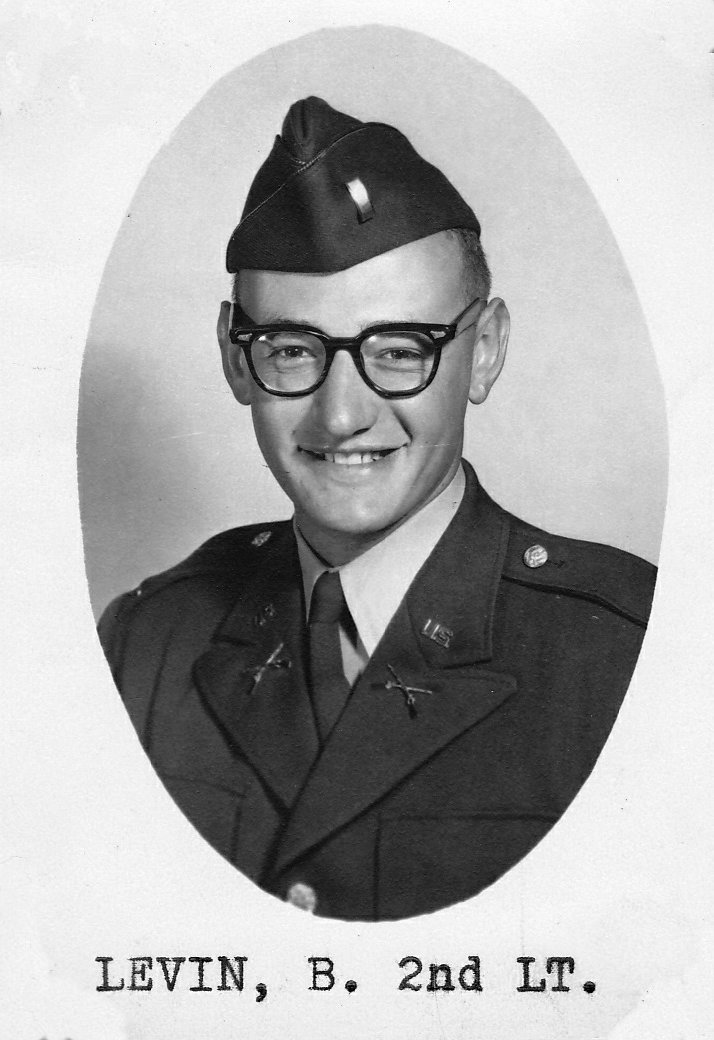
- Levin, Lt. Bennett S. (Muscatine, IA)
- Meeker, Avery L. (see fatalities)
- Morris, Ernest Wayne (jumped into the river with another guy
on his back)
- Morrison, Ralph
- Myers, Ralph E. (see fatalities)
- Opiela, Andrew L. (see fatalities) (see Readers' Comments)
- Partin, Lewis P. (see fatalities)
- Phillips, Fred
- Scarborough, 1LT John R. (passenger - see Awards section)
- Silveri, Arnold (survivor)
- Speegle, Sgt. (survived - He was a medic from the 43rd
Surgical Hospital going on R&R.)
- Spencer, PFC Carey W. Spencer (passenger - see Awards
section)
- Stone, Jack G. (see fatalities)
- Wallis, Jan M. (see fatalities)
- Warner, Paul B. (see fatalities)
- Witherell, Harry E. (see fatalities)
Fatalities
- Aguilar, Sp2 Francisco (20 years old, Corpus Christi, TX-brother of Rudi Aguilar, Corpus Christi, TX)
(Supply, 63F, 24th ID)
- Arold, Sp3 Eugene T. (21 years old, Staten Island, NY)
Born 1935. Believed to be the son of Francis and Anna
Arold. Eugene is buried in St. Mary Cemetery, Richmond
County, NY.
- Barstow, Army 2d Lt. Bruce E. (29 years old, 240 Obispo Ave., Long Beach, CA, member of Det. R, US
Military Advisory Group, Korea - son of Mr. and Mrs. Eldred M. Barstow of Long Beach.
Born June 5, 1927, he is buried in Ft. Rosecrans National
Cemetery, San Diego, CA.)
- Boiter, Major Ansel L. (crew-aircraft commander) (Born April
29, 1920, he was the father of Suzanne April Boiter who later
married John Partridge Howland Jr., Jennifer I. Boiter, and
Ansel L. Boiter Jr. He was the husband of Mary Boiter who
later married R. Marvin Carter of Greenville, SC.) (Major
Boiter was a World War II and Korean War veteran.)
- Boudreau, 1LT Frederick L. (Philadelphia, PA - 25 year old son of Mr. and Mrs. Fred J. Boudreau of
Philadelphia)
- Bowcock, Pfc. Stephen A. (18 years old, Nelson, British Columbia)
(Born April 8, 1938. Member of HQ Co., 19th Infantry
Regiment, 24th Infantry Division. He is buried in San
Francisco National Cemetery, San Francisco, CA.)
- Brown, Caldwell Jr. (Bay City, TX) (see Obituaries - this
page) (24ID)
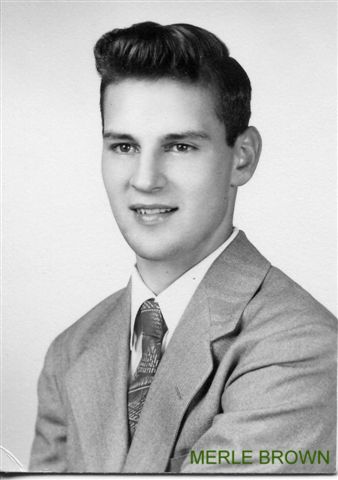
- Brown, Pfc. Merle J. (Army PFC, Blooming Prairie, MN - son of Justin and Grace Dawley Brown, born
September 22, 1936. Member of Company L, 19th Infantry Regiment, 24th Infantry Division. Buried in Rose
Creek Enterprise Cemetery, Mower County, MN.)
- Collaro-Gonzalez, Pfc. J.L. (San Juan, Puerto Rico)
- Glass, 2Lt. Edwin Harold (born 10/21/1932, 830 Cook St., Denver, CO - son of Charles and Molly Janet Ginsborg Glass, Denver, CO. Buried in Mt. Nebo Memorial Park, Arapahoe County, CO.)
- Hills, Pfc. George A. (29 years old, son of Mr. and Mrs.
Harold Hills, Raymond, NH) (C-52F, 24th Infantry Division)
- Junkroski, Gerald (Douglas, AZ - (born 15 June 1932; buried in Resurrection Catholic Cemetery, Cook
County, IL; parents Jacob & Agnes Junkroski; siblings Jacob "Jackie" - killed in North Africa in 1942
during World War II, Edward, Evelyn, Mary Ann, Elaine, Stanley, and Leonard.))
(HQ, 21st Infantry Regiment, 24th Infantry Division)
- Meeker, Sp3 Avery L. (age 20, Pryor, OK) (19th Infantry Regiment,
24th Infantry Division)
- Myers, Sgt. Ralph Edward (Lebanon, MO - husband of Mrs.
Betty J. Myers and son of Ralph Hatfield Myers. Born
September 22, 1933, he is buried in Springfield National
Cemetery, Springfield, MO.) (HQ, 21st Infantry Regiment, 24th
Infantry Division). See also: Newspaper Accounts, The
Beacon, March-April 1957.
- North, Capt. Robert L. (crew-pilot, North Hollywood, CA)
- Opiela, Capt. Andrew L. (buried in Holy Cross Cemetery, Cleveland, OH)
(see Readers' Comments - Michael Opiela.)
- Partin, SFC Lewis P. (Petersburg, VA) (Born 17 July 1920, Sergeant Partin served with the 21st
Infantry Regiment, 24th Infantry Division in Korea. His
widow was Arlasta Partin and his children were Ronald, age 11;
Johnnie, age 8; and Teresa, age 18 months. Sergeant Partin is buried in Wake Chapel Christian Church
Memorial Gardens, Middle Creek Township, Wake County, North Carolina.)
- Stone, 1Lt. Jack G. (24, Roseburg, Oregon, member of the
U.S. Military Advisory Group. He was the son of Mr. and
Mrs. Weldon W. Stone. His brother was Richard Stone.
He attended Roseburg schools and graduated from the University
of Oregon. He received an Army commission upon completing
ROTC training. He was called to active duty in May of 1955
and transferred overseas on October 10, 1956. He married Shirley
Brennen, daughter of Mr. and Mrs. Brennen on February 13, 1955.
They had one son, Bruce Alan Stone.)
- Wallis, Pfc. Jan Martin (20 years old, Sacramento, CA - son
of Dorothy Wallis. Brother of Ronald L. Wallis (USMC),
deceased.
Jan's mother, Dorothy Rothman Wallis Rodda, died September 21, 2012. Born
February 4, 1937, Jan is buried in San Francisco National
Cemetery, San Francisco, CA.) (HQ - 3rd Battalion, 19th
Regiment, 24th Infantry Division)
- Warner, 1LT Paul B. (Bellwood, PA - 28-year old son of Mr.
and Mrs. R.F. Warner and husband of Mrs. Carole Elaine Kellerman Warner,
who was the daughter of
Mr. and Mrs. J. Wilson Kellerman of Bellwood. Lieutenant
Warner was also the father of a young son named Scotty. Paul graduated
with a major in geography from Indiana State Teachers College in
January 1953.)
- White, AF MSgt. Joe Neal (crew member) (Schroon Lake, NY - husband of Mrs.
Jane E. Pitkin White, son of Mrs.
Emma Lee White, father of Deborah L. White Whitney who was born
August 8, 1948 in Merced, CA and died 7/31/2003 in White Plains,
NY. Born December 30, 1915, Joe is buried in
Alexandria National Cemetery, Virginia. He was a World War II
and
Korean War veteran. Joe's widow Jane died 11/01/1998.)
- Witherell, SFC Harry E. (East Lansing, MI) (Supply Co., 21st
Infantry Regiment, 24th Infantry Division) (Age 33, he was the
husband of Shirley F. Witherell of East Lansing. He was
also the father of sons James and John Witherell. Sergeant
Witherell is buried in Little Arlington, Evergreen Cemetery.)
Back to Page Contents
Survivors (incomplete as of 1/12/2017)
- Brown, Sfc. Vandy, Woodruff, SC
- Cain, Pvt. Harold L. (passenger)
- Cantrell, S/Sgt. Robert L. (crew) (received the Air Medal)
- Cartwright, Capt. James (crew) (received Distinguished Flying Cross)
- Clarke, Pfc. Warren J. (passenger)
- Crisman, Forrest E.
- Donaldson, Ben (passenger)
- Feil, Leon (passenger)
- Forrest, S/Sgt. Robert J. (crew) (received the Air Medal)
- Hile, S/Sgt. Allen P. (crew)
- Hocher, Donald L., Collinsville, IL
- Howard, Pfc. Alfred L. (passenger)
- Hutton, 1Lt. Harold S. (crew)
- James, Pfc. Elmus V. (passenger)
- Kawahara, Mark
- Levin, Bennett S. (see Eye Witness Testimonies)
- McKenzie, A/3c. Stephen A. (crew)
- Moon, Capt.
- Morris, Ernest Wayne
- Morrison, Ralph
- Phillips, Fred
- Reilly, A/1c. Charles P. (crew)
- Scarborough, 1Lt. John R. (passenger)
- Silveri, Arnold, Staten Island, NY
- Speegle, Sgt.
- Spencer, Pfc. Carey W. (passenger)
Back to Page Contents
Pilot/Co-pilot Information
- Total flying hours (including AF time, student time, and other accredited time)
- North (pilot) - 2384:25
- Hutton (co-pilot) - 437:00
- Cartwright (instr. pilot) - 7352:00
- Boiter (aircraft cmdr.) - 5733:00
- Total rated 1st pilot and instructor pilot hours, all aircraft
- North - 1853:25
- Hutton - 29:00
- Cartwright - 6626:00
- Boiter - 4120:00
- Total weather instrument hours
- North - 34:05
- Hutton - 23:00
- Cartwright - 1268:00
- Boiter - 429:00
- Total 1st pilot and instructor pilot hours this model (F-86, B-50, C-119, etc.)
- North - 33:45
- Hutton - 20:00
- Cartwright - 2846:00
- Boiter - 410:00
- Total other (command, a/c cmdr, co-pilot, radar control pilot) hours this model
- North - 34:25
- Hutton - 38:00
- Cartwright - 2987:00
- Boiter - 615:00
- Total 1st pilot and instructor pilot hours this model and series (F-84F, F-86D, etc.)
- North - 33:45
- Hutton - 20:00
- Cartwright - 805:00
- Boiter - 239:15
- Total other (command, a/c cmdr, co-pilot, radar control plt) hrs this model and series
- North - 34:25
- Hutton - 38:00
- Cartwright - 42:00
- Boiter - 292:20
- Total pilot hours last 90 days
- North - 61:30
- Hutton - 158:00
- Cartwright - 268:00
- Boiter - 66:00
- Total 1st pilot and instructor pilot hours last 90 days
- North - 31:50
- Hutton - 26:00
- Cartwright - 260:00
- Boiter - 66:00
- Total pilot hours (night) last 90 days
- North - 15:05
- Hutton - 55:00
- Cartwright - 94:00
- Boiter - 9:00
- Total pilot hours, weather and hood, last 90 days
- North - 10:25
- Hutton - 35:00
- Cartwright - 76:00
- Boiter - 15:50
- Date and duration of last previous flight this model
- North - 18 February 1957 - 6:00
- Hutton - 19 February 1957 - 8:15
- Cartwright - 21 February 1957 - 4:00
- Boiter - 16 February 1954 - 9:05
- Date and duration of last previous flight this model and series
- North - 18 February 1957 - 6:00
- Hutton - 19 February 1957 - 8:15
- Cartwright - 21 February 1957 - 4:00
- Boiter - 21 February 1951 - 9:05
Back to Page Contents
Eye-Witness Testimonies
Rev. Ronald C. Bauer (sent to the Korean War Educator):
"I came from St. Louis, Missouri originally, enlisting in the Army in January 1955, Fort Leonard Wood,
Missouri basic training, Ft. Lee, Virginia baking school honor graduate, Fort Sill, Oklahoma, Korea, then
Fort Hood, Texas. Following my discharge I attended the University of Missouri, Columbia, Missouri,
then finished college at the University of Oklahoma in Norman. I then attended Nashotah House,
Nashotah, Wisconsin, a seminary of the Episcopal Church. I briefly considered returning to the
military life, but my wife of the time would not agree to that move. I led churches in Oklahoma,
Kansas, Missouri, Minnesota, ending up retiring from St. Margaret of Scotland Church and School, San Juan
Capistrano, California, in 1998. In all I would have to say that the military and my experiences
there helped shape my character, maturity, and goals in life. It gave me a taste of moving I
probably would not choose by myself, making new friends and being responsible. I loved the
regularity of military life and the camaraderie."
--
"As best I can remember, it was a bitingly cold and colorless day in the winter of 1957-1958. My
memory is fuzzy on the exact month, however, I was walking towards the 121 Evacuation Hospital in ASCOM
City Korea early afternoon. An alarm began sounding and eventually helicopters began coming in, one
after the other, much like bees to a hive. At the emergency room I met Father Berry, the Roman
Catholic Chaplain, and his assistant, Owen (I cannot remember his last name). They told me that
there had been a C-124 Globemaster that had crashed in the Han River after taking off from Kimpo Air Base.
Chaos was evident everywhere, but, within the chaos, there was a determination and fervent
professionalism by all the medical personnel. Since we were between our resident Protestant
Chaplain, Father Berry asked me to see if I could get the regional chaplain. I did and his driver
drove him over in about 45 minutes. He seemed to be a bit unwell so I suggested he stay in the
chapel and pray. I then assisted Father Berry and his assistant Owen to discover the denominations
of the soldiers coming in on stretchers. All the injured were trembling violently from hyperthermia
and it took over an hour before most could settle down. I am sure that the terror of the plane crash
also contributed to their trembling. The crash obviously over taxed our facilities, but you would
hardly have known it. Everyone just dug in and worked at a frantic pace through the night until
about noon the next day, before things progressed from chaos to simply very busy. The emergency room
became a triage production line while the operating rooms and intensive care unit worked nonstop
attempting to operate on or stabilize the most severally injured. After several days, the most
severe injured, who needed further specialized care, were picked up and flown to hospitals in Japan.
The less severely injured continued their recuperation at our hospital. I'm unclear whether or not
they eventually continued on to Japan or returned to their units.
During the ensuing days my job was to help those who wished to write letters back home but needed help
doing so. I talked with those who needed to talk and prayed with those who desired prayer.
During this ordeal Father Berry incessantly kept telling me that I should become a priest. I
eventually did but in the Episcopal Church. In fact, this event was pivotal in prompting me to join
the Anglican Church in Korea and I took instructions under Father Matthew Imre, 8th Army Chaplain, and was
confirmed by Bishop Chadwell, the assistant Bishop in Korea. I also got to know Bishop John Daily,
who was the Lord Bishop of Korea, on a personal level that lasted for many years even after he retired
back to England.
We can all be proud for the actions of the medical personnel at the 121st Evacuation Hospital.
From the high ranking medical officers to the lowest medical aide, all worked together like a finely made
Swiss watch. Watching MASH years later brought me constantly back to my memories of this fateful
winter day in Korea, except we were not as crazy.
It was within a week that Father Berry, Owen and I drove out to the wreckage site and took pictures.
It was a mangled mess of a half submerged plane covered with snow and ice. A very bleak sight.
It is a wonder anyone survived. Those that did owed the pilot many thanks for their skill in
bringing the plane down as gently as they did. As terrifying as the event was, there was also
something majestic and noble about everyone who just did what they do best, heal the injured and in some
cases give the dying comfort, prayer and last rites.
Bravery comes in many forms and not simply on the battlefield. The pilots of the Globemaster, the
helicopter pilots, the doctors, nurses, hospital aides and the surviving soldiers all showed a bravery
that is a merit to the military service to which they belonged.
I was in Korea because I had volunteered for a friend. I began with the 130th Quartermaster
Bakery and gravitated to the next compound when the Chaplain's Assistant job became open. The plane
crash and the ensuing days was a seminal experience in my road to the Episcopal Priest Hood. You
could see the need of experienced medical personnel in such hectic situations, but you could also see the
need for spiritual comfort and presence. It was like an anchor for those with faith, and even those
who had no faith were often very accepting of our presence and ministrations. The character of the
chaplains and the medical personnel was just humbling."
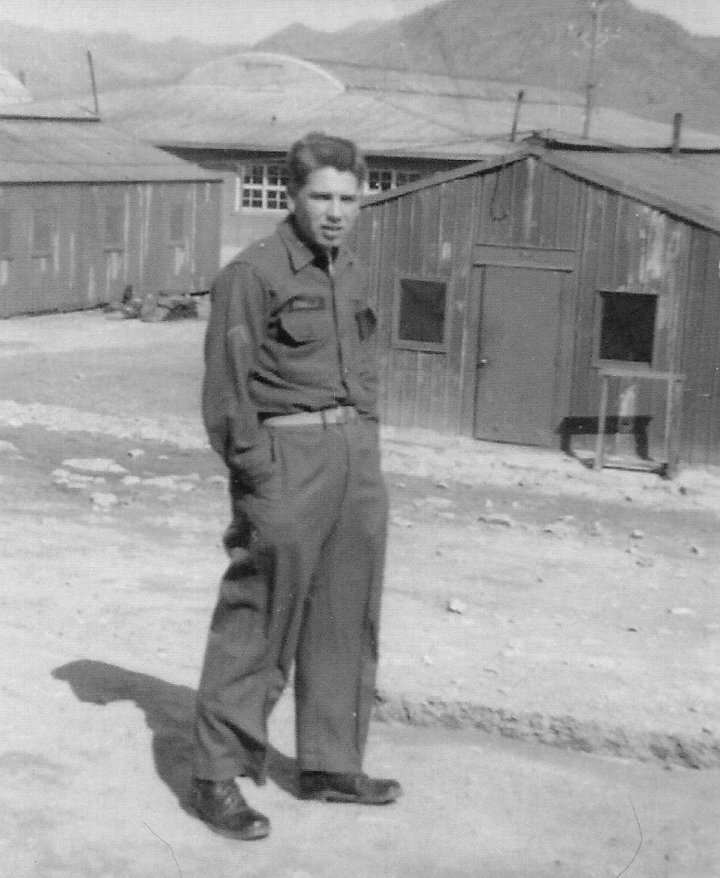
Fred Phillips
|
Fred Phillips 1957
(Click picture for a larger view)
|
"I was on the Globemaster that crashed in Korea in February 1957. One of my friends was a fatality.
His name was Gerald Junkroski, and he was from the Chicago area, I think. I just received some bad
bruises and the next day we were placed on another flight. I do not believe there was a manifest since we
were going on R&R. When we were boarding it was first come first served. I had missed two
flights. It was very horrible. I still dream about it. The pilots were outstanding in keeping
the craft level, however, it was destroyed.
The weather was very cold. Some places in the Han River were frozen over. As I mentioned, I had
missed two previous flights. For R&R, it was first come first served. That is probably the
reason there was not a manifest. When your outfit sent you on R&R, there was not an exact time to
return. For example, on one R&R I returned by ship to Inchon and had to hitch a ride back to the DMZ
where I was stationed. I was gone for 20 days. Since I did not have any serious injuries as a result of
the plane crash, I was issued more clothing at Ascom City and continued on to Japan. When I found your
posting, this was the first time that I had been able to obtain any info on the crash. I was seated on the
upper deck and that is probably the reason I did not receive any serious injuries. If the helicopters had
not arrived, we most likely would have frozen. I am going to look through some old things to see if I can
find any other information and will let you know.
Gerald Junkroski and I both were assigned to the 21st Infantry Regiment of the 24th Infantry Division.
We were both assigned to the communications platoon of Headquarters Company of the 21st Regiment. We
were assigned to the same Quonset hut and both held the rank of Private First Class (PFC). I think
he had been drafted. I had volunteered.
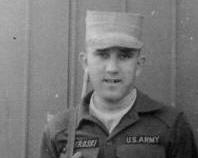
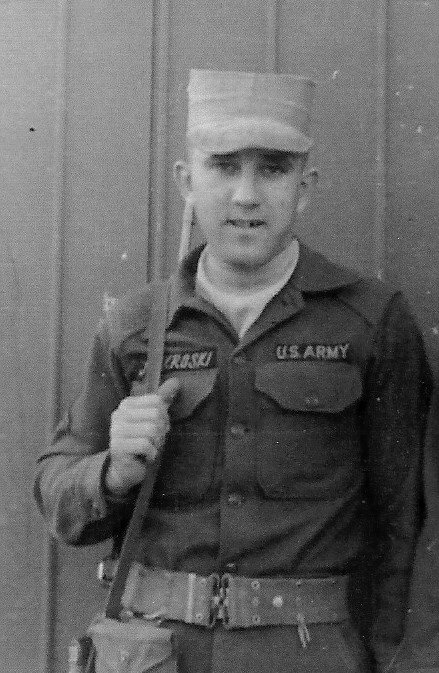
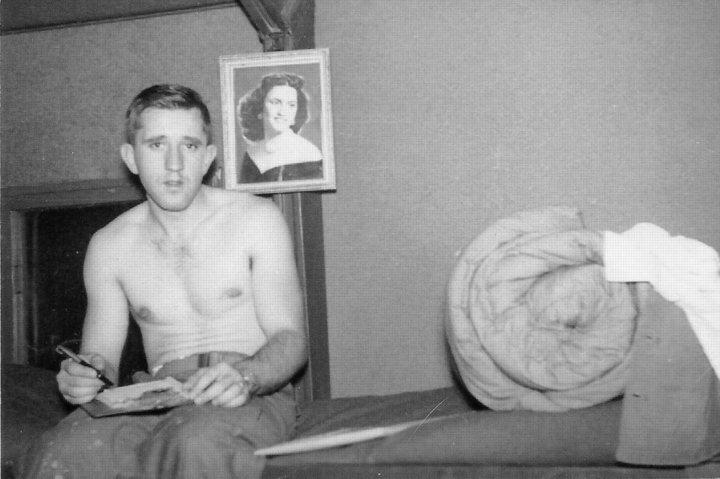
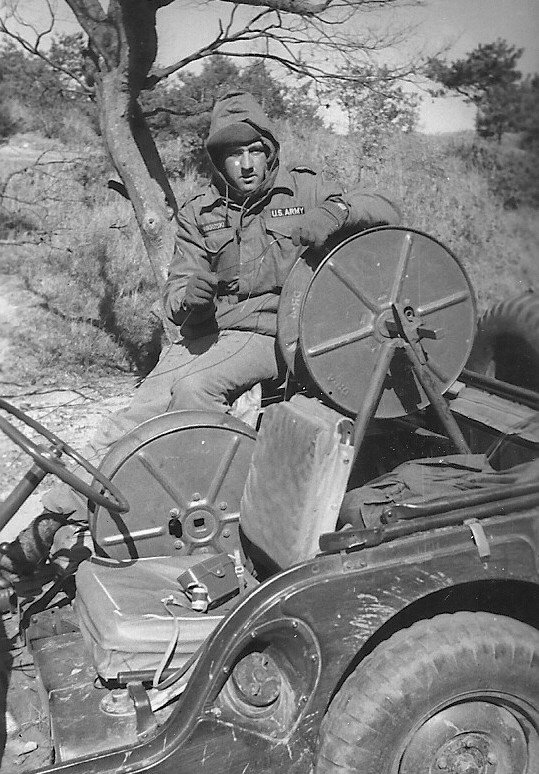
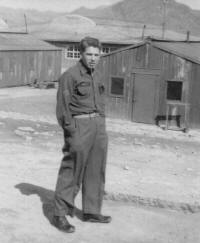
Gerald Junkroski 1957
(Click picture for a larger view) |
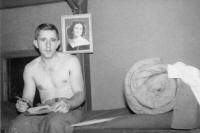
Gerald Junkroski 1957
(Click picture for a larger view) |
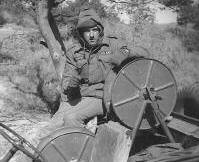
(Click picture for a larger view) |
He always kept an 8x10 photo of his wife close by, and talked daily of longing to be with her. He was a
very good man and friend. As I mentioned, I continued on to Japan for seven days and had initially thought
that Gerald had been injured. It was not until I returned to my unit in Korea that I found out that he had
been Killed.
I live in Jonesborough, Tennessee, and have retired after a 42-year law enforcement career."
|
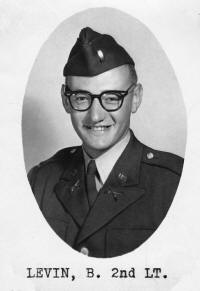
Bennet S. Levin
(Click picture for a larger view)
|
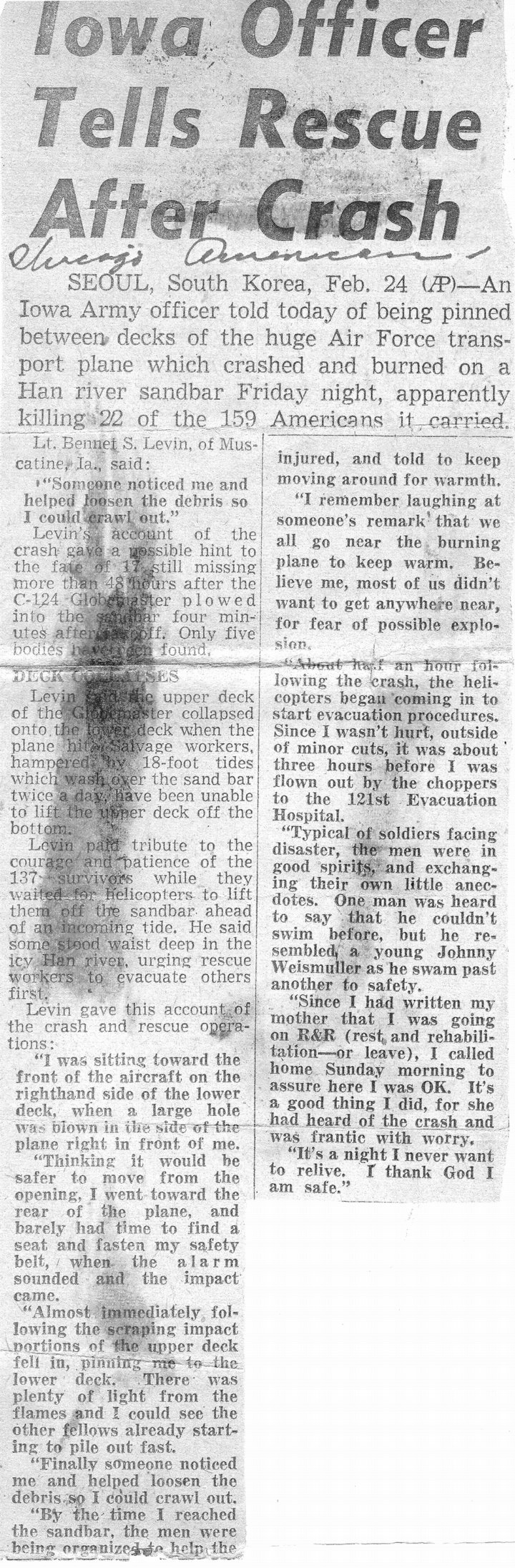
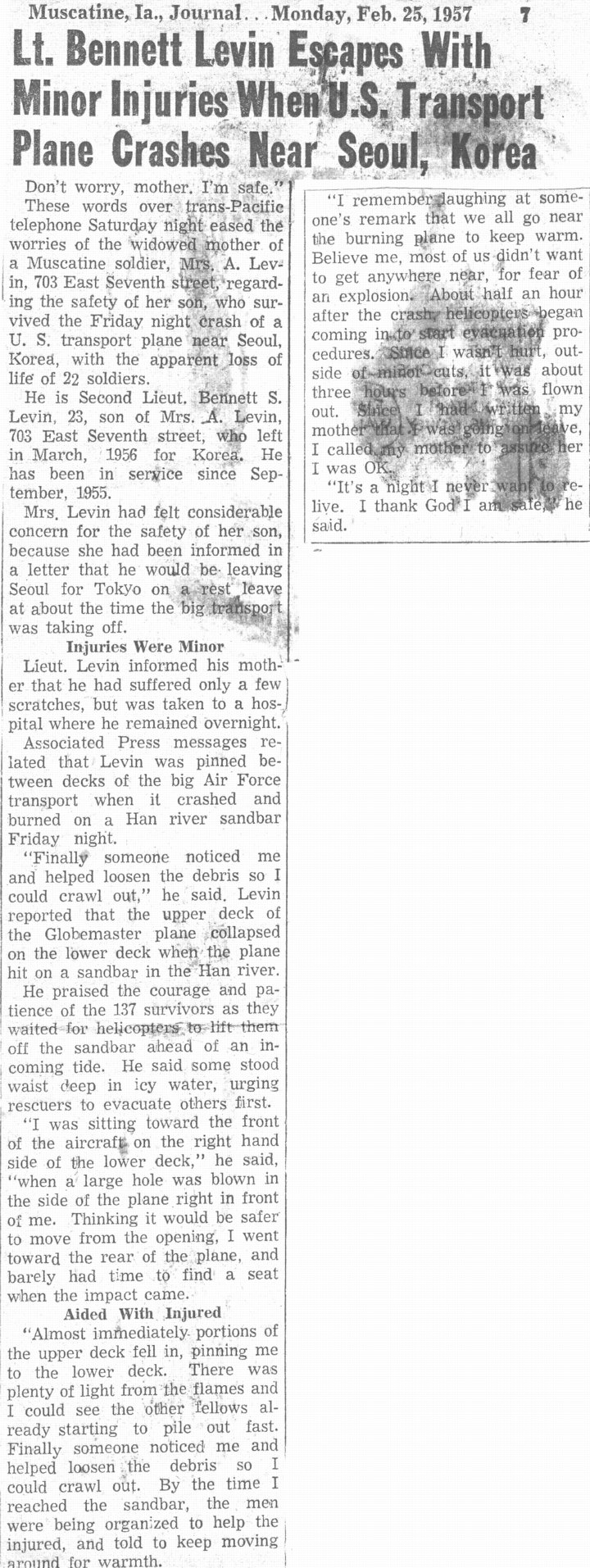
Bennet S. Levin (sent to the Korean War Educator by Ben Levin, California)
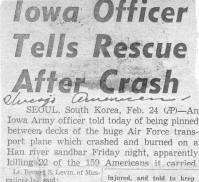
(Click picture for a larger view) |
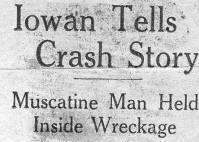
(Click picture for a larger view) |
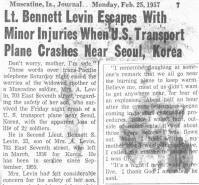
(Click picture for a larger view) |
Silveri, Arnold (crash survivor)
[KWE Note: The following excerpt was taken from Arnold Silveri's new book, Turning the Corner on Life.
It was copied with Mr. Silveri's permission. Order information for his book can be found in the
General Store (non-fiction books) of the KWE.]
"It was around 7:15 p.m. when we headed for the plane awaiting us. It's one thing to read about
the specifications of a C-124, but another thing to see one up close. The Globemaster is a
tremendously big airplane. The front clamshell loading doors are located in the nose, under the
cockpit, with hydraulic ramps that angled down at seventeen degrees. When carrying heavy equipment,
the second floor (upper deck) folded up against both sides of the plane. with the upper deck folded
down, it added a second floor, creating additional seats of metal and webbing that folded down from the
sides of the plane. The C-124s were affectionately called Old Shaky by the flight crews who manned
them. The big engines caused vibrations, shaking, rattling, and squeaking during the fight.
The "Shakemaster" was another nickname among others for the giant double-decker airplanes...."
"... As you might expect, we were all happy and excited, as the four engines revved up loudly before
taking off. After all, we were going on R&R to Japan, not on our way to an airborne drop behind
enemy lines. The engines roared loudly as we headed down the runway and took off.
Now that we were in the air, we were relieved of any anxiety we may have experienced prior to takeoff.
About five minutes into the flight, though, our happy mood and chatter was suddenly interrupted by a loud
'explosive noise.' The force of the explosion shook and rocked the plane. It was as though
someone had thrown a hand grenade or explosive into a steel garbage can and covered it up. When I
looked across to the other side of the plane, I couldn't believe my eyes, there was a big hole in the
side. The explosion made a hole big enough to blow out the two men who had been seated there.
Several men, who had been seated directly across from where the explosion occurred, stumbled by us while
trying to make their way to the rear of the plane. They were cut up, bleeding, and obviously
traumatized by what had taken place. I think the swiftness of the events that had taken place caused
everybody to be stunned into a fearful, traumatic silence.
However, a few seconds later, the soldier sitting on my left began to wail. It was a long,
drawn-out cry of grief and emotion. The way somebody would wail at a funeral. I didn't know
for sure, but I don't think he was screaming out of fear or pain from an injury. It was as though he
had suddenly realized what had occurred and perhaps foresaw his own impending doom. A few days
later, I would sadly be reminded of him when I saw his name on the casualty list. It appeared in one
of the articles in the Stars and Stripes.
In addition to the hole in the right side of the plane, the bucking and shaking only added to the
realization of the emergency at hand. In those few seconds, my life flashed through my mind.
"How is my mother going to take this news?" I asked myself as I engaged in a self-confession of things I
had done wrong in my life. I can't speak for anyone else, but I think everyone on that airplane had
an awful lot in common with the soldier sitting on my left.
As the pilot struggled for control of the airplane, I remember seeing an amber light flashing. I
found out later, of course, what had really happened to cause the explosion and subsequent crash from an
article that appeared in the Stars and Stripes. Captain James Cartwright, the pilot, said,
'We lost power on the number 3 engine early on. It caught fire and started throwing chunks of
metal (engine parts) through the fuselage. The parts hit the carburetor or throttle linkage on the
number 4 engine, and it started to lose power.'
Captain Cartwright continued,
'Pieces of metal were coming through the fuselage, cutting holes big enough for a man to walk
through. The metal cut the aileron cables. It all happened in about five minutes, but it was
obvious we couldn't turn around.'
The pilot concluded by saying, 'A light fire was burning in the number 3 engine, and I rang the alarm
bell and radioed in the situation.'
Even though I knew we were in big trouble and were going to crash soon, I had no way of knowing when it
would happen. One account of the crash came from a sergeant, who said that when the plane hit, he
felt like he was being rolled down a big tunnel end over end. Another survivor, amongst several
others, interviewed by the United Press said, 'The plane fell just like the whole world coming to
an end.'
For whatever reason, I just can't recall or remember the feeling--on impact--when the plane actually
crashed. I've replayed this DVR--over and over in my mind--but the crash part of it has been erased.
Another guy said, 'There was a loud crashing noise, a big jolt that caused the upper deck to break and
collapse on those seated below.' The upper deck that had collapsed was amidst the smoke and twisted
wreckage. The impact put a hole in the bottom of the plane near the tail. A part of the right
wing was damaged.
Eyewitnesses said the plane was on fire before it crashed. An air force spokesman said the plane
burst into flames when it crashed.
In our attempt to escape, everybody ran toward the rear because the front of the plane was burning.
In the rush to get out, I was knocked down by someone from behind. Someone screamed. 'You
can't get out back there up here..." I got up and headed in the direction of the guy who was
yelling. When the upper deck collapsed on impact, it formed an angle that served as an exit ramp
(like an escalator). I made my way up the makeshift ramp that led me to an open door. When I
looked out the door, in the dark of night, I saw what looked like snow and ice on the ground below.
It was a pretty high jump, but this was no time to procrastinate. I was not about to linger there
and wait for the whole plane to blow up in flames. The fear of having the plane blow up while being
trapped inside had clearly motivated everyone to get the hell out of there--ASAP. I didn't realize
it then, but the plane was filled with fuel. First of all, the pilot had no time to even think about
dumping the fuel.
Moreover, according to a former air force mechanic, even if the pilot wanted to dump the fuel, there
was no method devised to dump the fuel from the C-124. Almost all of us were lucky enough to survive
the initial explosion causing the hole in the side, the damage to the engines, and other damages.
Most of us were also lucky enough to survive the actual crash or any other possible explosion that might
cause the whole thing to blow up. But how many of us would be lucky enough to survive the last but
most chilling part of this whole ordeal.
So without further hesitation, I reared back and jumped. I expected to land in the snow and ice
below the plane. Instead, however, I had submerged into the icy waters of the Han River. When
I emerged from the river, the water on me immediately froze, from my head to my toes. I could hear
faint cries and moans but was unable to see anyone in the dark or even determine where the sounds were
coming from.
The dim light emitted from the rear portion of the burning, smoldering plane enabled me to see a group
of men huddled in shallow water a reasonably safe distance from the back of the plane. I swam a
short distance, then pushed my way through the floating ice and water I made my way toward the
group, who were double-timing in place to try to keep from freezing. A couple of older sergeants,
who were holding flashlights, had organized us into a group, took a head count, and told us to stay right
where we were. "The shoreline is deceiving. It's farther away than it appears to be," said one
of the sergeants.
It was revealed later that the river was a mile wide where the plane hit. You have to give those
old-time sergeants credit for taking charge. We continued double-timing in place in the shallow part
of the river. We were on a sandbar (near the DMZ) on the northwest bank of the Han River. The
estuary (or inlet) of the Han River meets the Imjin River. Parts of the Imjin and Han lie over the
Thirty-eighth Parallel. I didn't know it then but found out later why the water kept rising as the
night wore on. The Yellow Sea flows into the estuary of the Han River. More importantly,
though, the Yellow Sea has an incoming nineteen-foot tide (the second highest in the world). Two of
the guys, suffering from burns and other injuries, were lying on inflatable rubber rafts. When they
asked for field jackets to cover up the two guys, I laid mine over one of the injured guys.
After spotting the flares shot off by one of the sergeants and the searchlights being poked in the sky,
the first helicopters arrived in about forty-five minutes. But some some unknown reason, they
disappeared for a short time. They reappeared, of course, and began evacuating the most seriously
injured (two men on the raft) first. With an air force plane circling overhead to coordinate the
helicopter operations by radio, the choppers skimmed the swirling waters to get the casualties aboard.
Captain Joseph Reindhart, commander of an H-19 helicopter of the Thirteenth Transportation Company, said,
"The river was chock full of ice." The Han River, known as the Highway of Ice, was probably closed
to all boat traffic. Captain Reindhart also said, "Every landing was a completely new experience."
For a period of ti8me, they were transporting the evacuees directly to the 121st Evacuation Hospital in
Inchon. However, the round-trip from the now rapidly disappearing sandbar to Inchon took forty-five
minutes. When they realized they were fighting time and the nineteen-foot-high rising tide, they
began dropping them off on the nearby riverbank. The medics then transported the evacuees by
ambulance to the 121st Evacuation Hospital. The caption in one Stars and Stripes article said
it best: "Tiny Copters Battled Time, Tide in Evacuation at C-124 Han Site."
By 10:30 p.m., the choppers had to hover in the air while the survivors scrambled up rope ladders to
safety. I didn't feel any immediate pain when I jumped from the plane into the water. However,
I can't determine whether it was the impact of the crash, or the jump into the river. But in any
event, the back pain started at the beginning of the double-timing. Between the decreasing nighttime
temperature, the rising icy water, and the increasing back pain, it was becoming increasingly difficult
for me to double-time. It got worse as the night wore on.
At some point, perhaps during the last hour or so, I was literally unable to continue to move around.
It was like a vicious circle. The increase of my back pain prevented me from double-timing which
caused me to lose body heat even faster. By becoming increasingly colder, faster, and my back pain
increasing in severity, it prevented me from functioning.
Obviously, by now, I was numb and totally helpless. There were very few guys left in the water to
be rescued after nearly four hours. When one of the air rescue personnel shined his flashlight in my
face, I don't know if my face had any color left to it. Whatever the color of my face was, he
clearly recognized the appearance and symptoms of hypothermia. One of them said, "We have to get him
out of here, now." I had been out there too long. They tied a tag on my shirt button and
walked me to the helicopter hovering above the water. While I was struggling to climb up the rope
ladder, somebody from behind shoved me into the helicopter. Thus ended the four coldest--and most
traumatic--hours I have ever experienced in my life. By twelve thirty, the crash site had been
abandoned by all. Except for a small portion of the airplane's tail, the nineteen-foot-high tide had
engulfed the plane.
In addition to the helicopter pilot and radio operator, there were two other evacuees in the
helicopter. The pilot went straight up, leaving my stomach on the ground, before turning and heading
on a downward angle toward the shoreline. The medics of the Forty-ninth, Fiftieth, and Fifty-fourth
Detachments and the Thirty-ninth Air Rescue Squadron did a great job of rescuing and evacuating us under
very difficult conditions. At times, the rising tide flowed over the floorboards of the helicopters,
increasing the danger of the operations. The awaiting medics gave us blankets and helped us get into
the truck.
When we arrived at the 121st Evacuation Hospital, we took off our ice-caked uniforms. One medic
slowly removed my boots and cut my socks off. We were given hot tea and hospital pajamas and a
blanket. When the medic saw how white and pale my feet were, he clearly knew just how cold they
were, even before touching them. With that in mind, the medic asked, "Do you have any feeling in
your feet?" "No, they feel numb and heavy, like bricks," I answered. I know that sounds
contradictory, like some kind of oxymoron. After all, how could my feet have no feeling, yet feel
numb and heavy like bricks at the same time. In any event, the medic began massaging my feet.
In between, he'd pinch me and ask me if I felt it. When I answered no, he continued his massaging.
After quite some time my circulation and body heat were slowly beginning to return. Finally, when he
pinched me again, I felt it, but just barely. I experienced a slight burning sensation and pain.
Yet according to current methods of treatment at the Mayo Clinic, the person's head should also be
covered. Warm compresses should be applied to the neck, chest wall, and groin, but not the arms and
legs. Warm fluids could be administered intravenously. Furthermore, there should be no massage
of any kind administered in such cases because it could cause further damage. But that was then, in
1957--fifty-five years ago--and this is now, in 2012.
Surprisingly, the 121 Evacuation Hospital was not equipped with enough beds and prepared for such a
large influx of patients. but the hospital's function was not so much as to house a large amount of
patients on a continuing basis. So they broke out the cots for us to sleep on that night. It
was, after all, an evacuation hospital. If you didn't require any hospitalization, you were quickly
discharged. If you were injured or sick enough, they hospitalized you. If you were seriously
injured or too ill, they transferred you to the Tokyo Army Hospital in Japan. While two of Captain
Cartwright's crew remained in the Kimpo Air Base Dispensary, Captain Cartwright and four of his injured
flight crew, of the 374th Troop Carrier Wing, were transferred to Tachikawa AFB Hospital in Japan.
In a later interview, Captain James Cartwright said, "The first impact wasn't so bad, but the second
was a lulu. The next thing I knew I was in the water outside the plane. I crawled on an ice
floe, and I like to froze. That's the coldest place I ever was."
We provided the hospital personnel with our name, rank, serial number, lunit, mother's name and
address, etc. Later, I was questioned by a medical officer about any pain, injuries.... I told
him my back felt a little sore. But I didn't make a big deal about it. They never took any
x-rays of my spine or offered any psychological counseling. The admitting diagnosis, I found out
years later, was (8740) exhaustion from overexposure to cold.
In retrospect, I suppose they could have kept me for another day or so. But that's the army for
you. It reminded me of the old army song: "You're in the army now, you're not behind the plow,
you're digging a ditch, ya son of a bitch, you're in the army now." Just so there is no
misunderstanding, the great Irving Berlin, who wrote this song and so many other great songs, did not
include our fourth line: "ya son of a bitch" in his great song. In the interim, we were visited by
Lieutenant General Palmer, the AFFEC deputy commander in Korea. He came around and asked us how we
were doing and if we needed anything. Two hundred men had volunteered to give blood when they heard
about the crash.
The next morning, many of us were discharged and would be heading back to our units. By Monday,
three days later, thirty men remained hospitalized (two in serious condition). Later that morning,
we were escorted to an empty Quonset hut to examine articles that were salvaged from the wreckage.
While sifting through the clothes and other personal items, I spotted my name tag on one of the field
jackets in the pile. The only reason I would have wanted to reclaim the jacket was because it was
fitted. I was horrified, however, when I opened the field jacket. The whole inside of the
jacket was stained with blood. I felt terrible and threw it back into the pile, in disgust. I
had no way of knowing, though, whether the person I had covered with my jacket was one of the twenty-two
men missing or killed. In order to aid in an upcoming investigation, we had to fill out a long
questionnaire about the flight and events leading up to the subsequent crash. After completing the
questionnaire, I headed back to the group. We were awaiting further orders to return to our
units...."
Sgt. Speegle (as told to Andrew N. Nelson)
[KWE Note: The following article is entitled, "The Han River
Crash". It was found on pages 12, 13 and 22 of Volume 105, No.
50, The Youth's Instructor, December 10, 1957, and is
reprinted on the Korean War Educator with the written permission of
the General Conference of the Seventhday Adventists, Silver Spring,
Maryland. The first name of Sgt. Speegle has not yet been
determined because it was located on the center fold in the magazine
and thus hidden from view in a PDF.]
"R and R. Rest and Recuperation. These magic
words mean a lot to GI's in Korea, especially in bleak winter.
So it was with a great sense of satisfaction and relaxation that
I got away from my work at the forty-third Surgical Hospital and
settled down in the huge Globemaster for a quick flight to
sunnier scenes in Japan.
The two hundred-passenger mammoth of the sky lanes had just
disgorged a load of returning GI's at Kimpo Air Base and gassed
up, and we had scrambled on and filled almost every available
space on both decks. Our plane was a C-124 troop carrier
from Tachikawa, Japan, which had been shuttling back and forth
carrying thousands of GI's without incident.
I found a seat near the front of the seventy-three-foot cabin
on the left side. I was just one man in a long row.
Along the opposite side was another long row and between these,
down the center of the plane, were two more, with men sitting
back to back. On the deck above were four more rows of
GI's--146 of us in all, besides the crew of 10.
We were soon taxiing out to the runway. After taking
aim, the sixty-ton giant stirred, began moving, gathered
momentum, and shot down the concrete strip to leap into the air
and head for Japan, just three hours and twenty minutes away.
Though a medic, I naturally felt no need of carrying
first-aid equipment on such a shot hop. Furthermore, the
plane carried a good supply if it were ever needed.
But that short hop was shorter than anyone had anticipated.
It was over in approximately four minutes.
At 7:50 p.m., Japan time, we were lifted off the runway into
a cold moonless and starless February night. Trouble
struck immediately. The propeller of the new inner
starboard motor spun off and fantastically made a complete
circle of the plane to crash into the pilot's compartment,
killing the flight engineer. The resulting terrific
revving up of that uncontrolled engine caused it to explode,
sending bullet-like pieces flying in all directions.
Just across from me there was a deafening crash. A
six-foot hole was torn in the wall of the plane by a flying
cylinder head. Two men, safety belts and all, were sucked
out into the night to plummet parachuteless to the dark ground
three hundred feet below! Any of us might have been those
two men had we chosen to sit there. Near-panic followed as
more flying engine parts tore into the fuselage, breaking pipes
and shooting hydraulic fluid all over the cabin. Men near
that gaping hole quickly unbuckled their belts and dashed
pell-mell toward the rear of the plane.
Fire broke out at once in the damaged wing. Then the
outer engine was struck by flying parts from the first engine.
It gasped and stopped. This left an impossible situation:
a huge Globemaster flying on only two engines, both being on the
same side.
We were not far from the rugged 38th parallel, and the pilot,
Capt. James A. Cartwright, faced a very rough terrain as he
skillfully struggled to bring his human cargo down in a darkness
illuminated only by our landing lights and the trailing torch of
the burning engine. A high mountain was dangerously near
and the treacherous, frozen Han River lay below.
We were now rapidly losing altitude, but we thought we were
returning to Kimpo until over the P.A. system we heard a call
for help. Then came the announcement that we were
ditching. We were told we would hit the river at the last
of six buzzes. I quickly pulled the hood of my light parka
over my head and offered a quick prayer as I faced away from the
momentarily expected impact.
Buzz one. Buzz two. Buzz three. Then came
the crash. The other three buzzes never sounded.
With the first impact, two of the second-floor sections at
the rear fell, pinning down many of the beltless men who had
fled there when the cylinder head crashed through the fusilage.
Above me some men were dangling on their belts, the floor having
fallen out from under them.
The second jolt was terrific, mercilessly throwing around the
rest of the unbelted men and giving all of us a bone-jarring and
teeth-rattling shake-up. This was followed by a short
slide and a sudden stop. Captain Cartwright had succeeded
in finding a comparatively soft spot to land.
There was a mad, fighting scramble to get out of the burning
plane. The danger of an explosion that would engulf jus in
flame was imminent. Nearly all of the eleven exits were
jammed by broken plane parts, baggage, life rafts, etcetera, so
all the men started climbing toward the roof exit.
I was impressed to remain behind alone. But I soon
realized that, with the plane on fire, I too had to get out.
Just then, I was further impressed to pull aside the curtain in
the rear of the plane. There, to my surprise, I found the
floor exit wide open.
I jumped. My feet struck mushy ice and I broke through
to the river bottom three or four feet below. Fortunately
I had no broken bones and was soon making my icy way, along with
others, to a sand bar four hundred yards distant. How we
found it and got there through the broken ice was a miracle.
When we did get there, it was only two or three inches above the
river.
It was low tide. This was very fortunate. But
soon the high tide would be running, and in this area it
sometimes reached a height of nineteen feet.
I was one of the two medics aboard. Neither of us had
any supplies on us and nothing was saved from the plane.
But we did what we could. The men who had fought their way
up and out through the top exit discovered they had to jump down
fifteen feet to the wing and then get off. Many were
injured. Some were knocked unconscious as they struck the
wing and fell into the water, where they drowned unnoticed in
the darkness.
The night was bitterly cold, about 10 degrees below freezing.
The right wing burned fiercely, but its heat warmed no one
except the dead. The fire did help, however, in guiding in
the air ambulances, which had been called just before the crash.
While waiting we checked the survivors, gave what first aid
we could, and decided on the evacuation order. Some of
those huddled on the rapidly disappearing sandbar were safe and
sound. Others were suffering from shock. Some were
badly burned from the fire, and others had broken bones.
After fifty minutes the first helicopter arrived, cautiously
feeling its way down with lights blazing. It stopped in
midair, hovering a few feet over the huddled crowd. On it
we sent out four or five litter cases. After it flew away
to the 121st Evacuation Hospital at Ascom City, all was dark
again.
There was not even a flashlight in the group. Only the
plane blazing out in the river enabled us to discern the shadowy
frozen figures who had set out on a happy R and R tour to Japan.
It was cold. Our clothes, even our shoes, froze on us.
Soon all helicopters in the area were ordered to the scene, and
these aerial ambulances did a heroic rescue job. The high
tide was now rolling in from the sea and the sand bar was
rapidly falling beneath our feet, leaving us all standing
knee-deep or more in ice water.
It became apparent we could not all be flown out in time, and
it was decided, after first taking the most seriously injured to
the hospital, that the helicopters should just ferry us over to
the riverbank three or four hundred yards away. It was a
strange scene--a flock of spinning windmills picking us up one
by one or five by five or nine by nine, according to the sizes
of the various machines, and depositing us on the shore.
One man, in his excitement to get away from the engulfing
tide, hung onto a wheel as the helicopter took off. We saw
him hanging there and wondered. His benumbed hands soon
gave up the struggle and he fell into the river, but we
were able to rescue him. The last man ferried out had been
standing in water up to his neck.
It was then 11:00 p.m. and bitterly cold, but most of the men
were calm. Soon Korean farmers came from all directions.
They built fires, cut off frozen shoes, and rubbed icy feet back
to life. One Korean farmer used up all his winter fuel
supply of wood and straw trying to keep us warm. Korean
police and ROK Army ambulances also arrived and stood by.
One by one we carried the non-ambulatory victims on
stretchers to the ambulances or tied them to helicopters for
their aerial ride to Army hospitals. The other medic had
been evacuated by then, so I was the only one left.
At 1:45 a.m. we were still working, sending off the remaining
few, most of whom were able to walk. The wind had now
risen and the weather was frigid.
At 1:55 all the survivors had been sent on. My midnight
medic assignment over, I stood alone by the river.
All was quiet now. The muffled noises were silent.
Away out on the half-frozen river lay the dying embers of our
aerial chariot, its last flight over. One hundred and
thirty-four of us, including Captain Cartwright, were still
alive. But the other twenty-two lay silent around the
funeral pyre, or were strewn where they fell along the cold
countryside, or were being washed down the river under the ice.
I was thankful that so many were safely off to warm
hospitals. Never before had so many survived a Globemaster
crash. I was thankful, too, for the spectacular answer to
my own brief prayer and happy to have been of some help as a
lone medic at midnight on the frozen Han River. As I stood
there looking out over a scene strewn with broken and jagged
six- and seven-foot ice chunks, I realized that it was only by a
miracle that so many of my R and R companions and I had been
saved. A premature explosion of that plane, and death
would have claimed all of us.
At last General Gants, who had been surveying the wreck with
six or eight air and medical officers, approached and asked me
if all the living had been evacuated. Assured that nothing
more could be done, he invited me to leave with them.
As the helicopter rose into the air, silence again settled
down upon the river and nothing remained of the tragic scene but
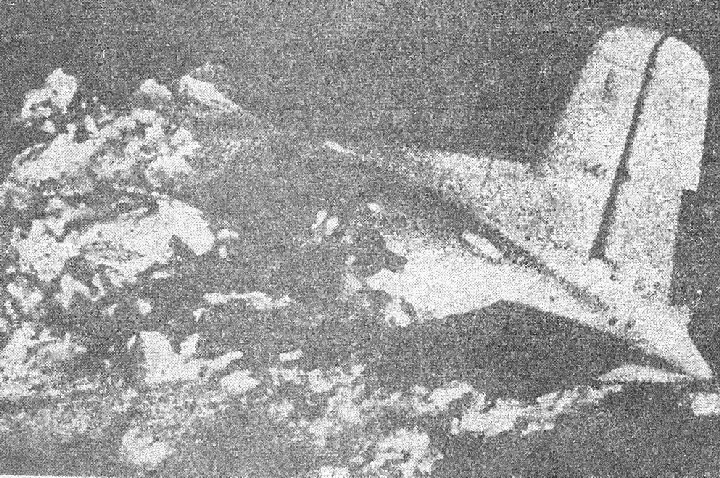
the forty-eight-foot tail of the $1,700,000 plane.
We stopped and alighted a short distance away, where the
ambulances were still parked and waiting. At the
insistence of the ambulance corpsmen I was carried from the
helicopter to the ambulance fifty yards away, even though I had
spent much of the night carrying stretchers myself! They
said they didn't want to take any chances with me, the last
survivor.
It was two days before I could get through on the
trans-Pacific telephone to my wife and parents in Stockton,
California, who all the time had known I was on that very plane.
I went on to Japan on the next Globemaster, to continue my R
and R. We got there safely, but on the return journey,
just eight minutes after we left Tachikawa on the sister ship of
the one that crashed, the same inner starboard engine also blew
up. As before, it quickly caught fire, and we thought we
were in for another crash, and this time with no soft river to
land in.
Another Han River crash victim was aboard. He went
berserk, and the crew had to strap him to his seat. But
the propeller did not spin off and the fire extinguishers
quickly put out the fire.
Our pilot made a quick turn and was soon heading downward
toward those precious Tachikawa runways. There was no time
for the usual slow approach, and we landed at a terrific speed.
As we whizzed along that concrete strip we saw an escort of fire
equipment and ambulances racing along beside us.
We reached the end of the runway far too soon, and as the
plane made the inevitable turn, the landing gear on one side
gave way and the plane went over on the side. There was no
fire, and we soon unbuckled our safety belts and walked out of
the tipped-over plane to safety.
I am still in Japan. The authorities have given me the
privilege of returning by ship."
Roland's Letter
[KWE Note: The following eye-witness account of the C-124
Globemaster crash in the Han River was submitted to the KWE by
Forest Clough. The author of the letter was a survivor of the
crash whose first name was Roland. His last name has not yet
been identified, but it is believed by Forest that Roland was a
member of the Bell Family. Roland wrote the letter to his mom
and dad on March 20, 1957.]
Dear Mom and Dad,
I sure am glad to get the letters. They are better than
medicine 'coz they build the morale as well as the body.
Glad you are ok too, Dad. I got the cartweel [sic] and
have it in my pocket. Thanks a lot.
Seems as though Jim has exaggerated a little, Mom. You
said in a letter that you were sorry to hear that I lost a
finger. Well, I still have ten. I just had
the 3rd finger of my right hand cut. I cut it to the bone
and also the nerve. I have no feeling from the big knuckle
forward. Looks normal and I can still use it. All of
the injuries I received are as follows: I burned the back of my
left hand from gas on the water (burning gas), and cut my right
hand. If you draw a straight line from the tip of the
first finger to a point one inch behind the union of the little
finger to the hand, you can see how the cut on my right hand
was. Only the longest finger (3rd finger) was cut real
deep. I burned the tips of all fingers (both hands) and
the palm of my left hand and got the cut at the same time.
I attempted to lift a portion of the fuselage up to free a
lieutenant that was pinned from the stomach down so he could
leave the burning wreck. I was still in the plane then and
she was mighty hot. I am sorry to say that I failed to
free the man and as far as I know he either burned or drowned or
both. About one minute after I left the plane, the tanks
in both wings blew. There were 2340 gallons of aviation
fuel in them. Big Bang! Here's the story:
We boarded the C-124 at approx. 7:45 PM Thur, 22 Feb 57 at
K-14 (Kimpo), Korea. This was an R and R flight to Tokyo,
Japan. The pilot made all of the preliminary checks,
revving the engines, taxing, etc. Everything was normal.
Then we took off. The C-124 is a huge plane and is double
decked on the inside. There are 4 rows of seats on each
deck running parallel to the sides. 2 rows, back to back,
in the center and one row on each side.
I was sitting on the top deck, right side, center aisle, 3rd
seat back. Sgt. Meyers was on my left and Pfc. Junkrowski
on my right. We weren't up over 2 minutes when the plane
was jarred as if we clipped the top of some large trees.
Then there was a very cold draft. We started losing
altitude fast. (I guess.) I knew we were too high to
hit trees and when you dip suddenly your stomach jumps up into
your mouth. Mine jumped up and stayed in my mouth. I
tightened my seat belt and relaxed as much as I could.
Seemed like we were going to make it when the warning bell rang.
The pilot told us before we took off that 6 short rings meant
ditching. The bell rang 3 times and then we hit before he
could ring the other 3 times. Upon impact it seemed to me
that I was thrown forward and way under water. I didn't
think I was going to make the surface. When I did I was on
my hands and knees in the fuselage in about 2 feet of water.
Somebody came running past me completely on fire. There
was fire to the front of the plane, to the rear, and the
fuselage was collapsed on the left side and there was fire
there. Fire on 3 sides and fuselage on the right with fire
on the other side of it. There was enough fire to heat the
water. It was warm. I got my face and ears scorched
a little. I knew I was having trouble breathing but I
didn't know why then. I had my doubts about getting out,
too. Then I heard the Lt. call for help. I tried to
help him but couldn't. About then the fire to the front
died down momentarily and I could see it was only about 2 feet
thick, so I went through it and out into the Han River. I
couldn't swim because of my clothes and boots and the cold
water. So I attempted to float with the current. I
drifted about 20 yards when I came to an ice floe about 6 feet
in diameter. I climbed on it and stood facing the fire and
expected to wake up any minute. I thought it was a dream.
After awhile I managed to swim, wade and drift to the main
sandbar where the rest of the survivors were. By then my
ribs hurt so bad I couldn't stand up straight. About 1
hour later, during which time my clothes froze, I was taken to a
hospital in a helicopter. It was one of these jobs where
they tie you in a rack on the outside. I was colder than
cold. I wound up with 2 burnt hands and one cut as
previously mentioned, 2 broken ribs, one pulled tendon of the
right ankle and misc. small cuts and bruises.
A couple of days later investigation teams came around asking
questions to get an idea what happened. I then learned
what happened. We were in flight about 4 minutes.
Our estimated speed when we hit was 125 mph and from first
contact with the sandbar until we stopped was only 75 yards.
How about that? Imagine the momentum of the people and
loose things in the plane. That was a sandbar of solid
ice! Not one time did I see anything but plane, ice, and
water. The river was 1 mile wide here, they say.
The #3 engine is the inside engine on the right side and #4
is outboard right side. The propellers are 4 bladed, 16
feet in diameter, and turning 2400 rpm. The cause of the
crash was because the propeller came off of the #3 engine and
cut through the fuselage. It cut from a point about 8 feet
up from the lower floor to the floor and all the way across the
bill or floor. This cut the controls to the number 4
engine and also the controls to the ailerons and the tail assy.
All the controls to the #1 and #2 engines and the rudder.
When the controls to an engine are cut, it immediately goes to
idle. That pilot sat that C-124 down with only the 2
engines on the left side and the rudders. 137 of the 159
onboard survived. That's damn good! Only 22 dead.
The worst of it all is the fact that both Junkrowski and Myers
died, 2 of my best buddies. That prop when it came through
the plane must have gone under where I was sitting. When
the plane finally came to a halt, the nose had broken off when
the prop came through and folded back under the belly. The
tail section was on the sandbar and the nose was in the main
channel of the river. God was taking care of me this time.
I wasn't seriously hurt, but I was scared. I haven't ever
been quite so cold, either. So no sweat and don't worry.
It's all over now. Just between you and I -- I wish I'd of
had a parachute. Next time I fly, I will have one on or I
won't fly! Gotta write Jackie now, so be good and have
fun.
- Love, Roland
Back to Page Contents
Letter of Commendation from Major General Waldon
[KWE Note: The following letter of commendation was printed on pages 2 and 40 of the United States Army
Aviation Digest, Volume 3, May 1957 (Number 5).]
Headquarters - United States Army Forces Far East
& Eight U.S. Army (Rear)
Office of the Commanding General
APO 343, San Francisco, California
5 Apr 1957
Dear General Hutton:
Enclosed for your information is a copy of a letter from Major General R.L. Waldon,
Commander, 315th Air Division, United States Air Force, as endorsed by General Laurence S. Kuter, Commander,
Far East Air Force.... We in this command feel justly proud of the conduct of our officers and men in
meeting a hazardous and tragic emergency with valor and expediency. - Sincerely, I.D. White, General, United
States Army Commanding.
Headquarters
315th Air Division (Combat Cargo)
United States Air Force Office of the Commander
APO 323, San Francisco, California
7 Mar 1957
Subject: Exceptional Service
Thru: Commander, Far East Air Forces (Advance), APO 925
To: Commanding General, United States Army Forces, Far East and 8th United States Army (Forward) APO 301
1. On 22 February 1957 a C-124 aircraft of this command was forced to land in the Han
River near Seoul, Korea. There were 10 crew members and 149 passengers aboard.... There were 137
survivors.
2. Certain members of your command gave exceptional service in the rescue of survivors.
I refer to the pilots and other crew members of Army helicopters who evacuated the survivors to nearby
hospitals...a few minutes after the aircraft accident occurred 26 Army H-13 and H-19 helicopters arrived
at the scene of the accident. These helicopters, with the assistance of one Air Force helicopter,
evacuated all survivors.
3. This evacuation was accomplished during the hours of darkness. The helicopters
involved flew a total of 81 1/2 hours.... Since there were 27 helicopters participating in the rescue
operation, the resultant air traffic saturation created an extremely hazardous condition. The
selfless and heroic actions of your helicopter pilots and other crew members in evacuating the
survivors to nearby hospitals unquestionably prevented the death toll from being higher. If
evacuation from the sand bar had not been affected, the rising tide and freezing water might have
resulted in there being no survivors. I recommend that these men be given special recognition and
high honor.
4. According to available information, the Army helicopters and crews involved were
assigned to the following units:
-
Korea Military Advisory Group
-
K-16 Helicopter Ambulance Detachment
-
A-9 unit of 24th Infantry Division
-
3rd Light Aviation Section of 1st Corps
-
2nd Engineer Group Air Section
-
13th Transportation Company
5. There were many individuals who gave aid and assistance on the night of the accident
and during the recovery and salvage operations which extended over several days. Many of these
persons should be singled out for special praise. However, we have no information as to the names
of most of these people. I regret that each of them cannot receive the honor and recognition due
him.
6. ... Personnel of the 121st Army Hospital did their utmost to relieve the suffering of
the accident survivors, many of whom had sustained cuts and burns...we also desire to express our
special thanks to all your personnel who assisted in the recovery of No. 3 engine from the accident
site. This was almost a superhuman task because of the icy water and tide conditions. Only
by examination of this engine will the cause of the accident be determined.
7. There are 7 individuals I would like to commend for their prompt and valuable aid in
the recovery efforts following the accident. They are:
-
Colonel John W. Maxwell, The Quartermaster, AFFE/8th Army
-
Colonel K.W. Dalton, United States Army Operating Group
-
Colonel Thatter P. Leber, 2nd Engineer Construction Group
-
Major Kilcauley, Transportation Corps, United States Army Port, Inchon
-
Captain John P. Denham, 5th Quartermaster Detachment, Petroleum Laboratory
-
Captain William J. Roof, 540th Quartermaster Company
-
CWO Mielnik, Harbor Master, Inchon Post
8. It is requested that a copy of this favorable communication be filed in appropriate
records of each individual concerned.
(signed) R.L. Waldron,
Major General, United States Air Force Commander
Headquarters, Far East Air Forces, 9 Mar 57
To: Commanding General, United States Army Forces, Far East and 8th United States Army (Forward), APO
301:
1. The foregoing letter by General Waldron has my wholehearted endorsement. It is a most deserving
tribute to the Army personnel, each of whom so willingly and courageously risked his life to assist in the
rescue of his fellow serviceman.
2. The indomitable courage demonstrated by the personnel who took part in this operation is surely a
credit to the United States Army. Their efforts will undoubtedly be a source of pride to the
organizations represented.
(signed) Laurence S. Kuter,
General, United States Air Force Commander
Back to Page Contents
Rescue/Recovery Efforts
Han Search Continues But Hope Dims for 17
[News clipping submitted to the KWE by crash survivor Arnold Silveri]
"SEOUL (S&S Korea Bureau) - Seventeen American servicemen were still missing Monday morning after a
huge double-decked C-124 transport burned after a crash landing Friday night on a Han river sand bar. Of
the 22 passengers originally listed as missing, bodies of five have already been found. The remainder of
the 159 passengers and crewmen survived. Twenty-eight are hospitalized, two in serious condition.
Bodies of a number of the missing are believed pinned under the top deck of the Globemaster which
collapsed onto the lower deck in the crash. High tides from the Yellow Sea and big chunks of floating ice
are hampering salvage operations. Low-flying aircraft and ground crews continued to search the ice-caked
banks of the Han Monday morning with no success reported as late as 10 a.m."
13 Still Missing From C-124 As Workers find 9th Body
[News clipping submitted to the KWE by crash survivor Arnold Silveri]
"SEOUL (S&S Korea Bureau), February 26, 1957, p. 11 - An Air Force spokesman reported Monday that four
more bodies have been recovered from the wreckage of a C-124 Globemaster which crashed Friday on a Han
River sand bar. Recovery of the bodies brought the death toll to nine with 13 still unaccounted for.
Maj. Raymond A. Day, operations officer at Ashiya AB, said three of the bodies were those of passengers
and the fourth that of an Air Force crewman. Recovery of the bodies Monday was made by Air Force
helicopter rescue teams. Mud, ice and rushing tides hampered raising of the gutted plane's forward section
from the water.
A pocket of quicksand in shallow water near the crash also prevented the use of an Army bulldozer and
crane-equipped tank retriever in the salvage operation.
Of the 137 survivors of the crash, 28 are still hospitalized. Two severely-burned victims Monday were
removed from the "critical" list at the 121st Evac. Hospital at Ascom City. Spokesmen said an all-out
effort was to be resumed Tuesday to lift the wreckage from the sand bar.
Teams Recover 10th Globemaster Crash Victim
[News clipping submitted to the KWE by crash survivor Arnold Silveri]
"SEOUL (S&S Korea Bureau) - Army engineers, graves registration workers and Air Force "para-rescue"
teams continued their fifth day of grim work in the Han River Wednesday and recovered the body of a 10th
victim killed in Friday night's crash of a C-124 Globemaster. The workers then spent four hours in water
around the narrow sand bar on which the huge plane crash-landed and burned, trying to recover another body
pinned in the wreckage. High tides rolled in at 4 p.m., forcing salvage crews to give up again. The
salvage operations and efforts to recover the 11th body were scheduled to resume at 10 a.m. Thursday, an
Eighth Army spokesman said.
Demolition charges exploded at intervals by the 44th Eng. Const. Bn. Tuesday night prevented the
plane's wreckage from being too-heavily covered under ice. At approximately noon Wednesday, a heavy charge
cleared the way for rescuers to probe for two bodies spotted beneath the ice late Tuesday. A bulldozer on
the rim of a levee 200 yards away pulled down the blast-loosened wreckage with a winch and nylon rope.
The first body was pulled up at 2 p.m., an Eighth Army spokesman said. Graves
Registration workers of
the Eighth QM Gp., wearing heavy "survival suits," then waded chest-deep into the freezing waters in an
attempt to recover the second body. "It was slow, reverent work to them," a spokesman said. "They refused
to use hooks and ropes. and they were in the water for a long time." He said the workers had nearly the
body from the ice-trapped wreckage when the tide, which had reached a height of 19 feet, forced the
salvage group to withdraw to the levee via helicopter.
While they could, the spokesman said, the workers made the most of time and material. They didn't even
look up when General L.L. Lemnitzer, UNC/FEC commander-in -chief, and Lt. Gen. Charles D. Palmer, deputy
commander AFFE/Eighth Army, visited the site late Wednesday. One AF and three Army helicopters buzzed
overhead between the levee and the sand bar during the four-hour operation, shuttling savage workers.
A ground search by members of the 70th Trans. Bn. was called off Monday, the spokesman said. It was not
known whether all ground search had been abandoned. Planes of the AFFE/Eighth Army Flight Det. flew over
the site and surrounding terrain as long as daylight would permit, while mechanics of the 8th Army
maintenance worked long hours on upkeep on the planes and helicopters.
Maj. Raymond A. Day, who is operations officer of the 89th AR Sq., is coordinating all salvage and
rescue operations for the Fifth Air force. He is being furnished assistance by the Eighth Army. “My para-rescue
people are especially trained for work in difficult crash sites,” Day said. “They’re working right
alongside Army graves registration men.” Day added that the Eighth army has been given a big job and has
come through very well. We’ve had splendid cooperation.”
Tiny Copters Battled Time, Tide in Evacuation at C-124 Han Site
[News clipping submitted to the KWE by crash survivor Arnold Silveri]
“SEOUL, Korea (AFFE/8th Army) – Only helicopters could be used to evacuate the scared survivors from
their icy prison when a C-124 Globemaster, carrying 149 passengers and 10 Air Force crewman, crash-landed
on a sandbar in the Han River, four minutes after takeoff from K-14 in Seoul, on Friday, Feb. 22, at
approximately 7:45 p.m.
Within minutes after the crash, 24 helicopters were in the air, rushing to the disaster area. The Han
River estuary was chocked with floating ice, which caused navigational hazards after affecting boa
traffic. Land ve- [words missing from clipping] out of the question. [Words missing from clipping] bar to
the river bank some 200 yards away. At times the water flowed over the floorboards of the crafts,
increasing the danger of the operations.
By 10:30 p.m. the choppers had to hover in the air while the survivors scrambled up rope ladders to
safety,” said the major. Capt. James W. Rhinehart of Hartford, Mich., the aircraft commander of an H-19
from the 13th Transportation Com. (Helicopter), said that every landing was a completely new experience.
By 12:30 Saturday morning, the last of the passengers were airlifted from the crash. Only the tail
portion of the giant Globemaster protruded from the water. No one was in sight.
But for the weary helicopter pilots, and the crews who maintain the crafts, the job had only begun. Of
the 159 men who had been aboard the plane, only 137 were accounted for, and 22 were still missing.
From daylight to dusk since the crash six days ago, the helicopters have been on the move. Skimming the
river and surrounding areas clear to the Yellow Sea, the search goes on.”
Special to the New York Times, Feb. 26, 1957
[News clipping submitted to the KWE by crash survivor Arnold Silveri]
More Crash Dead Found: Wreck of U.S. Plane in Korea Yields Four Bodies
“SEOUL, Korea, Feb. 25 – Four more bodies were found today in the wreckage of the United States Air
Force Globemaster that crashed and burned Friday night with 159 Americans aboard.
The bodies were found under the forward section of the C-124 troop transport plane, which lies on a
sandbar of the Han River, twenty-five miles northwest of Seoul. Five previously were known dead. Thirteen
persons are still officially listed as missing.
About 200 soldiers and several helicopters and light planes participated in today’s search. One of the
helicopters participating in the search crashed and was heavily damaged. The two crewmen escaped serious
injury.”
Back to Page Contents
Obituaries
Brown, Caldwell Jr.
"Specialist Second Class Caldwell Brown, Jr. (June 2, 1932-February 22, 1957) was born to Caldwell
Brown, Sr. (June 18, 1903-February 18, 1996) and Mary Lee (Ford) Brown (c. 1907-February 14, 1940) at Live
Oak, Matagorda County, Texas, and was a graduate of Van Vleck Herman High School. Attached to
Company L, 34th Regiment, 24th Infantry Division, he died when the C-124 Globemaster military aircraft
"flying boxcar" on which he was a passenger, crashed on the ice of the Han River approximately 11 miles
northeast of Kimpo Airfield (US base), South Korea.* Returned to the United States, he was buried at
the Vine Grove Christian Church Churchyard Cemetery in the Live Oak Community, next to his brother Hubert.
"His mother is also buried in this cemetery in a lost grave. Survivors included: wife: Geraldine
(Martin) Brown; son, Howard Earl; father, Caldwell Brown, Sr.; step-mother, Carrie (Woodard) Brown;
sisters, Pinky May and Erma Lee; brothers, Irving, Cash, and Hayward. At the time of his death his
wife was living in Bay City and his family was living at Cedar Lake."*NOTE: Shortly after taking off from
Kimpo Airfield with approximately 150 troops on board, a propeller came loose and cut through the
aircraft, cutting control cables. The Aircraft Commander, Major Cartwright, was able to set the
aircraft down in the middle of the Han River which was illuminated by moonlight reflecting off the ice on
the river. The aircraft split open forward of the tail section and was the escape route for most of
the passengers."
Source: www.rootsweb.ancestry.com
[KWE Note: Reader Jack Wright of Texas (who was in aircraft
maintenance in Korea 1956-57) tells us that rather than the 124, the
119 was known as the "flying boxcar".]
---
“Brown, Caldwell Jr. (June 2, 1932-February 22, 1957) – born to Caldwell Brown Sr. and Mary Lee Ford
Brown at Live Oak, Matagorda County, Texas. Brown was a graduate of Van Vleck Herman High School. He
served an induction term of two years in the U.S. Army and had recently re-enlisted for a three-year term.
When the airplane went down, Caldwell Brown was reported missing in action, but his casualty status
changed when his body was recovered. His remains were sent home to his wife, Mrs. Geraldine Martin Brown.
He was buried at the Vine Grove Christian Church Churchyard Cemetery in the Live Oak Community next to his
brother Hubert Brown. He was survived by his wife; son Howard Earl; father Caldwell Brown Sr.; stepmother
Carrie Woodard Brown; sisters Pinky May and Erma Lee; and brothers Irving, Cash, and Hayward.”
Source – www.rootsweb.ancestry.com
---
Husband of Bay City Girl Missing in Korean Crash
"Caldwell Brown, Jr., 3115 Ave. A, a graduate a couple of years ago of Herman High School at Van Vleck,
was reported missing as the result of the crash of the U.S. Globemaster aircraft near Kimpo Air Field on
the Han River in South Korea. More than 120 passengers on the Army transport were injured.
First reports indicated 12 men were missing. Several of the 12 have been confirmed to have been
killed in the crash.
Brown's wife, Mrs. Geraldine Martin Brown, was notified Sunday of her husband's missing status.
The wire from Major General Herbert M. Jones, adjutant general of the Army stated a confirming letter
would follow. The wire indicated Brown was missing since February 22, the date of the tragic crash
onto the ice of the Han River.
Brown is the son of Mr. and Mrs. Caldwell Brown of Cedar Lake. The graduate of Herman High had
served an induction term of two years in the U.S. Army and had recently re-enlisted for a three-year
term."
Source - The Daily Tribune, February 23, 1957
---
Bay City Youth's Body is Found: Had Been in Han River Air Wreck
"The body of Caldwell Brown, Jr., specialist second class of the U.S. Eighth Army who was included on
the list of those missing in the February 22 C-124 Globemaster crash in the Han River, Korea has been
recovered and positively identified, press reports from Seoul, Korea indicated.
Brown, a graduate of Herman High School at Van Vleck had been reported missing. More than 120
passengers on the plane were killed or injured. There were a total of 149 Americans aboard the giant
plane.
Brown's wife, Mrs. Geraldine Martin Brown, was notified Sunday, February 24, of her husband's missing
status. The wire was from Major General Herbert M. Jones, adjutant general of the Army. The
wire indicated Brown was missing since February 22, the date of the tragic crash onto the ice of the Han
River.
Wire service reports indicated the end of the missing status, and declared Brown definitely dead and
his body recovered.
Brown was the son of Mr. and Mrs. Caldwell Brown of Cedar Lake. The graduate of Herman High had
served an induction term of two years in the U.S. Army and had recently re-enlisted for a three-year
term."
Source - The Daily Tribune, March 6, 1957
---
With Red Cross Help - Body of Dead Soldier Returned for Burial
"The local Red Cross chapter, one of the participating agencies of the United Fund, this morning
completed arrangements for a very complicated problem of getting the body of a dead Bay City GI home for
burial, and simultaneously getting his brother home to Bay City from Europe in time for the services.
Caldwell Brown, Jr., of Bay City was killed in an airplane accident February 22 in the Han River in
Korea. He was first listed as missing, then later as definitely killed in the crash, after his body
was recovered. At the time his brother, Irving Brown, was in the U.S. Army in Europe.
Arrangements were made by Red Cross people in Bay City for bringing the body of Brown back to this city
for burial. At the same time arrangements were initiated for bringing his brother back home for the
rites. The body arrived back in Bay City March 20, with burial services planned at Live Oak Church
on March 24.
Irving was shipbound to Brooklyn Base when notification caught up with him. When he landed in
Brooklyn March 20 the Red Cross authorities there met him at the boat with a ticket for Bay City and money
for other expenses. He arrived in Bay City at 6 a.m. Friday, so he will be able to attend the
services to be held on Sunday. The escort for the body will remain in Bay City until after the
funeral.
Tom Hale, Red Cross official of Bay City, Friday morning said he was pleased with the results of the
Red Cross activity. "It surely was a tough case, what with two different areas having to be
correlated," he said.
Brown's wife, Mrs. Geraldine Martin Brown, was notified February 24 that her husband was missing in the
tragic air crash that took many lives among the 149 service personnel aboard the plane.
Brown, son of Mr. and Mrs. Caldwell Brown of Cedar Lake was a graduate of Herman High in Van Vleck.
He had served an induction term of two years, then had re-enlisted in the U.S. Army recently for a
three-year term."
Source - The Daily Tribune, March 22, 1957
Brown, Merle Justin
|
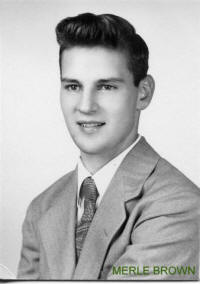
Merle Brown
(Click picture for a larger view)
|
17 Feared Lost--State Man Missing in Korea Air Crash
St. Paul newspaper, February 25, 1957
"SEOUL, SOUTH KOREA - A Blooming Prairie, Minnesota man was identified Sunday as one of 17 men missing
in Friday's crash of an Air Force transport plane near here. He is Pfc. Merle J. Brown, 20, son of
Mrs. Grace B. Morgan, Rte. 3, Blooming Prairie.
Pfc. Brown's mother said her son, an assistant company clerk in the infantry, has been stationed at the
38th parallel since he was sent to Korea several months ago. His mother, who was remarried since his
father's death some years ago, said Pfc. Brown has not been home since Christmas of 1955. He joined
the Army Aug. 18, 1955, a year after graduating from the Blooming Prairie High School. He is
unmarried.
The craft, carrying 159 men, slammed down on a Han river sandbar while carrying a big contingent on a
leave trip to Japan. Army and Air Force officials resolved their conflicting figures and announced
that 137 survivors have been accounted for. Twenty-eight of these are still hospitalized and two are
reported in serious condition. Five bodies have been recovered.
Military officials say privately they have little hope any of the 17 missing are alive.
Officially, the Army and Air Force say they are "continuing to search for the 17 still unaccounted for."
An Iowa army officer who survived the crash gave a possible hint of the fate of some of the missing.
Second Lt. Bennet S. Levin of Muscatine, Iowa, said the upper deck of the plane collapsed onto the bottom
deck, pinning him under debris. He was unable to move. "Finally," he said, "someone noticed me
and helped loosen the debris so I could crawl out."
An Army spokesman said salvage crews will try to move a large tank retriever, equipped with a powerful
derrick oonto the sandbar today to pull the wreckage of the upper deck off the lower.
Low flying aircraft and ground crews, meanwhile, continued their search of the Han and its ice-caked
banks in the belief that the flow of the 18-foot tides from the Yellow sea may have washed bodies up or
downstream from the crash site."
---
Brown, Merle - as told by Gary Morgan, Merle's brother
"Merle Justin Brown was born on a farm seven miles east of Austin, Minnesota to Justin and Grace Brown
on September 22, 1936. He died February 22, 1957 on a C-124 aircraft crash while on R&R leave from
Korea to Japan.
Merle's dad, Justin Brown, passed away April 14, 1936 before Merle was born. When Merle was three
years old, his mother married Kenneth Morgan and the family bought a 120-acre farm northwest of Blooming
Prairie, Minnesota. This is where Merle grew up.
Merle had one sister and three brothers: Donald Brown - served in the U.S. Army, Japan, 1946-47.
Don was drafted out of his senior year in high school when he turned 18. He later finished his
senior year after returning from the service. Verna Brown Busho - married Howard who served in the
U.S. Army in Panama, 1953-54. Ralph Brown - served in the U.S. Army, France and Germany, 1955-56.
Gary Morgan - served in the U.S. Army Security Agency, Germany, 1966-70.
Growing up, Merle was an active member of the Merry Lane 4-H Club, Steele County and played baseball in
high school in Blooming Prairie.
Merle had the nickname of "Leaner", as one would often find him leaning on someone during a friendly
conversation. He also had the habit of teasing his mother to the point one would see him laughing so
hard that he would be rolling on the floor, at which point he would be routed out of the house at the end
of his mother's straw pointed broom. He graduated from Blooming Prairie High School in 1954 and
stayed at home on the farm until he entered the Army a year later.
Merle joined the Army on August 18, 1955. He took his training at Fort Carson, Colorado from the
famed 8th Infantry "Golden Arrow." He shipped out for Korea in January of 1956 and served with the
19th Infantry Regiment, Company L (Blue Lima "The Rock of Chickamauga") until his untimely death on
February 22, 1957.
Among other duties Merle's last months in Company L included serving as assistant Company Clerk,
showing movies, watching the library and was in charge of the laundry operation. He was only a few
months from completing his tour of duty in Korea.
Earlier during his Korean tour, Merle had taken another R&R trip to Japan. On this trip he
traveled with Aubrey Meeker, to whom he referred to as his "good buddy." During this R&R they stayed
at the Mt. Fuji Hotel and from all his pictures it looks like they rented scooters and did some horseback
riding. Many pictures also include them posing with local Japanese people.
Merle's second R&R trip to Japan, in which he was killed, also included his buddy Aubrey Meeker.
Aubrey was killed in the same crash and I can only assume that they were sitting together. Included
in the documents submitted to the KWE are pictures that show the condition of Merle's dog tags and his
cigarette lighter which he had on him at the time of the crash. His leave papers, also included in
the pictures, were with him.
Merle was found eight days after the crash. Our family was concerned that the body may have been
lost in the water as reports were that one side of the plane was in shallow water and the opposite side
was deeper. The only word that the family received was that Merle's body had been recovered and
positively identified. This was the most difficult thing for my parents to accept and to believe
that it really was their son in the casket that came home. We only could trust in what we were told.
The family had no information about the recovery efforts like those stories I have been reading on the
Korean War Educator. Our family will be forever grateful for the tireless efforts of those involved
in the recovery operation. Master Sergeant John Hofer was assigned the duty of accompanying Merle's
body home and to see that all the affairs of the burial were in place. He did an excellent job and
his efforts were very much appreciated.
Marvin Ellis, another member of Company L and a friend of Merle's, contacted my parents and even came
from Oklahoma to visit. Marvin wrote to my mother every year at Christmas time until she passed away
in 2001.
A note about Aubrey Meeker. Aubrey was from Pryor, Oklahoma and according to "gravefinders.com",
Aubrey is buried in Fairview Cemetery in Pryor, Mayes County, Oklahoma. His parents are Martin and
Thelma (Pettit) Meeker. All of the newspaper articles and information about the crash, refer to
Aubrey as "Avery", but I believe Aubrey to be his correct first name because that is the way it was
spelled by Merle and on his R&R orders and on gravefinders.com."
Back to Page Contents
Newspaper Accounts
Catholic Herald, page 1, March 1, 1957:
Absolution From a Helicopter
"When a U.S. transport plane crashed last week on a sand bar
in the Han River near Seoul, Korea, an Air Force chaplain flew
above the wreckage in a helicopter and gave absolution.
Fire had forced the pilot to take a million-to-one chance in
landing on the sand bar. At least 134 of the 159 Americans
on board were saved.
After the helicopter flight, the chaplain, Fr. Joseph Hayes,
C.S.P., joined two other chaplains ministering to the burned,
wounded an shocked survivors at the hospital near Inchon."
Collinsville Herald:
|
Corporal, Specialist Third Class Donald L. Hocher
(Click pix for a larger view)
|
"According to the February 27, 1957, edition of the Collinsville Herald, "Corporal, Specialist Third
Class Donald L. Hocher of Collinsville was reported to be one of the survivors of a disastrous air crash
which took place just out of Seoul, Korea on Friday evening. The telegram received by his parents informed
them that he was 'seriously ill with burns about this face and hands.' Hocher is 21 years old, entered the
United States Army in September 1955 and was due to be released from active duty in approximately five
months. He graduated from O'Fallon Public High School before entering the service. After completing basic
training at Fort Leonard Wood in Missouri, he left for overseas duty. The Globemaster C-14 transport plane
which crashed in the icy waters of the Han River shortly after takeoff from the Kimpo airfield near Seoul
carried 159 Americans, 13 of which are still missing and feared dead. Nine passengers died in the crash."
Miscellaneous Articles in PDF:
St. Louis Post-Dispatch, Sunday, February 24, 1957
[Sent to the KWE courtesy of Carolyn
J. Hocher]
Raising of Plane From River Tried
"SEOUL (Sunday) Feb. 24 (AP) - United States Army divers and engineers sought today to lift a shattered
Air Force transport from the icy Han River and determine finally how many of the 159 men believed aboard
were killed when it crash-landed Friday.
|
Globemaster sitting in the water of the Han River
(Click pix for a larger view)
|
With 134 accounted for as survivors, the toll may reach 25. Five more bodies have been recovered
From 17 to 20 men are missing and feared dead.
'It is very doubtful they will be found alive,' said an Air Force information officer who visited the
crash site, at the Han's mouth on the Yellow Sea only 1 1/2 miles south of the demilitarized zone
separating North and South Korea. Of the survivors, 28 still were hospitalized for treatment of
injuries.
Tides from the Yellow Sea washed in and out over the wreck of the 90-ton transport, a C-124 Globemaster.
Crippled and afire, it belly landed on an islet and cracked up in the water five minutes after an 8 p.m.
take-off Friday from Kimpo airfield for Tokyo. With a 10-man crew, it was believed to be carrying
149 passengers, most of the service men headed for rest leaves in Japan. The tail section remained
intact. Most of the wings and nose were submerged.
The huge, double-decked craft went down with an engine afire and hurling chunks of metal through the
fuselage. The pilot, Capt. James Cartwright of Elkton, KY, said the first impact was light, "but the
second was a lulu" that hurled him into the river. He and five other members of the crew were flown
to Tachikawa air base in Japan Saturday.
Four crewmen were among the missing.
The United States Eighth Army ordered engineers and divers from Inchon Port to try to lift the plane
from the water during the hours when the tides were out.
It is feared some of the missing men may have been washed downstream in the 10-above zero weather after
the crash. The Air Force said the number of missing could not be settled until the passenger list is
thoroughly rechecked."
The Daily Advocate (St. Clair County, IL), February 23, 1957:
[Sent to the KWE courtesy of Carolyn J. Hocher]
U.S. Transport Plane Crashes in Han River
Death Toll May Be 25; 134 Saved
"SEOUL - A burning U.S. transport plane crashed on an islet in the Han River last night. At least
134 of the 159 Americans aboard were saved, but 5 bodies were found and it was feared tonight the death
toll might reach 25.
The pilot said an engine of the big C-124 Globemaster ran wild, burst into flame and spewed chunks of
metal into the two-story fuselage, tearing holes big enough for a man to walk through.
As the tide ebbed at the Han's mouth today, permitting resumption of the search for bodies at the crash
scene, Air Force officials listed 20 persons missing and Army officials listed 17. An Air Force
spokesman said: "It is very doubtful if they will be found alive." The Air Force listed 134
rescued and the Army 137.
The troop transport--the Air Force's largest--took off from Kimpo Airfield for Tokyo with 10 crewmen
and 149 passengers, most of them servicemen looking forward to rest leaves in Japan.
Lying on a stretcher at Tachikawa Air Base in Japan, the injured pilot, Capt. James Cartwright, 37, of
Elkton, KY, related what happened next: "We lost power on No. 3 engine. It caught fire and
started to throw chunks of metal through the fuselage. They hit ... No. 4 engine and it started to
lose power. Pieces of metal were coming through the fuselage, cutting holes big enough for a man to
walk through. The metal cut the aileron cables--we couldn't turn around so I decided on the Han
River.... It all happened in four or five minutes.... We landed on our belly. The first
impact was smooth, but the second was a lulu. The next thing I knew I was... in the water. I
crawled on an ice floe and I like to froze. People were pouring out of the plane and struggling on
to a sand bar 50 yards from shore."
The landing on the tiny island, above the water only at low tide, was described by another Air Force
officer as a "one in a million" shot that saved most of the lives. The scene was only 1 1/2 miles
south of the demilitarized zone separating North and South Korea.
Confusion over the number of missing arose because survivors were rushed to several hospitals and
dispensaries for treatment. The Army said only 43 of the survivors were injured seriously enough to
be hospitalized.
Rescue crews arrived at the scene within 45 minutes of the crash. Five bodies were found before
the tide from the Yellow Sea inundated the island at noon. The tide receded again before dusk and
rescue crews again probed the blackened skeleton of the plane.
An Air force spokesman said some of the missing may have been washed downstream in the confusion of the
crash. The water on one side of the island was shallow enough for wading but on the other side it
was deep, swift and cold.
Four crewmen were among the missing. The others, all suffering minor injuries, were flown to
Tachikawa. Cartwright suffered bruises and cuts on the head, face and body."
Stars & Stripes, Feb. 24, 1957
[Sent to the KWE courtesy of crash survivor Arnold Silveri]
Pilot Tells of Crash, Evacuation
"TACHIKAWA AB, Japn (AP) - Minutes after Capt. James Carwright lifted his huge C-124 Globemaster off
the runway at Korea's Kimpo Airport Friday night the No. 3 engine began running wild, hurling chunks of
metal which ripped man-size holes in the fuselage, he said Saturday. Cartwright and five other crewmen,
all injured in the crash, were evacuated here from Korea.
Lying on a stretcher in the hospital here, Cartwright described graphically the five harrowing minutes
during which he fought to keep his giant four-engine transport aloft. "We lost power on No. 3 engine three
minutes after taking off," the Elkton, KY, pilot said. "It caught fire and started to throw chunks of
metal through the fuselage." They hit the carburetor or throttle linkage on the No. 4 engine and it
started to lose power.
"Pieces of metal were coming through the fuselage, cutting holes big enough for a man to walk through.
The metal cut the aileron cables. It was obvious we couldn't turn around so I decided on the Han River....
It all happened in four or five minutes. It was a starlight night and I could see the outline of the river
ahead. I went straight for it, radioing (the situation) all the time. I rang the alarm bell, but there was
no panic. Everyone was very orderly. A light fire was burning in the No. 3 engine."
"The river was straight ahead. We landed on our belly. The first impact was very smooth... but the
second was a lulu. The next thing I knew I was unbuckling my safety belt in the water outside the plane. I
crawled on an ice floe and I like to froze. I'll be all right when I get warm. That's the coldest place I
ever was. People were pouring out of the plane and struggling onto a sand bar 50 yards from shore.
Forty-five minutes after we hit helicopters were picking people off the bar."
Cartwright had high words of praise for his crew--"a crew as fine as I've ever seen. Ideal." He said
the evacuation was carried out in a "perfect manner." As the 37-year-old airman with 15 years of Air Force
flying experience was carried into the hospital, his wife was waiting calmly to greet him."
Stars & Stripes, Feb. 24, 1957
[Sent to the KWE courtesy of crash survivor Arnold Silveri]
"SEOUL - None of the 17 men missing in the Friday night crash of a C-124 Globemaster in the Han River
has yet been found. The death toll in the crash still stands at five. An Army spokesman said Sunday
morning that the search will be carried out all the way to the Han's estuary and the 8th Army Flight Det.
is applying to the U.N. Command Military Armistice Commission for permission to cross the "No-Fly Line" to
carry out the search. (The No-Fly Line is a line several miles south of the DMZ beyond which U.S. planes
may not fly. Some parts of the Han River lie over this line.)
The search for the missing resumed early Sunday after some 200 ground troops and an umbrella of search
helicopters combed an area 10 miles northwest of Kimpo AB where the two-decker R&R transport piled into a
sandbar on its way to Japan with 159 servicemen aboard.
They found five bodies before the search was called off because of darkness Saturday and an incoming
19-foot tide, second highest in the world. Four of the bodies found Saturday were under the river's ice
and a fifth was in a rice paddy six miles south of the disaster scene. This fifth man apparently had
fallen from the plane before it crashed, and a survivor reported seeing two men disappear through the
plane's side when the starboard engine exploded and tore a gaping hole in the fuselage.
AFFE/Eighth Army engineers and salvage divers from Inchon Port went to work in the early ebb-tide hours
of Sunday to try to lift the plane from the water. they plan to build a pontoon bridge out into the Han
River to move cranes alongside the wreck. At the point where the Globemaster hit, the river is more than a
mile wide. A spokesman said some bodies may be found in the debris. Others, it is feared, may have been
washed downstream in the freezing river water.
An Air Force information officer at the crash scene said, "It is very doubtful the missing passengers
will be found alive." But the Air Force still holds out hope that some survivors, acting under shock, may
have wandered off in the night to nearby Korean villages.
At Ascom City Army Replacement center, 200 men have volunteered as blood donors for the injured. Names
of the dead are being withheld pending notification of next of kin, but a breakdown identified two as
airmen and one as a soldier. Of the 17 missing men, the Army said 15 were soldiers and two were airmen.
Best available information on the survivors gives this picture: At the 121st Evac. Hospital about 20
miles from the crash scene, 103 men have been treated and released. Between 25 and 31 patients are still
held there. Nine survivors taken to Kimpo AB have been released. Capt. James Cartwright, the pilot, and
five injured crewmen have been flown to Tachikawa AB Hospital."
The Beacon, March-April, 1957
Volume 1, Wickford, Rhode Island, No. 3
[Sent to the KWE courtesy of
Dale Myersi]
IN MEMORIUM
We, the editors and staff, dedicate this issue of “The
Beacon” to the memory of Sgt. Ralph Edward Myers, who gave his
life in the service of his country. Sgt. Myers, son of Mr. and
Mrs. Ralph H. Myers of Victory Highway, Lafayette, RI was killed
when the C-141 transport plane, on which he was a passenger,
crashed in Korea’s Han River on February 22, 1957.
This ill-fated plane with its cargo of GIs who were headed
for Japan for rest-leaves crashed on a low-lying island where
tides from the Yellow Sea hampered rescue efforts as they washed
in and out of the wreckage. Sgt. Myers was one of twenty-five
men who died in the crash.
Ralph, as we knew him, was born in Wakefield RI on September
22, 1933 and is an only child. He graduated from North Kingstown
High School in 1951. He was employed by the Wickford Standard
and at the Hillsgrove Airport before entering the service.
A member of the Rhode Island National Guard, Ralph enlisted
in the Air Force and took his basic training at Samson, New
York. He was later transferred to Cheyenne, Wyoming for further
training. After completing his schooling, he was assigned to
Fort Leonard Wood, Missouri, where he met his wife, the former
Betty Jane Linebaugh of Springfield Missouri. The couple was
married on October 15, 1954. Their twins, Laura Beth and Michael
Jeff, were born August 1, 1955. Ralph was transferred to Korea
on February 14, 1956. He had been there for over a year without
a single leave. He was going to Japan, on this his first leave,
to buy souvenirs to bring home with him.
One hundred and fifty-nine Americans were reported to be
aboard the double-decked troop carrier which burst into flames
as it hit and was destroyed except for the tail section.
[KWE Note: "The Beacon" was a community church newsletter.]
Back to Page Contents
Awards for Heroism
Air Medal - Sgt. Robert L. Cantrell
CITATION NOT YET FOUND.
Air Medal - Sgt. Robert J. Forrest
CITATION NOT YET FOUND.
Distinguished Flying Cross - Capt. James William Cartwright
Captain Cartwright, from Elkton, Kentucky, died January 30, 1997.
CITATION NOT YET FOUND.
Soldier's Medal - Leonidas W. Best
Headquarters, Department of the Army
General Orders No. 49 - 18 September 1957
Major Leonidas W. Best, Transportation Corps, United States
Army, distinguished himself by heroism in the vicinity of Seoul,
Korea, on the night of 22 February 1957. Major Best's
detachment was one of a group of aviation units assigned the
mission of rescuing survivors of a C-124 aircraft which
crash-landed on a sandbar in the Han River Estuary. In a
desperate race against the rapidly rising tide waters and a
mounting danger to the survivors from continued exposure to the
winter elements, he directed the evacuation flights of the
helicopters under extremely hazardous conditions. With
disregard to his own safety or comfort he worked in the ice
filled river with the rising tide reaching his armpits,
supervising the flights, loading the survivors, and directing
search operations. Despite the hazards of the helicopter
rotor blades, the swift current of the rising tide, and full
awareness of the danger of hovering aircraft over head, Major
Best resolutely and unhesitatingly performed his duty, thereby
contributing immeasurably to the completely successful rescue
mission. His unhesitating and courageous action in the
face of grave danger coupled with complete disregard for his own
safety, reflects great credit on himself, his unit, and the
military service.
Soldier's Medal - Harold L. Cain
Headquarters, Department of the Army
General Orders No. 49 - 18 September 1957
Private Harold L. Cain, Infantry, United States Army,
distinguished himself by heroism on the night of 22 February
1957 in the vicinity of Seoul, Korea, when the C-124 aircraft on
which he was a passenger developed engine trouble shortly after
takeoff and crash-landed on a sandbar in the Han River, bursting
into flames on impact. Private Cain ignored the fiercely
burning airplane and constant threat from explosion, and with
complete disregard for his own life, voluntarily returned to the
airplane to seek and aid injured survivors. He made
repeated trips at the risk of his life in attempting to drag the
injured men from the plane. His heroic efforts were
hampered by darkness and danger from drowning in the fast
flowing and freezing tide waters. Despite the icy water,
he led several men suffering from shock away from the crash area
and later helped load casualties onto rescue helicopters.
Private Cain continued his heroic efforts until all of the
injured had been evacuated and removed to safety. When he
finally consented to his own evacuation the raging river had
risen above his knees and threatened to sweep him into the icy
waters. His prompt and courageous action reflects great
credit on himself and the military service.
Soldier's Medal - Warren J. Clarke
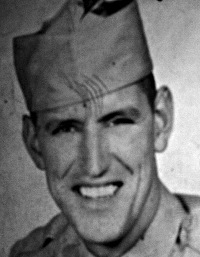
Warren J. Clarke
|
Headquarters, Department of the Army
General Orders No. 49 - 18 September 1957
Private First Class Warren J. Clarke, Infantry, United States
Army, distinguished himself by heroism on the night of 22
February 1957, in the vicinity of Seoul, Korea, when the C-124
aircraft on which he was a passenger developed engine trouble
shortly after takeoff and crash-landed on a sandbar in the Han
River, bursting into flames on impact. Although the plane
was burning fiercely, in spite of the constant threat of an
explosion, and with complete disregard for his own life, Private
Clarke voluntarily returned to the aircraft and dragged one
injured man from the flaming plane. He then made repeated
attempts to approach the aircraft to remove more of the injured.
Private Clarke's actions were with utter disregard for his own
personal safety in that the threat of explosion was imminent and
the rapidly rising tide threatened to sweep him into the
freezing water. Debris scattered about the crash site and
jagged edges on the aircraft seriously hampered removal of the
injured and the numerous helicopters hovering overhead created
additional hazards which threatened loss of life or grave
personal injury. Private Clarke's prompt and courageous
action with disregard for his own life reflects great credit on
himself and the United States Army.
[KWE Note: Warren's son, Ed Clarke, found this page of the KWE
after his father's death in 2013, and supplied the following
obituary.]
Warren Julian “ Sweet Pea ” Clarke, 80, of Lancaster,
Virginia, passed away peacefully on November 13, 2013.
He was preceded in death by his parents, Julia C. Clarke and
James A. Clarke, and three of his eleven brothers and sisters.
He is survived by his dedicated wife of twenty years, Joyce B.
Clarke; his children, Edward W. Clarke and his wife Melissa of
Williamsburg, Virginia, Judy C. Fay of Irvington, Tammy G.
Clarke of Callao, Virginia, Michael T. Clarke of Richmond,
Virginia, Stanley B. Bartlett and James A. Bartlett and his
wife, Jayme; grandchildren, Kirk and Jared Clarke, Jessica and
Chelsea Fay, Tyler Kipp Pinkard, Genevieve and Mackenzie
Bartlett; and numerous nieces and nephews.
Mr. Clarke served in the army during the Korean War and he
was a member of Lebanon Baptist Church in Alfonso, Virginia. He
was a self-employed building contractor who built over 100 homes
in the local area, and he was a loving husband and father who
enjoyed life and talking with everyone he met.
A funeral service will be held 2 p.m. Sunday, November 17,
2013 at Currie Funeral Home with interment at Lebanon Baptist
Church in Alfonso, Va. The family will receive friends from 6:00
until 8:00 p.m. Saturday, November 16, 2013 at Currie Funeral
Home in Kilmarnock, Virginia.
Soldier's Medal - Forest L. Clough, Jr.
Headquarters, Department of the Army
General Orders No. 49 - 18 September 1957
First Lieutenant Forest L. Clough, Jr., Artillery, United
States Army, distinguished himself by heroism in the vicinity of
Seoul, Korea, on the night of 22 February 1957. Lieutenant
Clough was one of a group of helicopter pilots assigned to the
mission of rescuing survivors of a C-124 aircraft which had
crash-landed on a sandbar in the Han River Estuary. In a
desperate race against the rapidly rising tide and the danger to
the survivors from continued exposure to the winter elements, he
made several flights to the crash site under extremely hazardous
conditions to evacuate survivors who were huddled on the sandbar
or on ice floes in the river. With practically no
illumination, he landed his helicopter in as much as 30 inches
of water. Despite darkness, density of aircraft in the
air, inadequate landing areas at the crash site, and with full
awareness that an aircraft failure or misjudgment could result
in his death or serious injury, Lieutenant Clough resolutely and
unhesitatingly performed his duty, thereby contributing
immeasurably to the completely successful rescue mission.
His unhesitating and courageous action in the face of grave
danger, with complete disregard for his own safety, reflects
great credit on himself, his unit, and the military service.
Soldier's Medal - Forrest E. Crisman
Headquarters, Department of the Army
General Orders No. 58 - 27 November 1957
Sergeant Forrest E. Crisman, United States Army,
distinguished himself by heroism on the night of 22 February
1957, in the vicinity of Seoul, Korea, when the C-124 aircraft
on which he was a passenger developed engine trouble and
crash-landed on a sandbar in the Han River, bursting into flames
on impact. Despite extreme physical and emotional stress,
forbidding terrain conditions and darkness, Sergeant Crisman
immediately organized the survivors for their safety and assumed
command of passenger accounting operations. Upon learning
that there was an Air Force Sergeant severely wounded in or near
the plane, Sergeant Crisman immediately organized a rescue team
to return to the site of the plane. Despite great personal
danger, Sergeant Crisman waded through waist-deep icy water back
to the burning plane, aware that there were several full tanks
of gasoline inside which had not yet exploded. In the face
of these hazards, Sergeant Crisman and the men who went with him
appeared to give no thought to their personal safety or their
lives and reentered the plane. The wounded man was located
near the flaming inside engine, and was carried back through the
rapidly rising icy water by the rescue detail. Upon his
return, Sergeant Crisman continued to assist the wounded and
give moral support to others. Sergeant Crisman's prompt,
vital, and courageous action in the face of extreme danger
reflects great credit on himself and the military service.
Soldier's Medal - Alfred L. Howard
Headquarters, Department of the Army
General Orders No. 49 - 18 September 1957
Private First Class Alfred L. Howard, Infantry, United States
Army, distinguished himself by heroism on the night of 22
February 1957, in the vicinity of Seoul, Korea, when the
C-124 aircraft on which he was a passenger developed engine
trouble shortly after takeoff and crash-landed on a sandbar in
the Han River, bursting into flames on impact. Private
Howard, with complete disregard for his own life, voluntarily
returned to the burning aircraft in search of survivors.
He aided in the rescue of an Air Force Sergeant, who was lying
near the plane, despite constant danger from the flames and the
threat of explosion. After removing the injured man, he
continued his rescue work by helping to load survivors on
helicopters that had been sent to the area. His repeated trips
to the plane constantly places his life in peril and the threat
of being swept into the freezing water was imminent. The
additional danger created by numerous helicopters hovering
overhead seeking landing sites posed a threat of grave personal
injury. Private Howard continued his heroic efforts until
all had been removed to safety. His prompt and courageous
action in the face of extreme danger reflect great credit on
himself and the United States Army.
Soldier's Medal - Elmus V. James
Headquarters, Department of the Army
General Orders No. 49 - 18 September 1957
Private First class Elmus V. James, Infantry, United States
Army, distinguished himself heroically on the night of 22
February 1957 in the vicinity of Seoul, Korea, when the C-124
aircraft on which he was a passenger developed engine trouble
shortly after takeoff and crash-landed on a sandbar in the Han
River, bursting into flames on impact. Ignoring his own
personal safety and with complete disregard for his own life, he
assisted injured survivors in the vicinity of the burning
aircraft, carrying two of them ot safety. Private James
did not heed the warnings of the copilot as to the danger of
explosion. He went within the vicinity of the burning
aircraft in order to ascertain if any individuals were trapped
inside. After the explosion he continued to help others
less fortunate than himself despite the ever present danger to
his own life from working in the steadily rising and fast
flowing tide waters. Private James in the face of extreme
danger brought great credit on himself and the military service.
Soldier's Medal - Robert W. Johnson
Headquarters, Department of the Army
General Orders No. 56- 28 October 1957
Warrant Officer Robert W. Johnson, United States Army, 13th
Transportation Company (Light Helicopter) (H-34), distinguished
himself by heroism in the vicinity of Seoul, Korea, on the night
of 22 February 1957. Warrant Officer Johnson, copilot of an
H-19 helicopter, was one of a group of helicopter pilots
assigned the mission of rescuing survivors of a C-124 aircraft
which crash-landed on a sandbar in the Han River Estuary. In a
desperate race against the rapidly rising tide waters and
mounting danger to the survivors from continued exposure to the
winter elements, he made approximately five flights to the crash
site under extremely hazardous conditions to evacuate survivors
who were huddled on the sandbar or on ice floes in the river
With practically no illumination he landed his helicopter in as
much as thirty inches of freezing water, and on one occasion
hovered sideward alongside an ice floe to pick up two
survivors. Despite the darkness, density of aircraft in the
area, inadequate landing areas at the crash site, and with full
awareness that an aircraft failure or misjudgment could result
in death or serious injury, Warrant Officer Johnson performed
his duty with exceeding dispatch and resolution, thereby
contributing immeasurably to the completely successful rescue
mission. The unhesitating and courageous action in the face of
grave danger displayed by Warrant Officer Johnson, with complete
disregard for his own safety is worthy of commendation and
reflect great credit on himself, his unit and the United States
Army.
Soldier's Medal - SFC Leon "Lee" R. Neal
Sgt. Neal was recommended for the Soldier’s Medal by Capt. J.
B. Foreman, Commanding Officer B Company, 44th Engineer
Construction Battalion (Broken Hearts) (APO 971, San Francisco,
California) for rescuing and saving the life of a downed
helicopter pilot on or about 10 March 1957. This rescue occurred
at the site of recovery operations of a C-124 Globe-Master that
crashed in the Han River, in Korea on 22 February 1957.
CITATION NOT YET FOUND.
Soldier's Medal - James W. Rhinehart
Headquarters, Department of the Army
General Orders No. 49 - 18 September 1957
Captain James W. Rhinehart, Transportation Corps, United
States Army, distinguished himself by heroism in the vicinity of
Seoul, Korea, on the night of 22 February 1957. Captain
Rhinehart was one of a group of helicopter pilots assigned the
mission of rescuing survivors of a C-124 aircraft which
crash-landed in the Han River Estuary. In a desperate race
against the rapidly rising tide waters and a mounting danger to
the survivors from continued exposure to the winter elements he
made approximately five flights to the crash site under
extremely hazardous conditions to evacuate survivors who were
huddled on the sandbar on on ice floes in the river. With
practically no illumination he landed his helicopter in as much
as 30 inches of freezing water, and on one occasion hovered
sideward alongside an ice floe to pick up two survivors.
Despite the darkness, density of aircraft in the air, inadequate
landing areas at the crash site, and with a full awareness that
an aircraft failure or misjudgment could result in his death or
serious injury, Captain Rhinehart resolutely and unhesitatingly
performed his duty, thereby contributing immeasurably to the
completely successful rescue mission. His unhesitating and
courageous action in the face of grave danger, coupled with
complete disregard for his own safety, reflects great credit on
himself, his unit, and the military service.
Soldier's Medal - Ronald A.
Rout
Headquarters, Department of the Army
General Orders No. 56- 28 October 1957
Private First Class Ronald A. Rout, Army Medical Service, United
States Army, distinguished himself by heroism following the
crash-landing of a C-124 aircraft on a sandbar in the Han River
Estuary on 22 February 1957. After the crash-landing he
assembled injured personnel, collected dry clothing and treated
the survivors for shock and exposure to the icy water. The
immediate and effective assistance rendered by Private Rout
prior to the arrival of qualified medical personnel prevented
serious injury to many of the survivors. His unselfish and
heroic actions were accomplished with compete disregard for his
own safety or comfort and were rendered exceedingly difficult
because of freezing cold, darkness and danger of being swept
into the current by the steadily rising and fast flowing tide
waters. Debris scattered about the crash site and jagged edges
on the plane created an additional hazard to his personal
safety. Private Rout's exemplary action during this hazardous
incident is indicative of a high degree of leadership ability
and reflects great credit on himself and the military service.
Soldier's Medal - John R. Scarborough
Headquarters, Department of the Army
General Orders No. 49 - 18 September 1957
First Lieutenant John R. Scarborough, Infantry, United States
Army, distinguished himself by heroism on 22 February 1957, near
Seoul, Korea. When the C-124 "Globemaster" on which he was
a passenger developed engine trouble resulting in a
crash-landing in the Han River, approximately 25 miles northwest
of Seoul, Lieutenant Scarborough despite sustaining several
burns during landing, immediately began assisting survivors.
Upon being advised of the extent of the burns which he could not
see, and being further advised to seek medical treatment,
Lieutenant Scarborough ignored the advice and continued to
assist survivors who were helpless in the vicinity of the
burning aircraft. Ignoring the danger of imminent
explosion, Lieutenant Scarborough personally carried three
victims to safety, and directed others to assist in carrying
others. When the engine did explode, covering the aircraft
and immediate vicinity with fire so that nothing further could
be done, Lieutenant Scarborough proceeded to supervise the
evacuation of survivors by helicopter. Despite the
severity of his burns, Lieutenant Scarborough refused evacuation
until all other injured, many with lesser injuries, were
evacuated. Throughout the emergency he ignored personal
hazard and danger to his own life by approaching the burning
aircraft to evacuate helpless survivors. His aggressive
action, sound judgment, and personal bravery were an inspiration
to fellow passengers and undoubtedly saved lives that would
otherwise have been lost. The heroism displayed by
Lieutenant Scarborough on this occasion reflects great credit on
himself and the military service.
Soldier's Medal - Carey W. Spencer
Headquarters, Department of the Army
General Orders No. 49 - 18 September 1957
Private First class Carey W. Spencer, Infantry, United States
Army, distinguished himself by heroism on the night of 22
February 1957, in the vicinity of Seoul, Korea, when the C-124
aircraft on which he was a passenger developed engine trouble
shortly after takeoff and crash-landed on a sandbar in the Han
River, bursting into flames on impact. After reaching
safety through an escape exit, with complete disregard for his
own life, Private Spencer volunteered to return to the burning
plane to rescue those trapped in or near it. Despite a
raging fire and the threat of explosions from the airplane's
fuel tanks, Private Spencer helped carry two badly injured men
to safety and then entered the aircraft to look for other
survivors. He later saw a man swimming in the icy waters
of the river and with the help of others, succeeded in getting
the man out and to the warmth of a fire which had been built.
Private Spencer refused to quit his rescue work until he was
satisfied that all survivors of the flight were safe. His
actions reflect the highest traditions of the United States
Army.
Back to Page Contents
Readers' Comments
Charles Bessett (found on the Korean War Project at
www.kwp.org):
“I was stationed at Tachikawa from 1954 to 1957 and was assigned to the 6th Troop Carrier (Bully Beef).
I was an airborne radio operator. Later I was assigned to MATS at Donaldson AFB, South Carolina and flew
on operation Deep Freeze with Major Cartwright who was also stationed at Tachikawa. He was the pilot
(Aircraft Commander) who took off from K-14 with about 150 troops on board. When on takeoff a prop went
through the aircraft, cutting the control cables and yet he managed to set the plane down in the middle of
the Yalu River, in the middle of the night during winter. I think there were about 20 deceased.”
Pfc. Kenneth Carville, Wendell Depot, MA (sent to the Korean War Educator):
“It’s 1500 hours February 22, 1957 and PFC Ralph Morrison and I are getting our duffle bags ready for
R&R in Japan. At around 1530 the Company Commander’s orderly came into our Quonset hut and informed me
that I had been scratched from this shuttle and would be taking the next shuttle to K-14, Kimpo Air Base,
South Korea for a Globemaster flight to Japan because of an emergency leave granted to a sergeant. The
airplane I was supposed to fly on crashed shortly after takeoff. Two of my friends didn’t make it and PFC
Morrison was hospitalized.
Over the years I’ve wondered why I was picked to miss that flight out of 148 others. I was just a kid
then and didn’t know how to go about trying to find out who the sergeant who took my place was. Now, after
52 years and all the experiences and things I’ve done, it’s on my mind all the time. Maybe you will be
able to help find this man or if he even survived. There was a fire in the bureau of records in St. Louis,
Missouri in 1973 but the information on the flight manifest is out there somewhere. Maybe you could steer
me in the right direction. Ralph and I were radio operators at HQ CO. 3rd BN, 19th Infantry Regiment, 24th
Division north of Freedom Bridge on the Imjin River in 1956-57.”
Donald Hocher (reference in his obituary)
Donald L. Hocher, age 84, of O'Fallon, Illinois, born
September 18, 1935 on the family farm in Collinsville, Illinois,
passed away Monday morning, June 21, 2021 at Colonnade Senior
Living Center, O'Fallon.
Don grew up on the Hocher family farm and graduated from
O'Fallon Township High School in 1953. While serving in the
Army following the Korean War, he was aboard a C-124 Globemaster
that crashed into the Han River on February 22, 1957, killing 22
passengers. Although severely burned, he survived and returned
to the States with an honorable discharge.
Don was a proud union carpenter and had worked at
Anheuser-Busch, retiring in 1996. As a superintendent, he was
well-respected by his colleagues. Don was a talented
woodworker, built his own homes, and shared many handmade
wood-crafted items with his family. Don was a former member of
the Lebanon Gun Club and NRA, and enjoyed trapshooting and quail
hunting with his bird dogs.
He was preceded in death by his father, Theophil Hocher, who
was killed in a construction accident when Don was only five
years old; his mother Florence; stepfather Carl Hocher; his
sister Jan (John) Smith; and brother Phil (Dolores) Hocher. He
is survived by his son Dan (Kim) Hocher of Collinsville; and
grandsons Danny and Drake.
Donald's funeral was held Saturday, June 26, 2021 at
Wolfersberger Funeral Home. Burial followed at Friedens St.
John's Evangelical Cemetery, Blackjack, Illinois Memorial
donations are suggested to American Cancer Society or O'Fallon's
VFW Post 805.
Steve Kovach (found on the Korean War Project at www.kwp.org):
“I was in the 22nd TCS at Tachikawa 1956-57. The tail number was 1040 and it was a 22nd TCS aircraft.
James Cartwright was the pilot. He was 37 years old at the time. The copilot was the 22nd’s assistant
maintenance officer. He was relieved from the right seat by the 22nd’s operations officer when the prop
came through the side. The ops major died in the crash while the assistant maintenance officer survived in
the reserve crew seat that the ops major had vacated. The flight engineer was killed. I saw the engine
after it was returned to Tachi. The prop shaft looked as though it was cut by a diamond saw. Not a burr on
it. The 22nd’s Japanese mechanics had spent a lot of time clearing a “smoker” on that engine the night
before that flight.
The plane ditched into the river because the river was illuminated by the moonlight and was the safest
reachable place. The plane split open forward of the tail section and was the escape route for most of the
passengers. In a newspaper interview, Captain Cartwright said he was thrown onto an ice floe in his seat,
unbuckled his safety belt and pulled survivors onto the ice floe. Not quite. His seat was still in the
plane. Strange things happen. I think the flight engineer was M/Sgt White.”
|
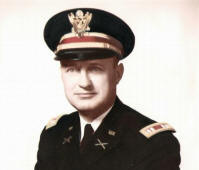
Capt. Andrew L. Opiela
(Click picture for a larger view)
|
Michael Opiela (son of Capt. Andrew L. Opiela):
"I am Andrew Opiela's son. He was a 16 year veteran of the Army. He was drafted in 1941 and
completed OCS at Fort Sill, Oklahoma. Although he was a captain when he died, his promotion to major was
already in process at the time of the crash of the C-124, so he was awarded the rank of major after his
death.
He was the son of Polish immigrants and deeply loved his country. He was conversant in seven languages
which he picked up during his nine years of service in Europe during and after World War II. My mother
saved many newspaper accounts of the crash, and the subsequent search.
Surviving the crash were his wife Verna Opiela; son Michael Opiela; brother Michael J. Opiela; and
sisters Mrs. Catherine Wikowski, Mrs. Victoria Jezior, Mrs. Magdaline Colle, and Mrs. Gean Borling."
Allen Hile (son of crash fatality Allen P. Hile):
"My father was Staff Sgt. Allen P. Hile and was in the plane crash at Kimpo Korea in the Han river. I
have conflicting stories about his role in the crash. Supposedly he was a crew member and assisted many
passengers to get out of the burning plane. If any survivors are left that could contact me via email it
would be greatly appreciated. Much thanks and blessings to all who served in Korea." - Allen Hile,
Pennsylvania
|
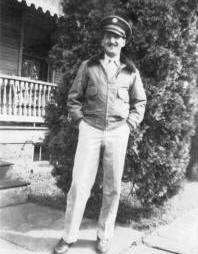
Allen P. Hile
(Click picture for a larger view)
|
--
Allen Pelham Hile was born December 11, 1917, a son of Joseph C. and Lydia Mae Gamby Hile. He
graduated from Sunbury High School and was then employed at Hoover furniture prior to enlistment in the
U.S. Army Air Corps in August of 1942 for duty in World War II. He served as a radio operator and
waist gunner of a B-26 Marauder in the Air Corps. During the war he was stationed in the
Mediterranean theater of war with a record of 64 combat missions while serving with the 319th Bombardment
Group in Italy, Sicily and Sardinia. He later served in Egypt, Southern Europe, India, China and
Burma. His squadron, part of the 12th Air Corps, made nine trips over the famous "Hump" from India
to China. His squadron received the Presidential Unit Citation, and TSgt. Hile personally received
the Air Medal, 10 Oak Leaf Clusters, the French Croix de Guerre, and the Good Conduct Medal.
He was married to Evelyn Virginia Geyer Hile and they had four children: Virginia Mae, Susan Dianne,
Sheryl Ann, and Allen Jr. He was the brother of Leona Hile, Martha Vanetta, Mildred Petterman,
Clarence Hile, Mary Marshall, Kenneth Hile, Ruth Walker, and Albert, Mahlon and Howard Hile. Their home
address was Sunbury, Northumberland County, Pennsylvania.
|
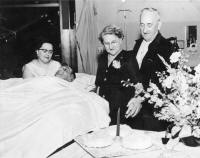
Evelyn, Allen, Lydia, Joseph Hile
(Click picture for a larger view)
|
While serving as a radio operator on a Globemaster C-124 troop plane, the plane crashed in the Han
River near Kimpo. It was the second plane crash he survived, having been one of three crewmen who
were injured in a crash of an Air Force assault transport during takeoff at Eglin AFB, Eglin, Florida, on
June 28, 1951.
In spite of second degree burns he received in the crash in the Han River, TSgt. Hile reentered the
plane in an effort to save the lives of other passengers. He was hospitalized at the Army's 121st
Evacuation Hospital near Kimpo, and later transferred to the Brooke Army Medical Center in Ft. Sam
Houston, Texas, where he died on May 9, 1957 following struggles with injuries, malaria, and hepatitis.
He had two surgeries on his left leg and one was an amputation of his leg above his knee. He was in
a coma for two days prior to his death. His death certificate lists injuries and hepatitis received
from the airplane crash near Kimpo as the causes of his death.
He is buried in Northumberland Memorial Park, Stonington, Pennsylvania.
--
Photo courtesy of Virginia Hile Straub.
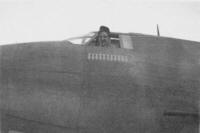
(Click picture for a larger view) |
(Click picture for a larger view) |
(Click picture for a larger view) |
Orrin "Bud" White
"I was stationed at Kimpo Air Base with the 5th AF at the age of 17. I was in munitions and worked at
our bomb dump, which was off base. The Koreans would cut our fences and steal anything they could carry.
When we would catch one, we would get three days R & R in Japan. I had 27 days coming. I didn't write many
letters, but wrote my dad that I was going to Japan for a couple days and told him when I was going. The
day I was to board that flight, I was bumped off by a Sergeant. I don't know why--maybe he just pulled
rank on me. Later I heard the Globemaster had crashed in the Han River, killing many. Over the years I
have often wondered if the person that bumped me off was one of those that died; would I have been sitting
where he was?
Needless to say, I didn't write home again to let everyone know I was not on that plane, putting the
folks through a great deal of stress. I never did make it to Japan. Does the Air Force still owe me
27 days there?"
Orrin (Bud) White, Oregon
503-879-4252
Mike Saul, Washington State
j was stationed at Osan Air Base K-55 Korea in 1957. A C-124
had crashed in the Han River near Seoul. A week later I
was boarding a C-124 with other UN troops. When I reached the
loading deck I noticed the entire lower level was covered with
brown metal coffins. I was the only person that opted to fly, so
I walked up to the second level and sat down. A few minutes
later one of the crew asked me to join them in the cockpit.
We had an uneventful four-hour flight to Tachikawa, Japan.
[Posted 7/13/2018]
|