[KWE Note: The Korean War Educator is continuously seeking more information, as well as
pictures, for this page. Dee Lovingood (TN), Richard Beeson (WA), Jock O'Connell (CA), Martel Donahoe
(TX), Wilma Donahoe Jones (TX), the Read Family in the Ashland City, TN area, the Ralf Miller, Howell
McCarley and Charles Welker families, and others are helping in the search for further details about the
crash. If any of our readers have any details about this accident, they are encouraged to contact
Lynnita Brown, lynnita@thekwe.org or phone 217-253-4620 (Illinois) in the evening.]
Most recent additions: August
25, 2021
Page Contents
Back to Page Contents
About the Crash
One of the world’s worst air disasters occurred in December of 1952 and involved veterans who were
stationed stateside and veterans returning home from the Korean War and Far East Command. At that
time, the Air Force had a program called "Operation Sleigh Ride", which brought servicemen home in time for
the holidays. The lucky passengers' names were drawn by lot number. This particular flight was
scheduled for Texas and points east. The accident took place at 6:27 a.m. on December 20. There were 105
passengers and 10 crew members. Eighty-two passengers and 5 crew members were killed when the plane crashed
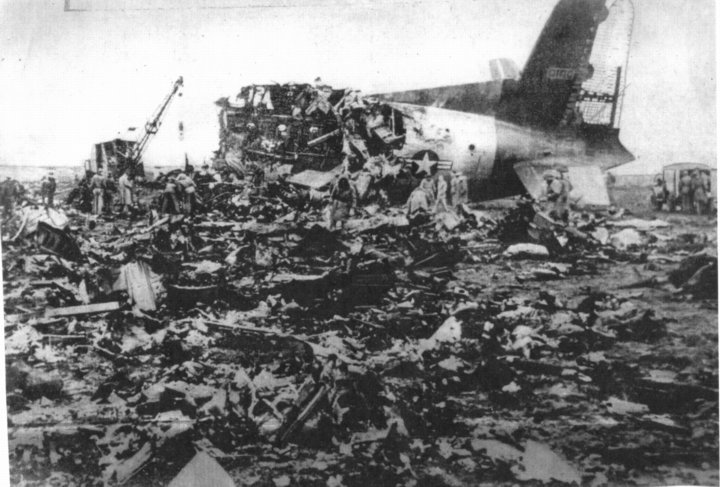
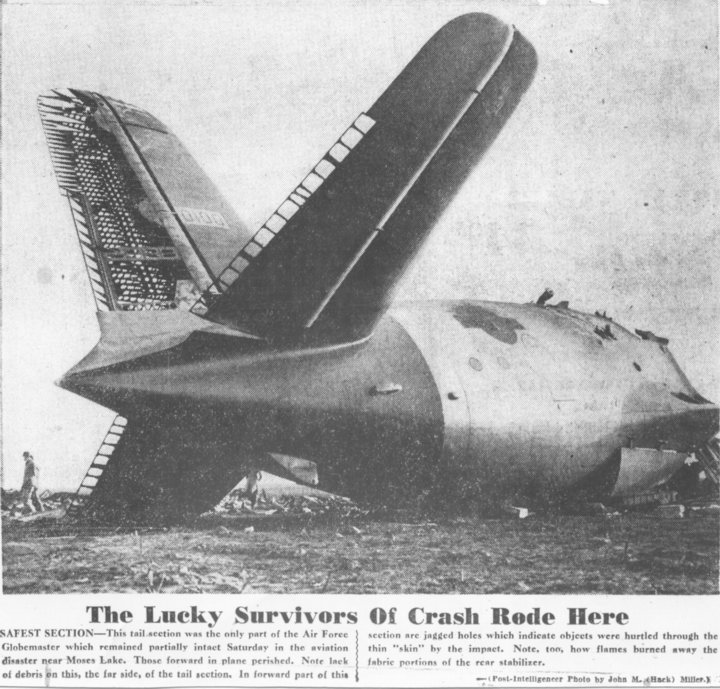
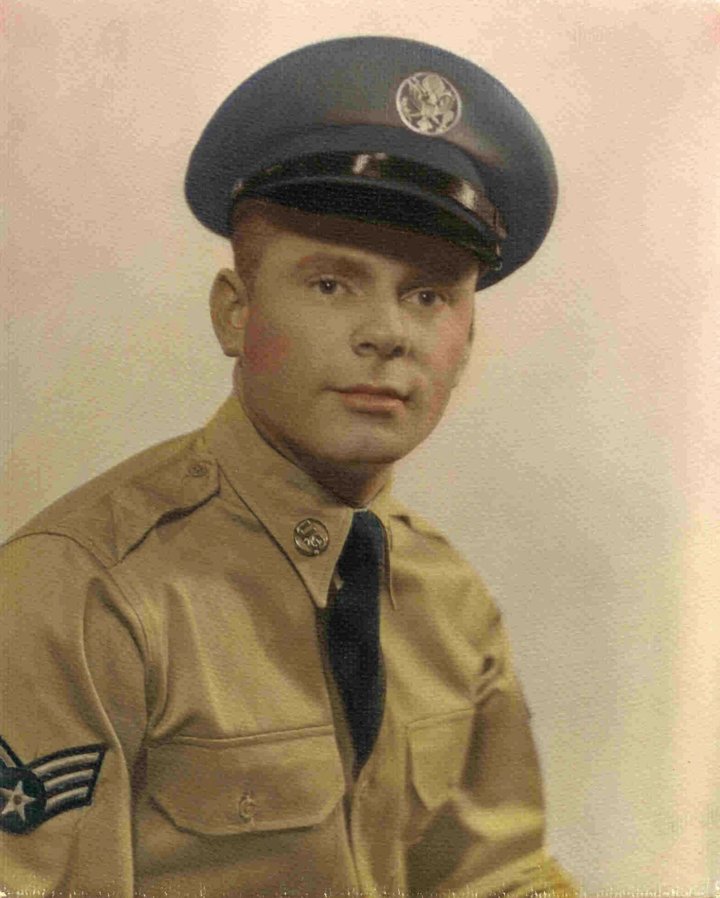
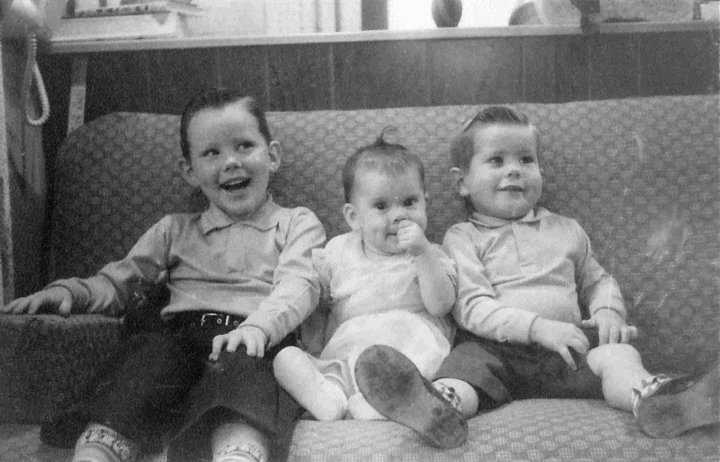
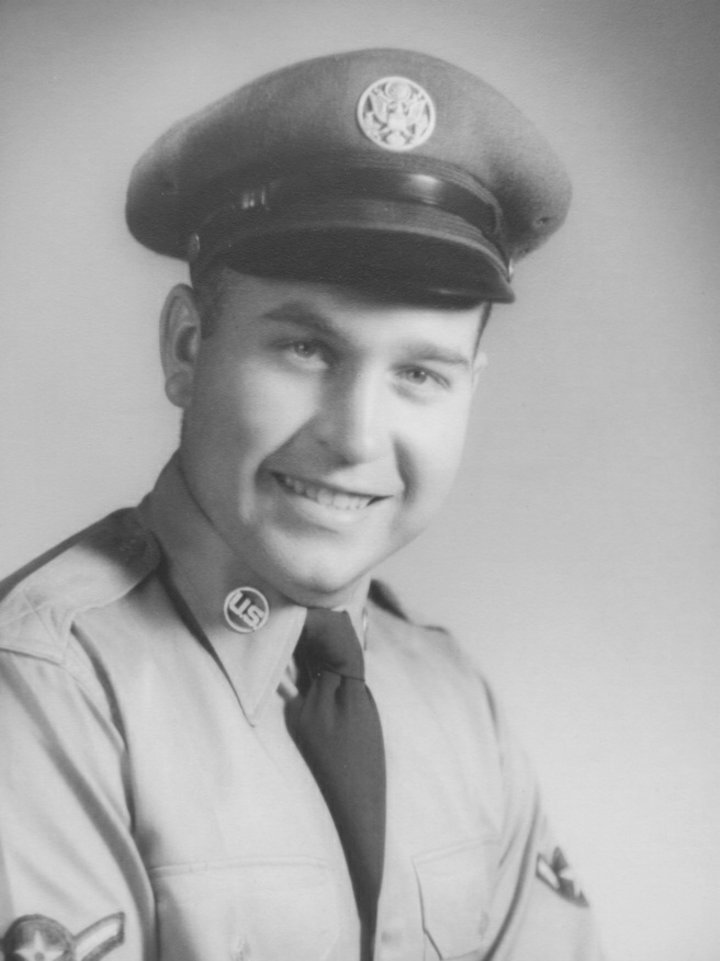
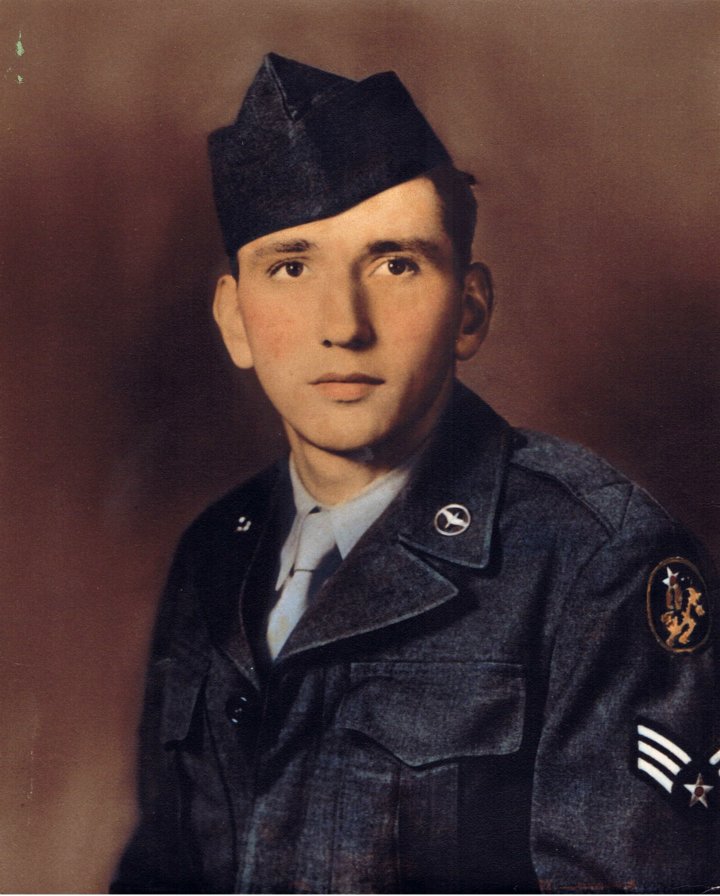
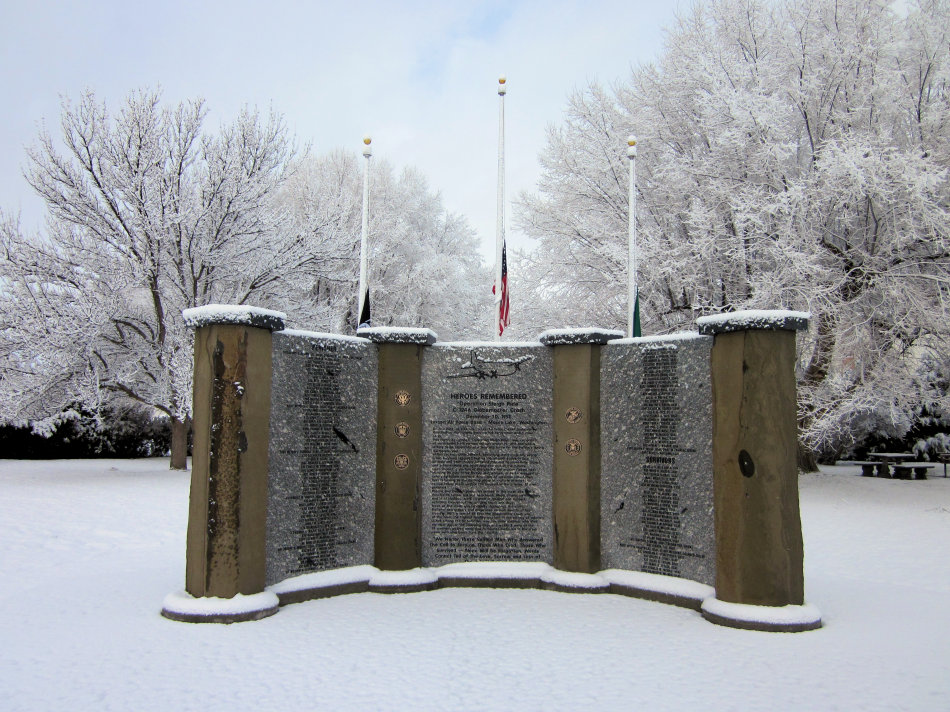
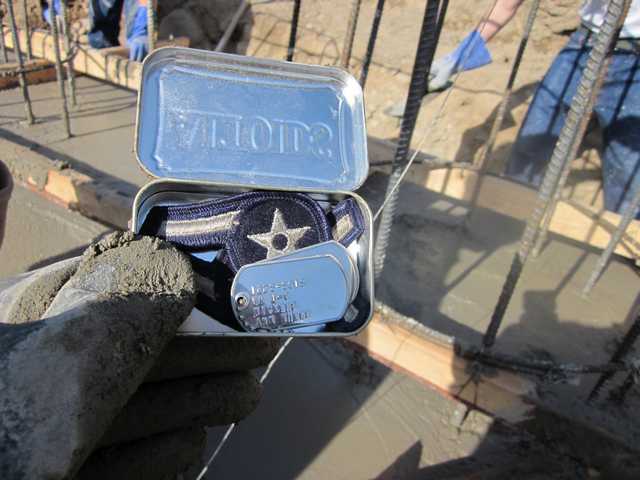
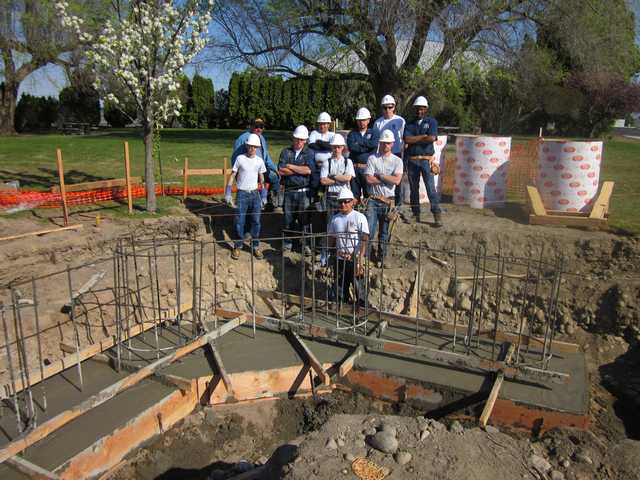
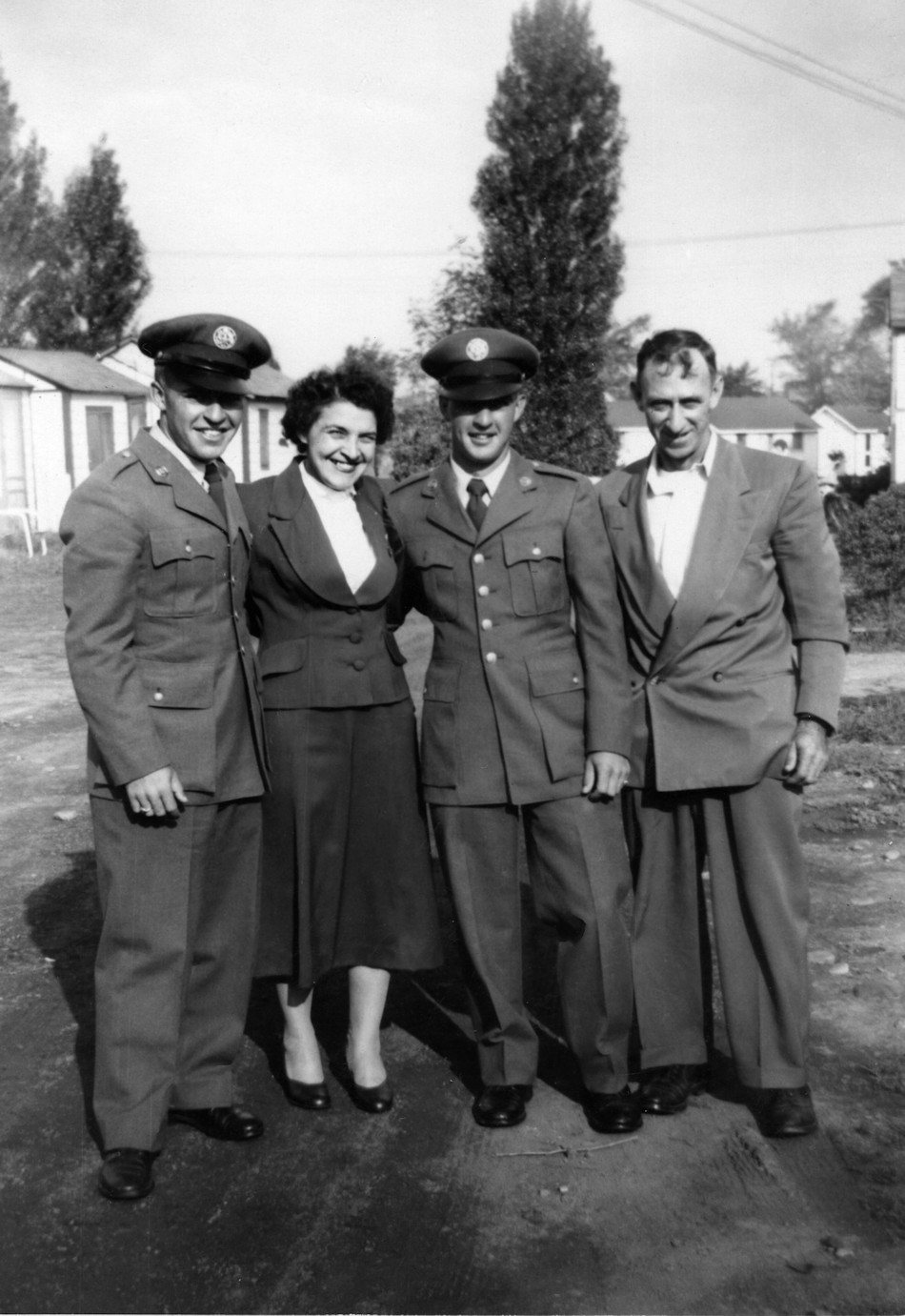
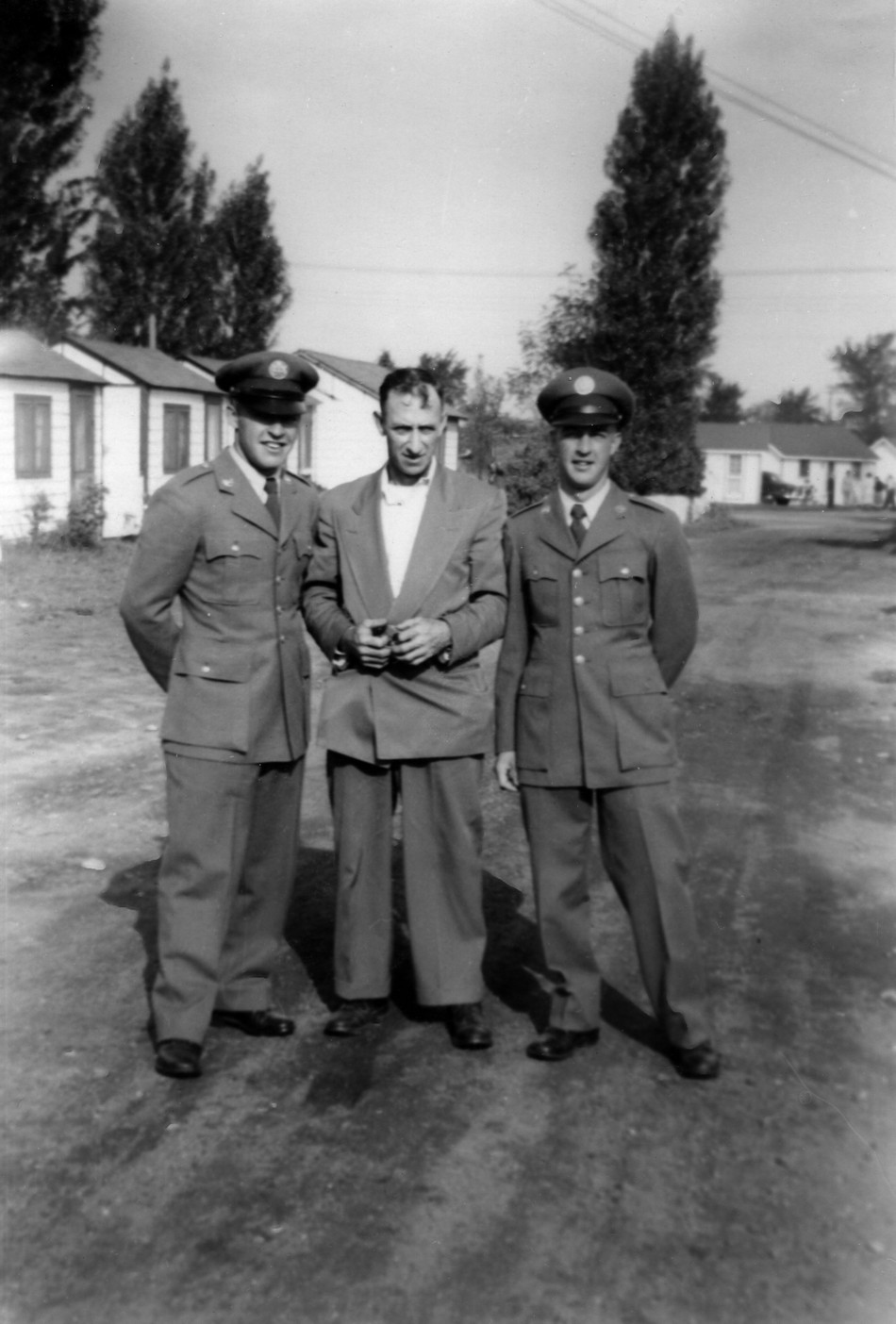
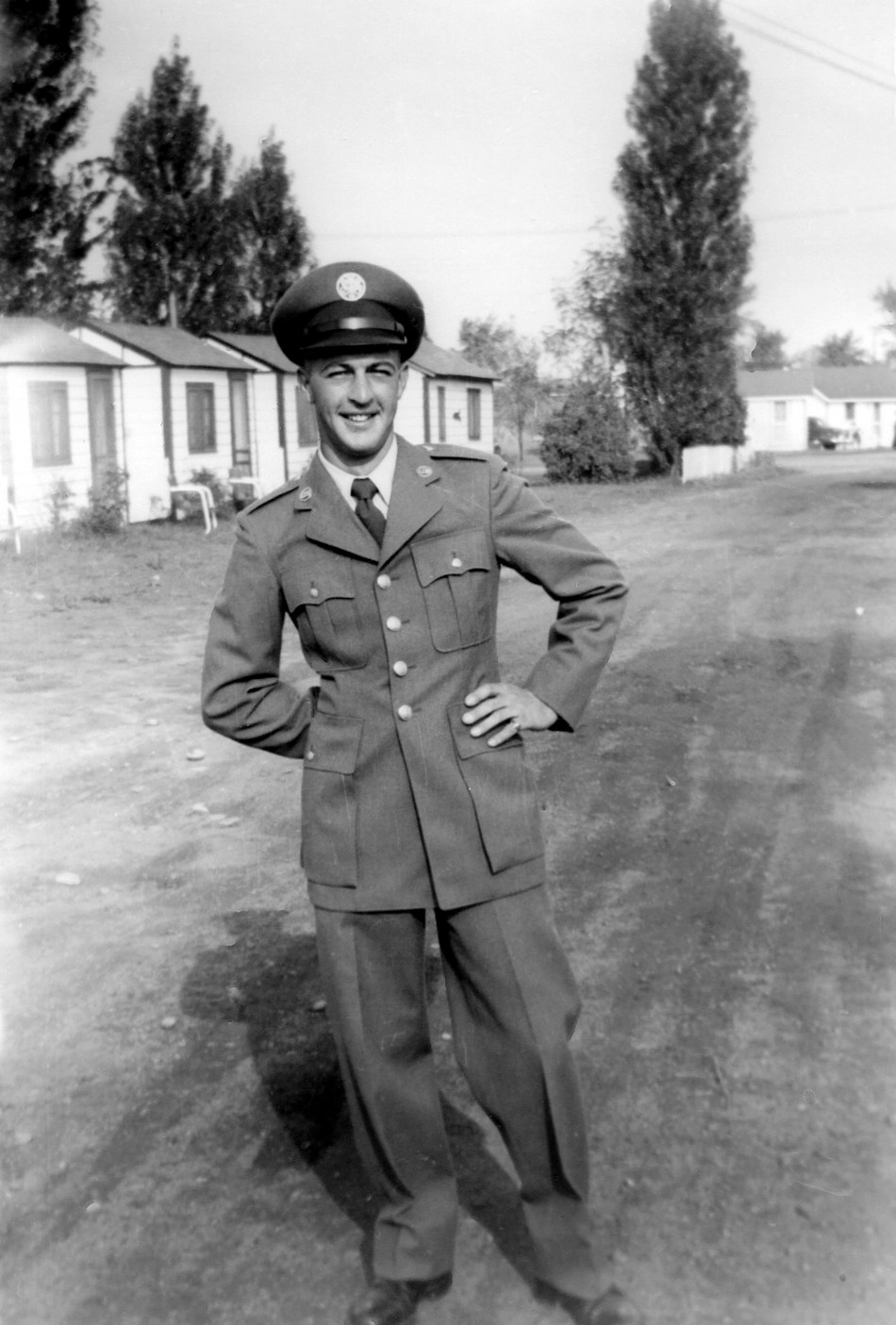
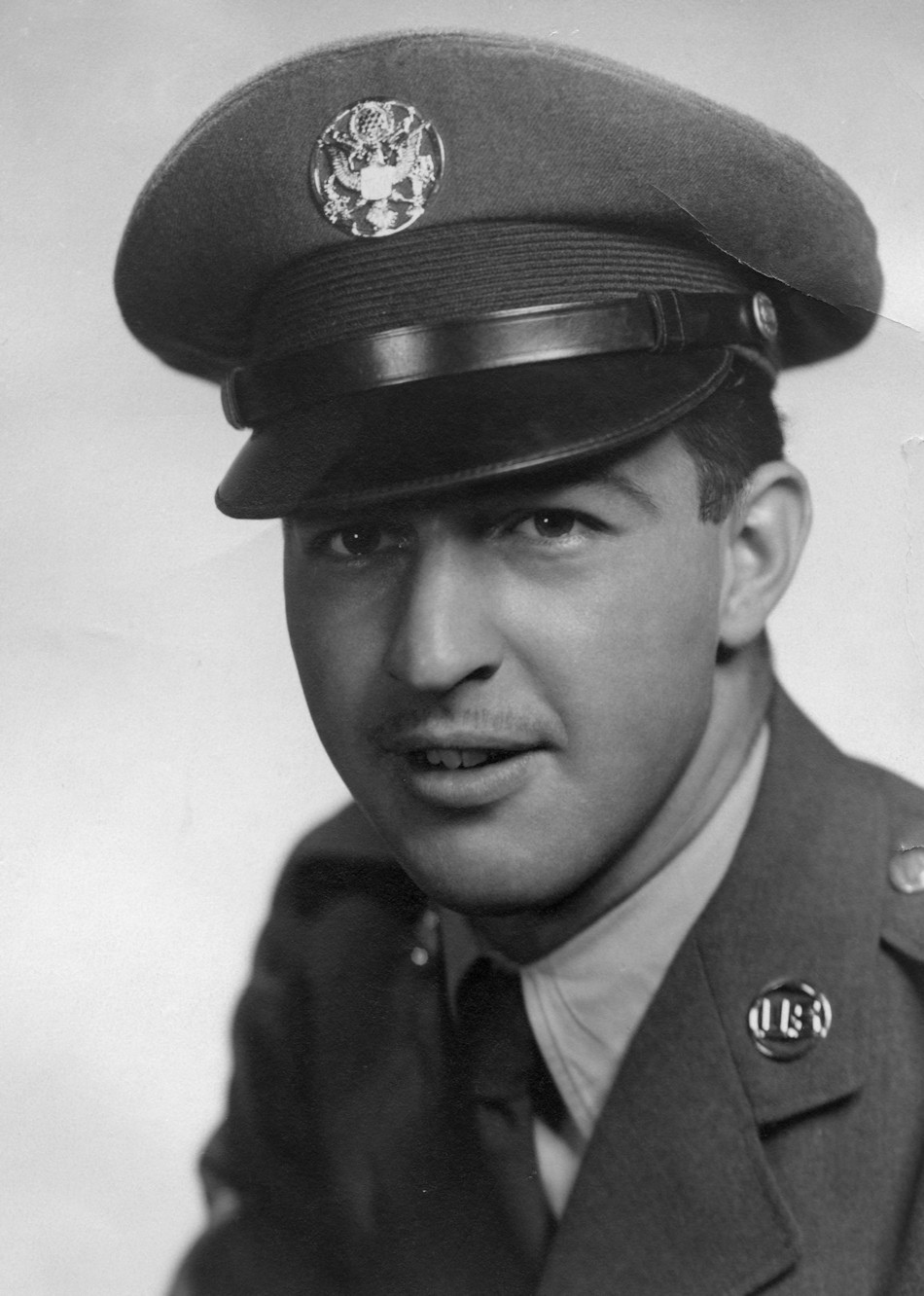
shortly after takeoff. The four pictures below were contributed to the Korean War Educator by Howell
and Peggy McCarley. He was one of the fortunate survivors of the crash.
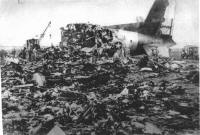
(Click picture for a larger view) |
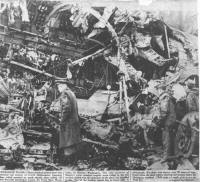
(Click picture for a larger view) |
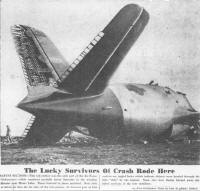
(Click picture for a larger view) |
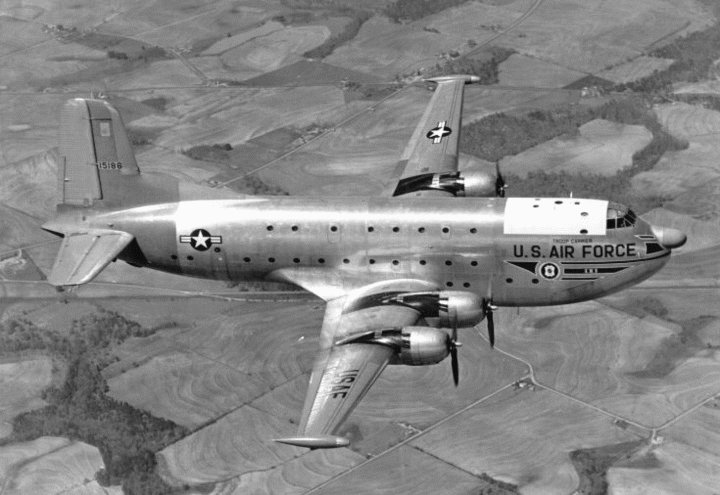
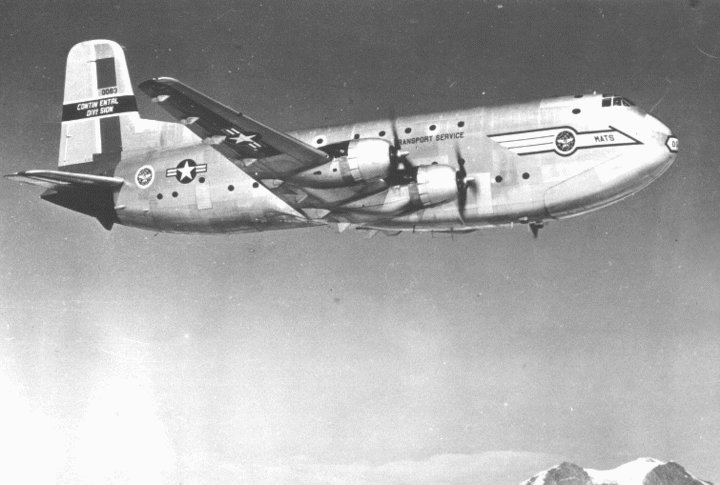
The plane involved in the accident was a C-124A Globemaster that had been made by the Douglas
Corporation. These giant planes were big enough to carry an armored vehicle, two big buses, or 200 fully
armed troops. It was a two-deck plane with four 3,500 horsepower engines, and passengers entered it by a
nose ramp. The cost of the plane was about $1.8 million.
|
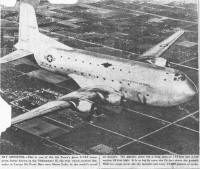
(Click picture for a larger view)
|
The accident took place at Larson Air Field. The base was geographically located five miles northwest of
the city of Moses Lake, Washington, fourteen miles southwest of Ephrata, Washington, and seventeen miles
south of Soap Lake, Washington. Larson AFB closed in June of 1966. The plane took off from the runway,
climbed to about 100 feet, started to turn left, and then plunged back to earth. The plane shattered into
pieces of metal in a fiery crash.
The victims were rushed the 3 ½ miles from the accident scene to the base hospital. According to
newspaper reports, some of the injured needed up to 12 pints of blood. Within two hours of the accident, 81
donors had given blood at the Yakima Red Cross regional blood center. Forty-eight pints of whole blood and
100 units of plasma were rushed to the Larson air Force Base hospital, where base doctors and nurses, as
well as airmen’s wives, were handling the emergency. By noon, more doctors and nurses had been flown in to
care for the injured.
One of the survivors of the crash was the plane engineer. He was conscious long enough to talk to his
wife, but he died the next day. Another survivor, Lt. Frank Riggenbach of Houston, is now deceased, but his
wife at the time, Dorothy Riggenbach of Pasadena, Texas, remembers the day she heard the news about the
crash. Frank had flown in India and Burma in World War II. The father of two children, he had been sent to
Korea after the war broke out. He had just finished 50 combat missions in Korea and had notified Dorothy
that his time was up in Korea and he was coming home on a commercial flight.
On the day he was scheduled to leave Washington for his home in Texas, he overslept and was thus rushed
to get to the plane before it took off. Because he was late, he had to sit in the tail end of the plane. His
lateness probably helped him to survive what so many others tragically did not. According to Dorothy, Frank
told her that he knew that something was wrong as soon as the plane started to lift off. He had flown so
many missions that he knew how a plane was supposed to "feel". This one didn’t feel right. Within two
minutes after takeoff the aircraft began to lose altitude. It crashed and burned into a snow-laden field at
the end of the airstrip.
Dorothy said that she received a telephone call from a Red Cross worker telling her that her husband had
been in an accident on "a ship in Washington". Dorothy told her that that was impossible because he had
already written to her to say that he was coming home by plane. Within hours, local newspaper reporters were
on her doorstep in Houston trying to get a story about something Dorothy knew nothing about. The next day,
she received a telephone call from a neighbor saying she was to call the Red Cross. When she called, she was
told that her husband had been in the crash but that, other than a few scrapes and burns and a dislocated
shoulder, he was fine and would soon be coming home. She took both of her young children to a nearby
shopping area to try to get away from the reporters and to calm herself down. When she returned home, she
found her injured husband waiting for her, along with LIFE magazine reporters and photographers. Photos of
the Riggenbach family appeared in LIFE magazine in Volume 34, No. 1, January 5, 1953, on pages 22-24.
Larson Air Force Base, now Grant County International Airport, is today a world-class heavy jet training
and testing facility used by the Boeing Company, Japan Airlines, the U.S. military, and many other air
carriers from around the world. With 4,700 acres and a main runway 13,500 feet long, it is one of the
largest airports in the United States.
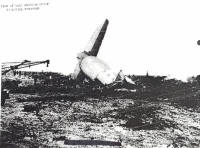
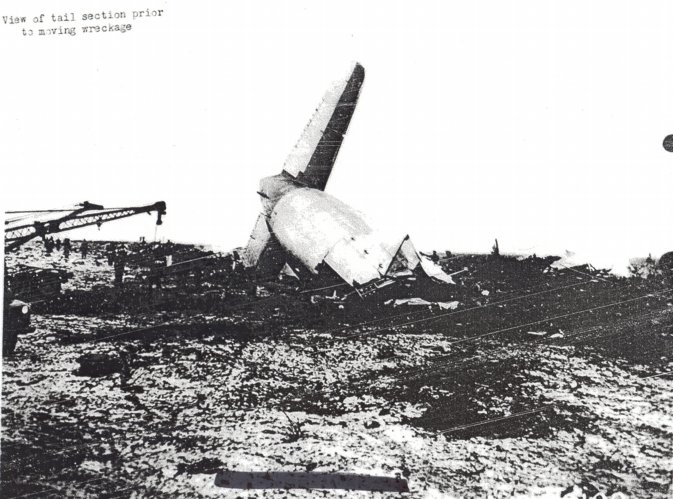
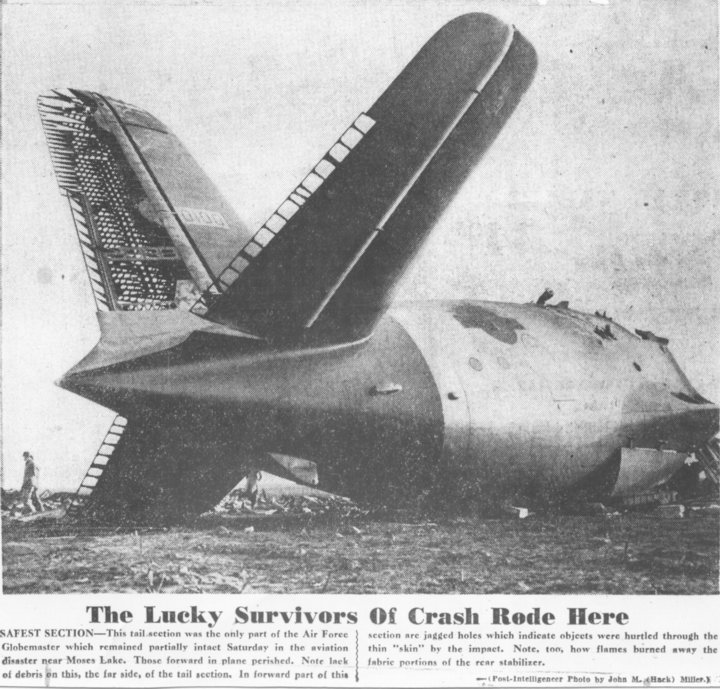
Tail Section
(Click picture for a larger view) |
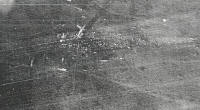
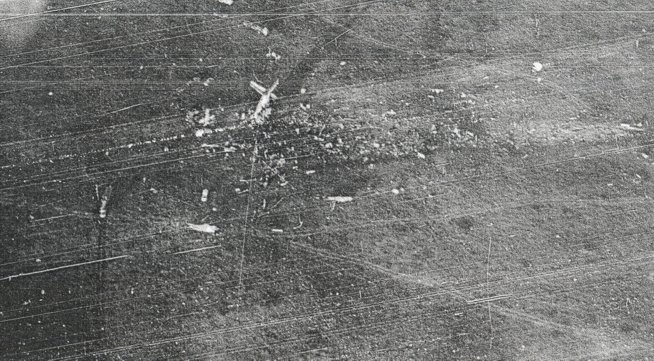
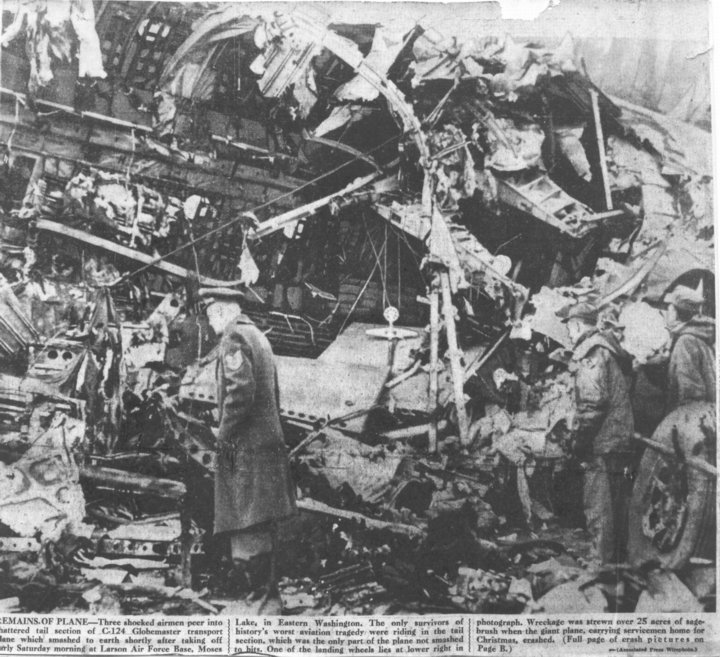
Debris Field
(Click picture for a larger view) |
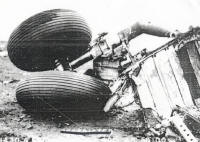
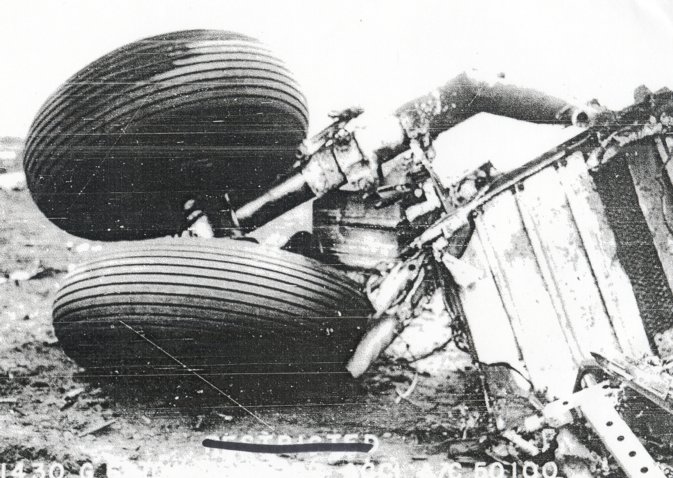
One of the Landing Gear sections
(Click picture for a larger view) |
The three photographs above were provided to the Korean War Educator by the Air Force Historical Research
Agency, Maxwell Air Force Base, Alabama. AFHRA provides Aircraft Accident Reports and other Air
Force-related data to the general public upon reasonable request. To find out more information about
that agency, visit
http://www.maxwell.af.mil/au/afhra.
Back to Page Contents
Government Investigators
The cause of the plane crash was later determined by government investigators to be the failure of the
pilot to remove the rudder and elevator locking pin prior to taking off. It should be noted, however,
that more than one Globemaster inexplicably crashed in the late 1940s/early 1950s. Consequently, some
believe that it was not pilot error that caused the crash; instead, they believe it was a plane malfunction
not caused by error on the part of a crew member, and that the C-124 was not a safe aircraft. Among those
who believe the latter is Jock O'Connell, the pilot's cousin, who has researched and written extensively on
the subject in an effort to clear the name and reputation of Lt. William N. O'Connell. An article about the
crash, written by Jock O'Connell, appeared in the Sacramento Bee on May 30, 1999.
Official Declassified Structures & Aerodynamics
Group Report (PDF File)
Official Flight Operations Group Report
(PDF File)
Back to Page Contents
Manifest
All Military Personnel Onboard the Plane
- Airman 2/C Lewis Jackson "Bill" Adams, Jr. -
Hopkinsville, KY. Fatality. Born June 19,
1931 in Hopkinsville, he was the son of Lewis J. Adams Sr.
(1902-1975) and Linda Torian Adams (1904-1965). He is
buried in Riverside Cemetery, Hopkinsville. The following
is from the source "Findagrave": As reported on the front page
of the KY New Era Newspaper-December 22, 1952 which saddened the
hearts of many who knew this handsome young airman: Adams Victim
Of Plane Crash – Among First Identified Following Catastrophe –
A local youth 21 year old Lewis J Adams, Jr., was among the
fatally injured G.I.'s in the Saturday morning crash in the
State of Washington that proved to be the worst aviation
disaster in history. Airman Second Class Lewis Jackson (Bill)
Adams, Jr., 1808 So. Virginia St., lost his life in the crash of
the C-124 Globemaster that killed a record 86 persons at Moses
Lake, Wash., on Saturday. His parents were notified yesterday.
He was 21 years of age. The Defense Department telegram said
arrangements would be made to have the body shipped home for
burial. Further details are to be revealed in a letter which
will be sent to the parents at a later date. An Associated Press
dispatch said he was among the first victims identified. Young
Adams, who spent a 10 day leave at his home here at Thanksgiving
time, had been stationed at Larson Air Force Base in Washington
only since Dec. 3rd. Prior to that time he had been at Keesler
Field, Miss., and before that he was at Sampson Air Base in New
York. He was the only son of Lewis J & Linda Torian Adams. He
was born here on June 19, 1931, and spent his entire life in
this community. He entered the Air Force in September, 1951. He
received his education in the local schools and was graduated
from the high school department of Columbia Military Academy,
Columbia, TN., in 1950. He then attended Tulane University in
New Orleans for a year. He was a member of the local
Universalist Church. The local young man served as a radio
operator in the Air Force. It was believed he was serving in
that capacity aboard the plane that crashed. He was one of two
Kentuckians to die in the crash. The other victim was Airman
third class Charles R Baker of Route 2, Springfield, who
identity was not immediately learned. In addition to his
parents, he leaves a grandmother, Mrs. A.J. Adams, and four
aunts and a number of more distant relatives. (KY New Era -
Front Page 12/22/1952)
- SN Billy Paul Alexander (USS Duncan) -
Survivor. Sherman, TX Son of Mrs. C.E.
Alexander.
- Airman 3/C C. J. Allen
- Airman 3/C John W. Allen (62nd Instl Sq) - Fatality.
Silver Creek, Polk County, GA. John was born November 23,
1931 and enlisted on May 31, 1951. He was a member of the
62nd Installations Squadron, 62nd Troop Carrier Wing, Air Force.
Inez Allen signed his death certificate. He is buried in
Seney Cemetery, Rome, Georgia.
- Airman 3/C Robert Leon Allen (Maint Sq) - Kenton, TN.
Robert was born on June 25, 1932, son of Euneice and Ruby Allen.
He is buried in Rose Hill Cemetery, Obion, Tennessee.
- Airman 2/C Kenneth Rodney Bacot (A.P. Sq) - Fatality.
He was born January 7, 1932, son of Harry G. Bacot (1902-1978)
and Loryne Huffhines Bacot (1904-1998). He is buried in
Fairmount Cemetery, Hollis, OK.
- Airman 3/C Charles Russell Baker (Fd Sv Sq) - Fatality.
Springfield, KY. Airman Baker was born February 26, 1933,
a son of Everett Francis Baker Sr. (1887-1935) and Myrtle Belle
Clark Baker (1894-1961). His siblings were William T.
Baker (1921-1968), Beulah Baker Beam, Mary Helen Baker Gordon,
Ernest Albert Baker (1930-1995), Myrtle Catherine Baker Alvey
(1925-1999), John Lawrence Baker (1919-1988), Everett Francis
Baker Jr. (1917-1988) and Aline Baker (1915-1917).
- Airman 3/C David Bolden (Fd Sv Sq) - Survivor.
- S/Sgt. James Robert Beck (59th RS&S) - Fatality.
Pasgagoula, MS. He was born July 31, 1931 and is buried in
Evergreen Cemetery, Ocean Springs, MS.
- A/2C W. E. Bennett (Fd Sv Sq)
- ATAM Arthur S. Beach (Op Emgcy Lv) - Fatality.
Born August 13, 1931, he is buried in Palm Cemetery, Winter
Park, FL.
- Airman 2/C Willie James Blake (15th T.C.) - Fatality.
Birmingham, AL
- Airman 2/C Louis A. Bowen (Fd Sv Sq) - Fatality.
Mt. Pleasant, TN He was born June 22, 1926 and is buried
in Lynnwood Cemetery, Lynnwood, TN.
- Airman 3/C Sidney Roy Bozeman (Maint Sq) - Fatality.
Opelka, AL. Airman Bozeman was born on January 04, 1934, a
son of Roy Bozeman (1904-1984) and Margaret Gibson Bozeman
(1910-1980). His siblings were Betty, Joyce, and Jerold. Sidney
Roy is buried in Winfield City Cemetery, Winfield, Alabama.
- Airman 2/C James H. Bradley (Maint Sq) - Fatality.
Ft. Worth, TX. James was born February 01, 1930 in Ft.
Worth, Texas, son of Robert S. and Lula Bell Bradley.
- PN3 Robert W. Buecker (USNS Caffey) - Fatality.
Atlantic City, NJ. He was born September 4, 1929 and was a US
Navy Patternmaker 3C. He is buried in Beverly National
Cemetery, Beverly, NJ.
- S/Sgt. Ceathil Ray Bumpers (Comm Sq) - Fatality.
Ceathil was born June 26, 1924 i9n Clark County, Alabama, a son
of Augusta Bumpers (1902-1962) and Daisy Lee Truett Bumpers
(1906-1986). His siblings were Kathleen Bumpers Deas,
Lyndal Bumpers Scruggs, Arthur Leon Bumpers, June Evelyn Bumpers
Roseberry, Jackie Bumpers Cox, Patricia Bumpers Meyer, and Doris
Bumpers Buendicho. Ceathil is buried in Ulcanush
Cemetery, Coffeeville, Alabama.
- M/Sgt. Wendell L. Burton (flight engineer). Fatality.
Temple, OK. He was transferred to Brooke AH, and died in that
hospital on December 22, 1952. Born November 9, 1921, he
is buried in Temple Masonic Cemetery, Temple, OK. He was
survived by a three-year old daughter, Hazel (later Bishop).
- 1st Lt. Anthony Cannizzaro (7th T.C. Sq) - Fatality.
Nashville, TN. Anthony was born in 1923, son of Frank and
Frances Cannizzaro.
- Airman 1/C Allen C. Carson (15th T.C.) - Fatality.
Kerrville, TX. Born October 5, 1930, he is buried in
Garden of Memories Cemetery, Kerrville.
- Airman 2/C Edward Roy Choate (Fd Sv Sq) - Fatality.
Nashville, TN. Born January 29, 1933 in Robertson County,
Tennessee, he was the son of Edward T. Choate (1911-2005) and
Georgia Helen Choate (1914-1999). He is buried in Lights
Chapel Cemetery, Greenbrier, TN.
- 2nd Lt. Donald Herbert Clayton (62nd Supp) -
Fatality. Greenwood, SC. He was a graduate of
Clemson University, Class of 1952. He was born March 11,
1931 and is buried in Zion United Methodist Church Cemetery,
Dorchester, SC.
- Airman 1/C Robert Neal Dalton (Fd Sv Sq) - Fatality.
Baxter, TN. Born August 23, 1931, he was the son of
Charles Herman Dalton (1895-1946) and Minnie Austin Dalton
(1900-1992). He is buried in Boiling Springs Cemetery,
Putnam County, TN.
- S/Sgt. Thomas Richard Dehart (Hq Sq Wg) - Fatality.
Born February 5, 1929, he is buried in Fairview Cemetery,
Narrows, VA.
- Capt. George Demas (61st T.C. Gp) - Survivor.
25 years old. Cleveland, OH. He was severely burned
and flown to Brooke Army Hospital in Texas.
- Airman 2/C Percy J. Develle Jr. (Hq Sq AB Gp) -
Fatality. Born March 8, 1931 in Alabama, he was the
son of Percy DeVelle Sr. (1912-1978) and Emma Alexander DeVelle
(1915-1986). He is buried in DeVelle Cemetery, Boligee,
Alabama.
- Airman 2/C Amos W. Dinkins (Hq Sq Wg) - Fatality.
Winston-Salem, NC. He was born July 29, 1932, the son of
Mr. and Mrs. Reid Dinkins of Winston-Salem. He enlisted in
the Air Force in May 1951 and had been at Larson AFB for eight
months. He is buried in Woodland Cemetery, Winston-Salem.
- Airman 1/C Paul Kenneth Donahoe (637th AC&W Squadron)
- Fatality. LaPorte, TX. Born January 12,
1930 in Texas, he was the son of Sam David Donahoe (1896-1979)
and Eva Ethel Windsor Donahoe (1899-1986). He is buried in
Wealthy Cemetery, Normangee, TX.
- Airman 2/C Will Calvin Dunn, Jr. (62nd Supp) -
Fatality. Aberdeen, NC. He joined the Air Force in
December 1951 and had been at Larson since then.
- Airman 2/C Robert H.J. Dupriest (7th T.S. Sq) -
Fatality. Searcy, AR. He was born May 6, 1932
and is buried in Oak Grove Cemetery, Searcy, Arkansas.
- M/Sgt. Willy Ellis (Mtr Veh Sq) - Survivor. 26
years old. Holdenville, OK. He was severely burned
and flown to Brooke Army Hospital, Texas.
- Airman 3/C Robert J. Elrod (4th T.C. Sq) -
Survivor. Born January 30, 1933, Robert Elrod Sr. died
December 27, 1990 and is buried in Mountain Home National
Cemetery, Johnson City, Tennessee.
- Airman 3/C Waymond Keith Ferguson (Fd Sv Sq) -
Survivor. Batesville, AR. Waymond K. Ferguson, born in
Humphrey, Arkansas on April 25, 1930, passed away on August 26,
2007 while a resident of San Antonio, Texas. His funeral
service was August 29, 2007 and he was buried in Ft. Sam Houston
National Cemetery. He is survived by his wife Eileen; three
children, Paul Ferguson, Carolyn Moore, and Lois Bourne; and
five grandchildren, Kristyn, Jonathan, Brandon and Kathleen
Moore, and Ryan Ferguson. [KWE Note: The following excerpt was
found in the Independent Press-Telegram, 21 December 1952.0]
"Waymond K. Ferguson, 22, an enlisted man who was en route to
his home in Batesville, Ark., was one of the survivors. He
suffered only a skinned forehead, a scratch on one arm and a
bruised leg. "I was in the tail section of the plane where most
of the survivors also were," Ferguson said. "When the plane took
off, it was shaking a bit and then it righted itself and went
into a long glide. "I felt it was going to crash and so I
huddled my head down and started to pray. Somebody was
listening, or I wouldn't be here talking now." Ferguson
said five of his "buddies" in the front of the plane were
killed. He said he unfastened his safety belt as fast as he
could and helped carry one injured man out. "We tried to rescue
others, but they were trapped by flames," he said. "It was
terrible." Ferguson said he found his suitcase and that it had a
few holes in it. He said Air Force officers would not let him
have the bag. Police ringed off the crash area and permitted
only authorized personnel near the wreckage. Newsmen and
photographers were kept away from the scene. Every available
ambulance, doctor and nurse in the area was called to help or
stand by."
- Airman 2/C F. Ford (Instl Sq) - Survivor.
- Airman 2/C Zachariah Gaither (62nd Instl Sq) -
Fatality. Charlotte, NC Airman Gaither was born June
21, 1933, in Mecklenburg County, North Carolina, a son of George
and Lizzie Jones Gaither (1903-2004). One of his siblings
was Isaiah Gaither (1928-2013). Zachariah is buried in
York Memorial Park, Charlotte, North Carolina.
- Airman Basic Otis Roland Gilley (15th T.C.) -
Fatality. Ada, OK. Otis was born February 6, 1926, a
son of Lewis Calvin and Viola Mae Olds Gilley. He is
buried in Memorial Park Cemetery, Ada, Oklahoma. His
siblings were: Myrtle Louise Gilley (died 1928), Mr. Leita Louis
Gilley (1925-1966), Glen Elbert Gilley (1927-1928), Wanda L.
Gilley Striegel (1923-2010), Nelda Ramona Gilley Bowen
(1930-2019), Laverna Mae Gilley Chandler (1935-2011), Fred
Eugene Gilley (1947-2016), Clara Belle Gilley Brengle, Ruth Ann
Gilley Richardson, Norman Gilley, Carl Gilley, Frank Gilley,
Earl Gilley, and Lloyd Gilley.
- S/Sgt. Richard Glenwood Girdham (61st T.C. Gp) -
Fatality. Airman Girdham was born November 21, 1929 in
Hudson, Michigan, a son of Glenwood William Girdham (1907-1977)
and Belva Paxton Girdham (1907-1998). His siblings were
Helen June Spangler (1928-1988), Hazel Janet Kime (1932-2018),
Clifford (1940-2009), Wayne L. (1942-2010), and Glenn "Curly"
Frederick (1944-2014). Airman Girdham is buried in Oak
Grove Cemetery, Morenci, Michigan.
- Airman 1/C Ernest W. Gomillion Jr. (4th T.C. sq) -
Fatality. Columbia, SC. He was a member of the 4th
Troop Carrier Squadron, 62nd Troop Carrier Wing and was serving
as a radio operator on the fated flight.
- Airman 2/C Jewell D. Grantham (Instl Sq) -
Fatality. Bush, LA. He was the son of Ralph D. and
Hattie T. Grantham.
- M/Sgt. Hoyt G. Greene (Med - Army) - Survivor.
Scheduled to fly home out of Portland, Oregon the day before,
the pilot of that flight was stricken with appendicitis and the
flight was cancelled. The next day he got a seat in the
third upper deck of the fated Globemaster. Greene had been
in the Army since 1938 and was going home on a 10-day leave
before being shipped to Korea. When the crash occurred he
was sent to Madigan Hospital, where he stayed six months before
being sent to Korea. In 1965 M/Sergeant Greene was an army
recruiter in Gadsden. To see a story about his experiences
in the Globemaster crash see Gadsden Times, January 10,
1965, "Flight He Almost Missed - 87 killed in Plane Crash"
written by Frank Sikora.
- A/3C Donald H. Grogan (82 Supply Sq.) - Survivor.
Cookeville, TN. Obituary: Funeral services for
Donald Wayne Grogan, 69, of Cookeville, were held on Sunday,
March 4, from the chapel of Hooper & Huddleston Funeral Home.
Burial was in Cookeville City Cemetery with full military honors
conducted by Veterans Honor Guard, consisting of American Legion
Post 135, VFW Post 6277 and VVA Chapter 741. Mr. Grogan died on
Friday, March 2, 2001, at Cookeville Manor Nursing Home.
He was born September 6, 1931, in Putnam County to the late
Haskell and Nancy Dunn Grogan. He was an antiques dealer and
veteran of the U.S. Air Force. His family includes two sisters,
Beatrice Elmore and Ara Farley, both of Cookeville; four
brothers, Austin Grogan of Lewisburg, Payton Grogan of
Cookeville, Layton Grogan of Gainesboro and Haskell Grogan Jr.
of Tullahoma; and several nieces and nephews. In addition to his
parents, he was preceded in death by a brother, Harold Kenneth
Grogan.
- Airman 2/C James Pierre Guidry (637th AC&W Squadron).
- Fatality. Port Arthur, TX. Airman Guidry was born
in 1931, the son of Wallace Pierre Guidry (1905-1979) and Carmen
Bernard Guidry (1904-2002). He is buried in Calvary
Cemetery, Port Arthur.
- Airman 2/C Charles Nelson Hall (61st T.C. Gp) -
Fatality. Front Royal, VA. Born December 19, 1929 in
Northumberland County, Virginia, he was the son of Chowning
Reginald Hall (1900-1969) and Henrietta Nelson Hall (1901-1999).
Charles' siblings were Chowning Reginald Hall Jr., William
Armistead Hall and Lucy Page Hall. Charles is buried in
Prospect Hill Cemetery, Front Royal.
- Airman 3/C Thomas T. Hartley (SKA) - Fatality.
Jacksonville, FL. Born November 28, 1934, he is buried in
Oaklawn Cemetery, Jacksonville, Florida, in a plot along with
C.A. and Kathleen Hartley.
- Pfc. Arnold Eugene Helms (62nd Supp) - Fatality.
Charlotte, North Carolina. Born August 15, 1933, he was
the son of Mack and Bright Hargett Helms. He is buried in
Mt. Harmony Baptist Church Cemetery, Matthews, NC.
- S/Sgt Lewis Fletcher Henry (63rd T.C. Sq) -
Fatality. Born October 8, 1929, he is buried in Beaver
Creek Baptist Church Cemetery, Neeses, SC.
- AA Donald L. Herring (USN) - Survivor.
- Airman 1/C Bobby Harry Lee Hyman (62nd T.C. Gp) -
Fatality. Winston, NC. He was born September 25, 1931
and is buried in Rest Haven Cemetery, Wilson, NC.
- A/B Manford L. Irwin (Instl Sq) - Survivor.
- Airman 1/C Robert Morton Jacobs - Fatality.
Burbank, CA. Airman Jacobs was born November 22, 1931 and is
buried in Sholom Memorial Park, San Fernando, California.
- Airman 1/C Alvin Cullom Jared (62nd Instl. Sq) -
Baxter, TN. Fatality. Age 22, he was born on March
13, 1930 in Putnam County, Tennessee, the son of Leonidas Polk
Jared Sr. (1879-1963) and Mary Frances Maxwell Jared
(1886-1981). He is buried in Maxwell Cemetery, Baxter, TN.
- M/Sgt. James Sam Jones, Jr (61st T.C. Gp) -
Fatality. Unknown how he escaped from the plane. Taken to
Larson AFB Hospital, where he died shortly thereafter. He was the son of Mr. and Mrs. J. Sam Jones
of Greenwood, South Carolina. He left a wife and children: Shirley Mae, age 2; Mary Ann, age 6; and
John Wayne, age 5. He was also survived by a sister and five brothers.
- Airman 2/C Sam R. Kaufman (Hq 39th Air Div Wg). -
Fatality. Nashville, TN. Taken to Larson AFB Hospital, where he died
shortly thereafter. Airman Kaufman was born December 21,
1932. son of Sam Kaufman (1900-1962) and Ettie Kaufman
(1906-1977). His sister was Mrs. Bill (Sara Helen Kaufman)
Farmer (died 2018). Airman Kaufman is buried in Sherith
Israel and West End Synagogue Cemeteries, Nashville, TN.
- 2nd Lt. Artice Lee Laird (Hq Sq Wg) - Fatality.
San Antonio, TX. Former reporter for The Corpus
Christie Caller Times. He was born in Texas August 29,
1929, and was married in December 1951 to Patricia Ann Cloud,
daughter of Colonel and Mrs. H.H. Cloud. His mother was
Mrs. L.L. Laird of Magnolia, TX. Lieutenant Laird had been
in the Air Force for two years and was stationed at Larson,
where he was assistant adjutant.
- Airman 1/C Walter J. Lavette (62nd Supply, 62 Troop
Carrier Wing, USAF) Fatality. -
Chattanooga, TN. Walter was born July 20, 1931 and is
buried in Marietta National Cemetery Marietta, Georgia.
- Airman 2/C George Lee Leverette (Fd Sv Sq) -
Fatality. Mississippi.
- Airman 3/C James W. Lewis (62nd Supply Sq) -
Fatality. Airman Lewis was born April 26, 1934 and is buried
in Pleasant Hill Cemetery, Suffolk, Virginia.
- Airman 2/C Francisco E. Loya (62nd Sq) - Fatality.
McAllen, TX. He was born August 6, 1932 in San Benito,
Texas, a son of Salvador G. Loya Sr. (1913-2009) and Hortencia
E. Loya (1914-2004). His brother was Salvador Loya Jr.
Francisco is buried in Valley Memorial Gardens, McAllen, TX.
- 1st Lt. Robert J. Maple (Co-Pilot) - Larson AFB, WA
- Airman 3/C David Martinez (Fd Sv Sq) - Fatality.
San Antonio, TX. Born August 24, 1931, he was the son of
Mr. and Mrs. Estanislado Martinez of San Antonio, and the fiance
of Olivia Casares. He had siblings, two of whom were Lilia
Martinez and Ruben Martinez. Names of his other siblings
is not known by the KWE. David is buried in San Fernando
Cemetery #3, San Antonio.
- Airman 3/C Felimon Gasper Martinez (62nd Supply Sq) -
Survivor. New Mexico. Severely burned. Flown to
Brooke Army Hospital, Texas. Obituary: Felimon “Phil”
Martinez age 85, a resident of El Prado passed away peacefully,
surrounded by his loving family, after a lengthy illness on July
6, 2020. He was preceded in death by his parents Eraclio and
Marcelina Martinez and brother Norbert Martinez. Felimon proudly
served his country in the U.S. Air Force. He worked for over 35
years in the grocery industry, Felimon was a caring and loving
husband, father and grandfather and great-grandfather. He is
survived by his wife Maria Odelia Martinez; sons Tom Martinez
(Anna), Danny Martinez (Stella); grandchildren Santana Martinez
(Loren), Christine Martinez, David Martinez; great-grandchildren
Carlos Hammer, Azalea Hammer, Mateo Felimon Hammer; siblings
Ramona Bender, Maxine Martinez, Rosina Apodaca (Melecio),
Erminio Martinez, Juan Martinez (Tina) and many loving nieces,
nephews, relatives and cherished friends. Private services will
be held at the Holy Trinity Catholic Church in Arroyo Seco with
burial to follow at the Santa Fe National Cemetery
- SN Alexander J. Maynes (USS Duncan) - Survivor.
22 years old, El Paso, TX. Severely burned. Flown to
Brooke Army Hospital, Texas.
- S/Sgt. Johnny L. McBride (53rd T.C.) - Fatality.
SSgt McBride was the son of Fulton McBride and Emma Louella Bolt
McBride. He was a native of McMinnville, Warren County,
Tennessee and attended the public schools, completing two years
at Central High School before enlisting in the military.
- Howell Day McCarley (AF - Hq Sq Wg) - Survivor.
Blue Ridge, TX. Mr. Howell Day McCarley of Blue Ridge, Texas,
passed away November 12, 2012, in McKinney. He was born March 1,
1929, in Delva, Texas, the son of Eugene and Lena Duke McCarley.
He graduated from Blue Ridge High School at age 16 and then
attended and graduated from East Texas State College in three
years. He then began his teaching career in Blue Ridge. In 1951
he joined the U.S. Air Force and, while stationed in Moses Lake,
Washington, he was one of the lucky 29 survivors out of 116 that
were involved in the crash of a C124. After his term in the Air
Force he resumed his teaching career in 1955 at Dallas ISD and
retired in 1985 as an administrator of the evening school at
Skyline High School. He married Peggy Compton December 31, 1953,
in Celeste, Texas. He was also a member of the Blue Ridge
Baptist Church and the Blue Ridge Masonic Lodge and a
50-year-member Shriner. He is survived by his wife of almost 59
years, Peggy; and his children, Ken McCarley and Chuck McCarley
and his wife Becky of Blue Ridge and Dean McCarley and his wife
Kelly of Sugar Land. He is also survived by seven grandchildren
and one great-grandchild. He was preceded in death by one
daughter, Vickie Musser and one grandson, Neal McCarley. Funeral
services will be held at 10 a.m. Thursday at the Blue Ridge
Baptist Church with the Rev. Johnnie Jones and the Rev. Shawn
Bailey officiating and Masonic graveside rites following at the
Blue Ridge Cemetery. Visitation was held from 6 to 8 p.m.
Wednesday evening at the Blue Ridge Baptist Church in Blue
Ridge. In lieu of flowers the family requests that contributions
be made in his name to the Blue Ridge Baptist Church Building
Fund.
- Airman 3/C Thurman McDonald (Instl Sq) - Survivor.
- Airman Basic Howard McGuire (62nd Supp Sq)
- Airman 1/C Joseph B. Miceli - Waterbury, CT.
Joseph was born on June 6, 1918, a son of Alfonzo Miceli
(1893-1964) and Anna Lucido Miceli (1898-1950). This World
War II/Korean War veteran is buried in Saint Marys Cemetery,
East Hartford, Connecticut. His siblings included: Bartelo
Miceli Sr (died 1997), Salvatore Miceli, Mary Miceli Seymour,
Dolores Miceli Leccese, Patricia "Fran" Miceli Donofrio,
Antoinette Miceli Donofrio, Rose Miceli Pappagallo, and Carol
Miceli Capaldo.
- 2nd Lt. Ralf M. Miller - Survivor. Ft. Lewis, WA.
- Airman 3/C Willie J. Milton Jr. (Maint Sq) - Montgomery, AL
- Airman 2/C Thomas White Mires (A.P. Sq.) - Mt. Juliet, TN.
Airman Mires was born June 26, 1930 in Wilson County, Tennessee,
a son of Louis Thomas Mires (1892-1966) and Sarah Katherine
White Mires (1905-1995). His siblings were Kathleen Mires
Spickard (1928-2016), Samuel Davis Mires (1932-2011), Hilton A.
Mires and Jackie Mires. Airman Mires is buried in Wilson
County Memorial Park, Lebanon, Tennessee.
- Airman 2/C Washington Morgan Jr. (4th T.C. Sq).
Fatality. Roanoke, AL. Unknown how he escaped from the plane. He was
transferred to Brooke Army Hospital in Texas, and died in that hospital shortly thereafter.
He had 3rd degree burns over 65% of his body surface.
Known as "Wash", he was born in Alabama on August 28, 1933, son
of Washington Morgan Sr. and Donnie [sic] Finley Morgan
(1910-1936). He was never married, but was the brother of
Raymond Morgan, Johnny Frank Morgan, Bobbie Mack Morgan, Annie
Bell Morgan Sims, Mrs. Walter N. (Katie Ruth Morgan) Whitlow,
Clifford Morgan, Forrest Morgan, Eddie Lee Morgan, Mary Dot
Morgan Baker, George Morgan and Sharon Morgan Whetstone.
Washington Morgan Jr. is buried in East Roanoke Cemetery,
Roanoke, Alabama.
- QMS Robert Thompson Myers Jr. (LSL 25, NY, NY) -
Fatality. Navy Gunners Mate 3C from Shelton, WA.
He was born January 3, 1930 and is buried in Monongahela
Cemetery, North Braddock, Pennsylvania.
- A/2C Ernest Narcisse (7th T.C. Sq) - Survivor.
- Airman 1/C Van Buren Nickens Jr. (Hq Sq AB Gp) -
Fatality. Monterey, TN. Age 23, Van Buren "Bud"
Nickens Jr. was born on December 12, 1929 in Detroit, Michigan,
the son of Van Buren Nichens Sr. (1906-1953) and Martha Jane
Winningham Nickens (1911-1982) of Monterey. He is buried
in Welch Memorial Cemetery, Monterey, TN. His funeral was
a double funeral with his best friend and fellow crash fatality,
Paul Eugene "Boob" Vaden.
- Lt. William Norbert O'Connell Jr. (pilot) - Fatality.
Portland, ME. Lieutenant O'Connell was born January
19, 1926, a son of William Norbert O'Connell Sr. (1893-1948) and
Mary F. Earls McConnell (1895-1932). His siblings were
Marie Norberta O'Connell Jerome (a WWII WAVE), Patricia "Titi"
O'Connell Cooledge, and Joseph S. O'Connell. Lieutenant
O'Connell is buried in Calvary Cemetery, South Portland, Maine.
- Airman 3/C Leroy Parker (Fd Sv Sq)
- Airman 1/C Charles E. Phillips (62nd Hq T.C. Gp) -
Fatality. Florence, AL.
- A/1c David Claude Pinnick (10th Air Division) -
Fatality. Airman Pinnick was born January 28, 1933. He
is buried in Crown Hill Cemetery, Wheat Ridge, Colorado.
- Airman 1/C Robert Ray Poole (Mtr Veh Sq) - Fatality.
Taccoa, GA. He was born February 22, 1930 and is buried in
Union Hill Missionary Baptist Church Cemetery, Banks County,
Georgia.
- Airman 1/C Leroy Prestwich (7th T.S. Sq) - Fatality.
Columbia, TN
- Airman 1/C Johnnie Ray Price (Mtr Veh Sq) -
Fatality, San Angelo, TX. Born in Big Spring on
November 22, 1931, he was the son of Mr. and Mrs. James T.
Price. His father died in May of 1952. He was
survived by his mother, sister Mary Spruell, and brothers James
H. Price and Russell Dail Price. Johnnie moved to San
Angelo with his family in 1945 and was employed by Decoty Coffee
Company when he enlisted in the Air Force in June of 1951.
He received his training at Lackland Air Force Base. He
was buried next to his father in Fairmount Cemetery.
- Pfc. Donald Maurice Queen (Ft. Lewis, USA)
Fatality. - Born March 22, 1933, Pfc. Queen was from
Maryland. He is buried in Annapolis National Cemetery,
Annapolis, Maryland. He was a member of the 44th
Reconnaissance Company, 44th Infantry Division.
- Airman 2/C Joseph E. Quinn (667th MV Sq). - Unknown how he escaped from the plane. He
was taken to Larson AFB Hospital and died two days later of a crushed chest. Fatality.
- Airman 1/C Harold B. Ramsey (Hq Sq Wg) - Tensas, LA.
Harold was born September 15, 1930 and is buried in Legion
Memorial Cemetery, Newellton, Louisiana.
- Airman 2/C Marion Jimmy Read (Fd Sv Sq) - Survivor.
- Airman 3/C Teddy G. Reynolds - Alcoa, TN (637th AC&W Squadron)
- Lt. Frank Riggenbach (22nd Air REF Wg) - Survivor.
Pasadena, TX. At the time he had a wife and two children.
He was burned on the leg and had a dislocated shoulder and cut
hand. He was flown to Brooke Army Hospital in Texas.
- S/Sgt. Thomas Eugene Roberson (637th AC&W Squadron) - Little Rock, AR
- A/3C John C. Ross (62nd Supply) - Fatality.
Jackson, MS
- Airman 2/C Arthur A. Ruffin (62nd Supply) - Morgan City, LA
- Airman 2/C N.A. Rustad (G. Squadron)
- Airman 1/C Ignatino A. Schwan - Survivor.
- Airman 3/C Alvin R. Six (62nd Sup) - Survivor.
- S/Sgt. Joseph Skmartz - Survivor.
- Airman 1/C John P. Sloan (5201 AB Sq APO 729) - Bellrose,
Long Island, NY
- Airman 3/C Walter E. "Wally" Smith (637th AC&W Squadron)
- Airman 1/C Spurgeon D. Stonecypher (15th T.C.) - Survivor.
21 years old. Tucker, GA. He was severely burned and
flown to Brooke Army Hospital in Texas.
- Airman 1/C Joseph C. Stout (567th Inst. Sq) -
Survivor. 22 years old. Lancaster, OH. He
was severely burned and flown to Brooke Army Hospital in Texas.
- S/Sgt. Carlos Manuel Suarez (7th T.C. Sq) - Fatality.
New Orleans, LA.
- Airman 2/C Bernard A. Tacy (66th FTR In Sq) - Keene, NH
- S/Sgt. Clarke H. Taft (Hq AB Gp)
- Airman 1/C Alexander Taylor, Jr. - Fatality.
Kinston, NC.
- Airman 3/C Duane O. Taylor (66th FTR In Sq) - Survivor.
27 years old. Helen, GA. He was severely burned and
flown to Brooke Army Hospital in Texas.
- Lt. James D. Taylor (22nd Air REF Wg) - Survivor.
Amarillo, TX. Had a wife and three children.
- 2nd Lt. Marshall R. Thompson (M&S Gp) - Fatality.
Okay, AR.
- M/Sgt. Thomas Turner (61st T.C. Gp)
- Airman 1/C Paul Eugene "Boob" Vaden (Hq Sq AF Gp) -
Fatality. Monterey, TN. He was born August 12,
1930, son of Walter Lee "Athie" Vaden (1904-1982) and Lena Mae
Smith Vaden (1907-1977) of Monterey. He is buried in Welch
Memorial Cemetery, Monterey. His funeral was a double
funeral with his best friend and fellow crash fatality, Van
"Bud" Nickens.
- S/Sgt. Finn Otto Wahl (62nd Maintenance Squadron,
62nd Troop Carrier Wing) Fatality.
- Airman 2/C Ned McGinnis Walker (Mtr Veh Sq) -
Fatality. Born May 28, 1931 in Mocomas, Mercer County, West
Virginia, son of M.K. & Clara Stanley Walker. He is buried in
Resthaven Memorial Park.
- Airman 2/C Jerry Nehland Wall (Maint. Sq)
- S/Sgt. O.B. Weaver (15th T.C.) - Coushatta, LA.
Fatality. Staff Sergeant Weaver was born December
05, 1930. His wife was Helen Sledge Weaver (later Ross)
(1930-2001). His children were Rita Dianne Weaver (born
May 29, 1951/died December 20, 2009) and Ralph Weaver, who was
13 months younger than Rita. O.B. Weaver was a trained
B-52 gunner. He had just finished his schooling, according to
his cousin, and wanted to go home for the holidays prior to
taking his first assignment. He hopped a plane headed for
Barksdale Air Force Base in Bossier City, Louisiana. The plane
crashed, killing almost everyone onboard. O.B. didn't make it
home to see his wife or children. Sergeant Weaver is
buried in Zion Baptist Cemetery, Fairview Alpha, Louisiana.
- AF2 Robert L. Weaver (USS Yorktown)
- S/Sgt. Francis W. Wehrle (61st T.C. Gp) - Survivor.
- S/Sgt. Charles B. Welker (Fd Sv Sq) - Survivor
- Capt. Joseph E. Wells - Fatality. Pawhuska,
Oklahoma
- Capt. Beryl L. Williams (1727___ Sep Sq APO 729) -
Baltimore, MD
Airman 1/C Vance Jones (62nd Supply) was scheduled to board the craft, but did not.
Also on the passenger list, but not on the plane, was Sgt. Bobby J.
Wilbanks of West Monroe, LA. 1st Lt. Cammizaro and
S/Sgt Suarez did not arrive for the roll call, but boarded the aircraft after engines had started.
Deceased Crew Members
Airman 2/C Louis J. Adams Jr.
M/Sgt. Wendell Burton (lived a short time; was seated by the engineers panel)
S/Sgt. Melvin L. Flowers
Airman 1/C Robert M. Jacobs
1Lt. Robert V. Maple
Airman 1/C Joseph B. Micelli
1Lt. William N. O'Connell
Capt. Joseph E. Wells
Back to Page Contents
Survivors
Survivors (Military Personnel)
- Alexander, SN Billy Paul - Sherman, TX
Unknown how he escaped from the plane. Transferred to Madigan.
- Balden, Airman 2/C David
Escaped through a break in the tail section. He was seated in the end seat, lower deck, center,
facing outward.
- Diemas, Capt. George
He escaped through the bottom of the fuselage. He was seated 3rd right rear left, lower center,
facing outward. Transferred to Brooke AH.
- Ellis, M/Sgt. Willie
Exited through break in tail section. He was seated 2nd seat from back, right lower center, facing
outward. Transferred to Brooke AH.
- Elrod, Airman 3/C Robert J.
Unknown how he escaped from the plane. He was seated in the tail section.
- Ferguson, Airman 3/C Waymond K.
He escaped through a hole in the ship. He was seated fourth seat from the rear against the wall,
facing inward.
- Ford, Airman 2/C F.
Unknown how he escaped from the plane.
- Greene, M/Sgt. Hoyt
Unknown how he escaped from the plane. He was seated in the tail section. Transferred to
Madigan AH.
- Grogan, Airman 3/C Donald H. - Cookeville, TX
Unknown how he escaped from the plane. Transferred to Madigan AH.
Donald Howard Grogan was born September 6, 1931, son of William
Haskel Grogan (1898-1967) and Mary Jane Dunn Grogan (1908-1995).
He died on March 2, 2001 at the age of 69 in Putnam County, TN
and is buried in Cookeville City Cemetery, Putnam County.
- Herring, AA Donald Lee
Unknown how he escaped from the plane. Transferred to Madigan AH.
He was an airman apprentice from New Llano, LA.
- Higgenbach, Lt. Frank
Houston, TX - Exited through hole in fuselage. Was seated facing forward in the left rear, 6th seat
against the wall.
- Irwin, A/B Manford L.
Unknown how he escaped from the plane.
- Martinez, Airman 3/C Fulimon Gasper
He escaped through a hole in the ship behind the right wing. He was seated in the lower deck, right
side against wall, facing inward. Transferred to Brooke AH.
- Maynes, SN Alexander
Unknown how he escaped from the plane. Transferred to Brooke AH.
He was a seaman recruit from El Paso, TX.
- McCarley, Airman 1/C Howell - Blue Ridge, TX
Unknown how he escaped from the plane. Transferred to Madigan.
- McDonald, Airman 3/C Thurman
Unknown how he escaped from the plane. Transferred to Madigan.
- Miller, 2nd Lt. Ralf M.
He escaped through a hole in the ship. He was seated in the left rear against the wall.
- Narcisse, Airman 2/C Ernest
He escaped through a hole in the right wall. He was seated on the right side, lower deck, against
the wall, facing inward. Resides (2005) in Lafayette, LA.
- Read, Airman 2/C Marion J.
Unknown how he escaped from the plane. He was seated in the tail section.
- Riggenbach, 1st Lt. Frank - Pasadena, TX
- Schwan, Airman 1/C Ignatino
- Six, Airman 3/C Alvin R.
He exited through a hole in the right wall. He was seated in the lower deck, right side against the
wall, facing inward.
- Skrzyniarz, S/Sgt. Joseph.
Unknown how he escaped from the plane.
- Stonecypher, Airman 1/C Spurgeon D. "Don"
He was seated left rear, middle seat, facing outward.
Transferred to Brooke AH.
Obituary: Mr. Don ‘Stoney’ Stonecypher, age 87, of Cleveland,
Georgia, passed away Tuesday, January 1, 2019. Mr. Stonecypher
was born on August 14, 1931, in Winder, Georgia to the late
Spurgeon and Altha Rutledge Stonecypher. He served in the United
States Air Force, deployed to Korea during the Korean War. Mr.
Stonecypher survived a 1952 plane crash while in the Air Force.
He was a working cowboy, working at numerous farms across White
County taking care of livestock and land. Mr. Stonecypher also
worked at the White County Recreation Department. Mr.
Stonecypher is preceded in death by wife, Patricia Jane Perkins
Stonecypher (1933-2007); daughter-in-law, Eddie Stonecypher; and
brother, Jerry Stonecypher. Survivors include his daughter,
Brenda Stonecypher, Cleveland; daughter and son-in-law, Becky
and Gregg Dickerson, Peachtree City; son, Patrick Stonecypher,
Cleveland; and sons and daughters-in-law, Paul and Lucy
Stonecypher, St. Louis, Missouri and Pete and Marty Stonecypher,
Cleveland; grandchildren, Sarah Newton Wright, Daniel Paul
Stonecypher, Meechie Alice Dickerson, Mattie Allison Dickerson,
Wil Perkins Stonecypher, and Seth Henry Stonecypher; and 10
great-grandchildren. Funeral services are scheduled for 2 P.M.
Friday, January 4, 2019 from the Chapel of Barrett Funeral Home.
The Rev. Chris Anderson and Rev. Wayne Wilkes will officiate.
Interment will follow in Yonah View Memorial Gardens. The family
will receive friends from 6-8 P.M. Thursday, January 3, 2019,
and again Friday from 12 Noon -2 P.M. at the funeral home.
- Stout, Airman 1/C Joseph C.
Exited through hole in plane behind him. He was seated right rear, 5th seat against the wall, facing
inward. Transferred to Brooke AH.
- Taylor, Airman 3/C Duane O.
Unknown how he escaped from the plane. Transferred to Brooke AH.
- Taylor, 1st Lt. James D. - Amarillo, TX
Exited through hole in fuselage. He was seated in the tail.
- Wehrle, S/Sgt. Francis M.
He escaped through a hold in the ship. He was seated in the lower deck against the left wall, 3rd
seat, facing inward.
- Welker, S/Sgt. Charles B.
Unknown how he escaped from the plane. He was seated in the tail section.
Charles B. Welker, 75, Somerset, Kentucky, formerly of
Beavercreek, Ohio, passed away Saturday, April 29, 2006, at
Hospice of Dayton. He was preceded in death by a son, Robert
Welker, who died in 1997, and his parents, John and Gertrude
Welker. He is survived by his wife of 52 years, Virginia. His
children also survive him, Terry (and Sandy) Welker, Jerry (and
Dorothy) Welker, and Diane Spitzig, all of Dayton; 11
grandchildren, Rodney, Melissa (and Mike) Scott, Joshua (and
Elizabeth), Valerie (and Rodger), Christopher, Benjamin, Chuck,
Keith, Safa and Emily; six great-grandchildren, Maxwell, Maya,
Sebastian, Kaden, Samuel and Sophie; two sisters, Joyce Sheppard
and Nora Thomas; and a brother, Bill Welker. Charles retired
from the U.S. Air Force in 1973, and the Beavercreek School
System in 1990. Following his second retirement, he and Virginia
moved to Somerset, to enjoy Lake Cumberland. He was an avid
fisherman and woodworker. Graveside services will be held at 3
p.m. Thursday, May 4, at Dayton National Cemetery.
Survivors (Crew Members)
- Skrzyniarz, S/Sgt. Joseph (major injuries) - He was seated near the rear exit door, right side of
plane.
- Schwan, Airman 1/C Ignatiusa (no injuries) - He was seated in the scanner seat, left rear.
Escaped through the elevator well.
Back to Page Contents
Pilot/Co-pilot Information
The Pilot
The pilot of the aircraft was 1st Lt. William Norbert O'Connell, based at Larson Air Force Base with the
62nd Troop Carrier Group, 7th T.C. Squadron, 18th Air Force. He received his pilot's license on 30
September 1949, and since that time had acquired the following hours of experience:
-
Total pilot (1st pilot, copilot, command pilot etc) hours - 2,775
-
Total 1st pilot hours - 1633
- 1st pilot hours within last 90 days - 255
- 1st pilot hours within last 30 days - 35
- 1st pilot hours with this model - 331
- Other pilot hours this model - 137
- Total time spent in air during 24 hours prior to accident - 20 minutes
- Total 1st pilot instrument weather hours - 329
- Total 1st pilot instrument hood hours - 28
- 1st pilot instrument (weather & hood) hours last 6 months - 95
- 1st pilot instrument (weather & hood) hours last 60 days - 73
- 1st pilot night hours last 6 months - 87
- 1st pilot night hours this model last 60 days - 74
The Co-Pilot
The co-pilot of the aircraft was 1st Lt. Robert Vernon Maple, based at Larson AFB with the 18th Air
Force, 62nd T.C. Wg., 62nd T.C. Gp, 7th T.C. Sq. He received his pilot's license in August of 1950 and
since that time had acquired the following hours of experience:
- Total pilot (1st pilot, copilot, command pilot etc) hours - 2007
- Total 1st pilot hours - 1133
- Pilot hours last 90 days - 198
- 1st pilot hours last 90 days - 130
- Co-pilot hours last 90 days - 68
- Pilot hours last 30 days - 7
- Total pilot hours this model - 388
- 1st pilot hours this model - 269
- Co-pilot hours this model - 119
- Total pilot hours this model last 90 days - 141
- 1st pilot hours this model last 90 days - 71
- Co-pilot hours this model last 90 days - 70
- Total 1st pilot instrument weather hours - 170
- Total 1st pilot instrument hood hours - 9
- 1st pilot instrument (weather & hood) hours last 6 months - 19
- 1st pilot instrument (weather & hood) hours last 60 days - 1
- Total pilot night hours last 6 months - 16
- Co-pilot night hours last 6 months - 37
- Total pilot night hours this model last 60 days - 15
- 1st pilot night hours this model last 60 days -
- Co-pilot night hours this model last 60 days - 8
Back to Page Contents
Weather Information
Ceiling - P500X
Visibility - 2 miles
Wind direction & velocity - N13
Temperature - 33
Dew point - 31
Other weather conditions - light now
Back to Page Contents
Eye-Witness Testimonies
Riggenbach, Frank, 1st Lt., USAF
21 December 1952
The following statement was taken on 21 December 1952 at 1500 from 1st Lt. Frank Riggenbach by 1st Lt.
John Olsen. Lt. Riggenbach is a navigator on flying status and a recent returnee from a Korean tour.
He was flying as a passenger.
Statement as follows:
The time between starting and takeoff seemed long. It amounted to about 45 minutes. I
remember one time after we had started engines running that we let another man in. Then we taxied
out. It seemed like the takeoff roll was awfully long. After leaving the ground and the wheels
were retracted, I had the sensation that we were settling. A very short time and then we started to
climb again although the engines sounded the same. That is, there did not seem to be any power
change. The climbing sensation may have been a turn but I did not realize it at the time. Next
there was the firs jolt like hitting a bird but imagine it was the ground. Then just a fraction of a
second and we hit.
Welker, Charles B., S/Sgt., USAF, AF 14385696
21 December 1952
Statement as follows:
I, S/Sgt Charles B. Welker, AF 14 385696, 62nd Food Service Squadron, Larson Air Force Base, Washington
was a passenger on the C-124 that crashed at Larson Air Force Base December 20, 1952. This was my
first ride in a large aircraft. We seemed to make a good takeoff, after which we went down a little,
then came back up and seemed to have leveled off. The ship swung to one side, then crashed into the
ground. I guess I blacked out but came to immediately, for I was the second or third man to get
clear of wreckage.
Read, Marion J. Jr., A/2C, USAF, AF 14385682
21 December 1952
Statement as follows:
I, Marion J. Read, Jr., A/2C, AF14385 682, 62nd Food Service Squadron, Larson Air Force Base,
Washington, was a passenger on a C-124, AF #0100 which crashed on 20 December 1952. I boarded the
plane at 0500 and took the next to the last seat on the bottom right hand side of the deck. I put on
my parachute and fastened my safety belt. The pilot then briefed us on what to do in event of an
emergency or accident.
We started the takeoff and left the ground very smoothly. Shortly after becoming airborne, the
plane appeared to drop about twenty feet. Then it seemed to continue climbing normally. At
this time the wings started to rock and the left wing hit the ground. The plane then seemed to
bounce and start coming apart. I was fully conscious throughout the accident. I recollect
hanging from my safety belt and being pinned against the wall of a large box. I then released my
belt and fell to the bottom of the ship right next to a large hole in the fuselage. I immediately
escaped from the ship through the hole.
I then returned to the aircraft with several other passengers to help remove other men from the crash.
We had removed all but three when the fire and crash crews arrived. I was then brought to the
hospital in a pickup truck.
Bolden, David, A/3C, AF14434108, USAF
21 December 1952
Statement as follows:
I, A/3C David Bolden, AF14434108, Food Service Squadron, Larson Air Force Base, Washington, was a
passenger on a C-124, AF #0100, which crashed on 20 December 1952. I got on the plane at 0500 and
went to the rear of the plane, sat down and put on my parachute and fastened my safety belt. We all
were briefed. We taxied down the runway at 0600. The takeoff was good, then the ship began to
rock and we went down. I blacked out for a moment. My safety belt was still fastened. I
got out as quickly as possible and began to help get the men out that were trapped in the plane.
Miller, Ralf M., 2nd Lt, USA, 01931408
21 December 1952
Statement as follows:
I arrived at Larson AFB about 3:30 Saturday morning and went directly to Base Operations to see about
the flight to Kelly Field. I was on the manifest and about 0500 hours, the Sergeant in Operations
announced roll call. After getting a box lunch, I listened for my name and then, when it was called,
I took my luggage and went directly aboard the plane. I went towards the rear of the plane and sat
down about 6 or 7 seats from the rear. I got into my parachute, sat down and listened to the pilot's
instructions over the speaker. The safety instructions and abandon ship procedures were covered
thoroughly by the pilot and also printed instructions were handed out to everyone aboard. One of the
crew members went around to see that everyone had his chute on correctly. A crew member sat by each
emergency door in the rear and then we waited for takeoff.
To my knowledge, everyone around me had their safety belt fastened. The pilot warmed the motors
up for a few minutes and then we taxied to the runway. There, the motors were gunned up fast for
quite a while before takeoff. Then we started our takeoff. I was sitting near a window and
watched the lights go by until I couldn't see them anymore. My ears started popping then and I knew
we were airborne and thought we were pretty high.
I was looking to the front of the plane and felt the plane turn right because of the way I leaned and
saw other guys leaning. Then the nose slowly went down and I thought we were just straightening out
to gain speed. Then we hit the ground. Besides the noise, the first thing I saw were sparks
and flames. The fire was all over everywhere and it was awfully dusty and smoky when the plane
stopped moving. I got out of a hole in the right side of the plane and dragged another guy with me.
I then helped with the injured inside the plane and took out all I could find. Then about 0730 I
rode in with Chaplain Rumney to the hospital.
Diemas, George, Captain, USAF
21 December 1952
The following statement was taken on 21 December 1952 at 1430 hours from Captain George Diemas by 1st
Lt. John Olsen. Captain Diemas is a recent Korean returnee where he flew a tour in B-26's as pilot.
Captain George Diemas was flying as a passenger.
Statement as follows:
As we started down the runway, this being my first ride in a C-124, I was very conscious of everything
going on. The first thing, it seemed to me the plane stayed a long time on the runway. It
seemed like it used the whole runway. Then it felt like the pilot ranked it off the runway as it got
in a steep altitude and I felt a floating sensation as if mushing. By then I looked out the window
and could see lights below. I judge we were about 75 feet in the air. Right then the pilot
decided to make a steep bank to the left and I could feel pulling. Then he seemed to change his mind
like he was going the wrong way and then changed it again trying to level the plane. Then we hit.
Gallarda, William J., Engineering Officer, 7th TC Sq
20 December 1952
Statement as follows:
Reported to flight line at 0525 on the 20th of December 1952 to see aircraft 50-100 department as
scheduled. MSgt. Shulte reported two (2) exhaust brackets were broken and replaced. The
fire-guard and alert crew were standing by waiting the arrival of the pilot, 1st Lt O'Connell, who had
left instructions to start the engines.
Lt. O'Connell arrived at approximately 0535 and I asked him if he was also ready and what he thought of
the light snow on the aircraft. His reply was, "I think it's OK, but what do you think?" I was
also of the opinion that it was not a dangerous factor and that it would blow off. He said he would
have liked a 5 gallon can of water and some paper cups, but didn't have anymore time to look for them.
I informed him of a check list we are putting into use in the near future to ensure flights departing,
they would have every item, even to including cups and napkins. He then turned to leave and said,
"Good, we are in fine shape."
He then taxied out behind Aircraft 51-903 and started his runup check. He stood by in Base
Operations in case he needed any assistance.
I heard him go to full power for takeoff. Then climbing out I turned to go to the Officers' Mess
for breakfast. I turned to say something to the Base Operations' Clerk, when I saw a large fire.
at the same time the Base Operations' clerk said, "My Lord, what's that?" I knew it was a fuel fire,
but I could still hear the noise from engines and couldn't quite believe it was our aircraft. I
said, "It's an aircraft, sound the crash alarm." Then the noise of the engines faded and a dull thud
was heard.
After the crash alarm was put into effect, I called Major Mayland, Operations Officer, 7th Troop Carier
Squadron and then stood by to assist in dispatching crash crews.
DeGarmo, Leon B., Ground Crew Member
20 December 1952
Statement as follows:
Reported to the line at 0500 to see Aircraft 0100 off on Operation sleigh Ride. The aircraft was
parked in front of Base Operations loading the passengers and luggage. Sgt. Shulte and Sgt. Foreman
were replacing an A clamp on #1 engine, and Sgt. Jones and Sgt Sine were replacing one on #4 engine.
After the necessary maintenance was done, the pilot briefed the passengers and engines were started at
0600. Sgt. Foreman and myself stood fire-guard.
The engines were all started and everything was normal from the ground. The engines were warmed
up and A/C proceeded to taxi out to take-off position. Myself and the rest of the ground crew went
into Operations to wait until the aircraft was airborne.
About 0615 the aircraft started down the runway. Just as I was about to leave Operations, I saw
the flash. The day before the accident I helped Sgt Foreman clear up some minor write ups.
I changed the landing gear safety switch crystals, cleaned the struts and gassed the aircraft to 35,00
lbs of gasoline. After I finished, Sgt Shults came over with a climb indicator to install in my own
aircraft and I left Sgt Foreman to work on my own aircraft. I did not see Sgt Foreman or his
aircraft until 0500 the morning of December 20th.
Jones, James L., S/Sgt USAF, AF19362429
20 December 1952
Statement as follows:
I, S/Sgt. J.L. Jones, S/Sgt. Sine and S/Sgt. DeGramo, were told upon completion of work December 19, by
M/Sgt Shults to report to Aircraft 50-100 at 0400 on the 20th December for the purpose of readying
Aircraft 50-100 for 0600 take-off.
Shortly after my arrival, I was told by M/Sgt. Shults to remove the "A" clamp on exhaust collector on
#4 engine. The clamp was broken. After removing clamp, S/Sgt. Sine and myself replaced it with
a clamp removed from Aircraft 49-252. Upon completion of replacing clamp, we removed the stand and
waited for Lt O'Connell before starting engines.
An airman from Base Operations came out and asked for some member of the crew to answer a phone call in
operations. The crew was busy on the aircraft so I took the call. Lt O'Connell was calling, he
told me to have them start the engines and to brief the passengers. He was getting water and paper
cups for the trip. I told Lt Maple and TSgt Foreman of the phone conversation and TSgt Foreman went
into the aircraft.
The scanner wasn't there at the time so I put on the scanner headsets and MSgt Burton and I started the
engines. TSgt Foreman stood fire guard. We had some trouble starting #1 and #2 engines, it was
nothing unusual. after the engines were running, SSgt Skrayniarz (scanner on the aircraft) took
over. We then stood by waiting for Lt O'Connell. He arrived in a few minutes and entered the
aircraft. Shortly after this, another man came out and entered the aircraft, then they taxied out.
S/Sgt DeGramo and myself went in Operations. The rest of the ground crew followed. We all
waited in Operations for the aircraft to take off. When the aircraft started its take-off, TSgt
Foreman and myself went out the door on the line side of Operations. When I got outside, I began to
look for the aircraft again which was airborne by then. I saw a flash of fire and heard two
explosions and then the engines quit.
Sine, Benjamin E., S/Sgt, USAF AF15060516
20 December 1952
Statement as follows:
Reporting to MSgt Shuts at 0400 as instructed, we heard the C-21B back-firing and were going down to
replace it. Before we left the engineering office, MSgt Burton came in and told us that two spider
brackets were cracked.
MSgt Shults and myself left the office, went to the hangar and pulled another C-21B down to the
aircraft with the tug. MSgt Shults sent TSgt Foreman, SSgt Skrzyniarz, and myself, over to Aircraft
49-252 to get two spider brackets to replace the ones on #1 and #1 engines. We spent about 15
minutes getting the brackets off. Returning to Aircraft 100, TSgt Foreman and MSgt Shults had
changed the one on #1 engine and SSgt Jones and myself changed the one on #4 engine. As soon as we
were through on #4, we took the tug and pulled the stands back to the hangar.
While we were in the hangar (MSgt Shulte and myself), SSgt Skrzyniarz came after his tool box. We
hauled him and his tool box over to the aircraft. While we were on the way over, the engines were
being started. After the engines were started, TSgt Foreman told me to take the tug and park it
under the aircraft parked in front of 100, so I could clear the wing on Aircraft 100 as it taxied out.
After this was done I stood in the light from the headlights of the tug and guided him out to the center
of the taxiway. After that I drove the tug down in front of Operations and went inside. We
waited in Operations (the whole crew), until the aircraft had run up and started its take-off run.
We watched the aircraft go down the runway until it was airborne. We then started home. I had
just got to the front door and turned around to say something to SSgt DeGarmo and saw the explosion.
Before the runup, MSgt Shults and myself noticed a light covering of snow on the aircraft wings.
After the engines were started, the prop wash blew the snow off the wings except for the outboard of the
nacelles. After we found out that Aircraft 100 had crashed we stood by in Operations until relieved
by Captain Gallarda.
Survivor Accounts
Spurgeon Don Stonecypher (Atlanta Constitution newspaper)
Back to Page Contents
Redeeming Cousin Billy: An Elegy for Memorial Day
Written by Jock O'Connell
theclarkstreetgroup@email.com
[This is the author's text of an article published in the Sacramento Bee on Sunday, May
30, 1999. It is reprinted on the Korean War Educator with the permission of Mr. O'Connell.)]
By all accounts, the crash of the C-124 Globemaster near Moses Lake, Washington, just before dawn on
December 20, 1952, was horrific. Survivors told of a leftward lurch seconds after take-off, a sinking
descent until the wing clipped the ground and sent the plane into a cartwheel. An instant later, the impact
gave way to a gruesome inferno as the fuel tanks ruptured, spilling 32,000 pounds of aviation fuel and
spewing fire on nearly everything and everyone. Intense flames burned for more than two hours, consuming
much of the aircraft and melting metal parts into shapeless lumps of steel and aluminum. In the end, 86 of
the 115 men on board were dead or dying in what remained of the big, double-decked Air Force transport.
The crash was quite literally a disaster of the first magnitude. It was the worst mishap in aviation
history up to that date, as radio news bulletins and newspaper headlines around the country announced.
Compounding the sense of national tragedy was the fact that many of those on board were servicemen en route
home from the war in Korea.
Several days later, our family gathered in Maine to bury one of those who had perished in the crash, Lt.
William N. O'Connell, my uncle Norbert's son. Though I was just five years old at the time, I carry memories
of my cousin's funeral that are as crisp as the mid-winter air. The occasion was replete with the mnemonic
events that captivate a small boy: the resplendent honor guard the Air Force had sent from Pease AFB in
Portsmouth; the crack of rifles fired in salute; the somber ritual of the folded flag. What I was much too
callow to appreciate that day was how perversely our family's grief had been defiled by the news, delivered
only days earlier, that we were burying the 27-year-old pilot the Air Force had deemed responsible for the
entire disaster.
Today, we are accustomed to lengthy investigations into airplane crashes. We've grown familiar with the
exhaustive and expensive efforts made to collect and reassemble plane wreckage -- even if it requires diving
to the ocean floor or plunging into malarial swamps or impenetrable jungles. But such extensive, meticulous
inquiries are not merely products of our peculiarly litigious age. An Associated Press story that ran in the
Los Angeles Times following the Moses Lake disaster warned that "crash investigations often take months" as
investigators gingerly sift through the wreckage and question witnesses and survivors (if there are any)
looking for clues.
In this instance, though, the Air Force was uncommonly swift to judgment. Within hours of the Saturday
morning crash, an Accident Investigation Board had been formally impaneled and dispatched to the crash site
at Larson AFB in Washington State. By the following Wednesday, the panel had wrapped up its work and
officially closed the book on the inquiry.
Then, with an appallingly lack of grace, the Air Force did something unconscionable. It promptly released
the panel's conclusions to a callous press. As a result, the entire nation awoke the next morning --
Christmas Day -- to newspaper accounts much like the one that appeared in the New York Herald Tribune under
the headline: "Take-Off With Locked Controls Blamed For Crash Killing 86." The damnation of Cousin Billy was
lodged in the second paragraph: "By implication, the world's worst flying disaster was attributed to the
failure of the plane's chief pilot, 1st Lt. William N. O'Connell, to make a prescribed check of the craft's
controls before attempting to leave the ground."
So there it was right under the Christmas tree -- the unwrapped gift proclaiming that Billy's negligence
had made him the next worst thing to a mass murderer. Apart from that, Mr. & Mrs. O'Connell, how were your
holidays?
What little evidence the Air Force chose to share with the public looked sufficiently conclusive. Billy,
the Air Force said, had failed to insure that a mechanism which locked the plane's rudders and flaps while
on the ground had been properly unlocked prior to take-off. With the plane's critical surface controls
locked, he had taken off in a heavy piece of machinery that, once airborne, was incapable of sustained
flight.
The Air Force's account went unchallenged. It was, it must be remembered, an era in which few were
inclined to argue with the established order. Vietnam and Watergate were well in the future. In 1952, there
was a shooting war in Korea, Josef Stalin was still in the Kremlin, and at home the House Un- American
Activities Committee, Sen. Joe McCarthy and others were on the prowl for malcontents. Besides, not to
indulge ethnic stereotypes, my aunts and uncles were generally of the sort more apt to ask for another round
of Bushmills than for an independent inquiry.
And that proved too bad for Billy. For a closer examination of the Air Force inquiry raises many more
questions than it put to rest. Indeed, what happened in those predawn minutes nearly 47 years ago still
remains far from evident.
I'm not sure what it was that, in the fullness of time, prompted me to re-examine this painful chapter of
family history. But a couple of years ago I began by reading contemporary newspaper accounts of the
accident. From the outset, there were aspects of the Air Force inquiry that struck me as quite odd -- not
the least of which was the remarkable speed with which it had been concluded.
The plain truth was that by the time of the Moses Lake disaster, neither the Air Force nor the plane's
builder, the Douglas Aircraft Corporation, could afford the luxury of a long, exhaustive inquiry. For the
Air Force had a very serious problem: Its big transport planes had been falling out of the sky with
disturbing frequency.
In the six weeks leading up to the Moses Lake crash, the Air Force had lost ten transport planes along
the North Pacific rim between Korea to Montana. Just four weeks earlier, a virtually identical C-124 with
fifty-two servicemen on board had vanished on a flight in Alaska. Another 91 lives had been claimed in the
crashes of four C-119 Flying Boxcars, manufactured by Fairchild. In all, nearly 300 men had died in
accidents involving Air Force transports since November 7.
Disturbed at such an appalling waste of lives, Congress was threatening to hold public hearings,
something neither the Pentagon nor Douglas Aircraft welcomed. In particular, serious questions were being
raised as to whether the C-124 was a safe aircraft. Noting that a third C-124 had disappeared in 1951 on a
flight over the Atlantic, Sen. Richard Russell, chairman of the Senate Armed Services Committee, told
reporters after Billy's crash: "I think the Air Force should ground these Globemaster's until it can
definitely be determined whether they are mechanically defective." The head of the House Veterans Affairs
Committee voiced exactly the same recommendation.
Under the threat of further unfavorable publicity, did the Air Force exhaust all possible explanations
for the crash of the C-124 at Moses Lake? Or did it merely embrace the most convenient explanation -- the
one that seemingly accounted for what happened without pointing any accusing fingers at Air Force procedures
or aircraft design?
To learn more of what had happened at Moses Lake, I obtained a copy of the report filed by The Accident
Investigation Board. It makes for some exceptionally troubling reading. "The C-124," the report notes, "has
one mechanical control handle which locks four separate controls -- the throttles, elevators, ailerons and
rudder -- when the plane is parked on the ground. All of these controls are unlocked by moving the control
handle through its complete traverse area." Then came the report's principal allegation. "Indications are
that in this case the control handle was moved partly but not completely through its full traverse before
the take-off and, as a result, the throttle was unlocked, permitting power to be applied, while the surface
control locks remained in a locked position. The investigation established that the elevator and rudder
control surfaces were in the locked position prior to impact."
This conclusion rests, however, on a liberal dose of supposition. For one thing, the crucial physical
evidence was simply lacking. For another, the conclusion was contradicted by most of the eyewitness
testimony. But what seemed most extraordinary was that at least one senior participant in the accident
inquiry, Major General Victor E. Bertrandias, the Deputy Inspector General of the Air Force, appears to have
made up his mind about what had happened even before he arrived on scene to consider the factual evidence.
As for the physical evidence, the full report conceded: "A very intensive search was made in the crash
area in an attempt to recover the cockpit control surface lock handle and mechanism. This search was
negative." The fire damage on the aircraft itself was very intense and concentrated around the cockpit and
forward fuselage. "There was little that could be readily discernible of these parts in the wreckage itself
due to the melting down of the structure. There were large solidified parts of melted aluminum alloy."
As for the witnesses -- not only survivors but Air Force ground personnel who helped ready the aircraft
prior to take-off -- no one reported anything but a routine, by-the-book operation almost up to the point
the plane veered out of control. The C-124's flight engineers, Master Sgt. Wendell L. Burton, lived long
enough to tell investigators that "the C-124's instruments indicated the plane's operation was normal in the
takeoff." He did, however, reveal that the pilot had said his gyro had gone out.
Q. Were the controls locked?
A. No, the controls didn't seem to be.
Q. Do you recall who unlocked the controls?
A. Yes, sir. It was the Assistant Engineer.
Q. You're pretty sure it was unlocked before your taxiing down?
A. Yes, sir, I know it was.
Q. No warning horns or lights?
A. No warning horns.
Another crew member, S/Sgt. Joseph Skrzyniarz, was seated in the rear of the aircraft but had a
communications link with the flight crew in the cockpit. According to a transcript of his testimony,
Skrzyniarz attested that all procedures with respect to the surface controls locking mechanism had been
followed. He, too, stated he had heard the pilot saying that "the gyro was out" but was unsure whether this
was before or after take-off. At the conclusion of his testimony, Skrzyniarz was asked: "Other than the
comments you have already made, do you feel that this take-off was other than normal?" Answer: "I felt that
it was normal procedure. Everything was normal."
Of course, there had to be something that was not normal about this flight. Normally functioning
airplanes do not crash and explode after take-off. So what was abnormal about this flight, and why didn't
anyone -- the pilot, the co-pilot or the flight engineer -- recognize they had a problem until it was too
late?
According to the accident report, the pre-flight checklist required the C-124's co-pilot to ascertain
that the locking mechanism had been fully disengaged. The report further notes that the actual unlocking was
typically performed by a flight engineer. (In this case, Sgt. Burton evidently delegated the chore to one of
two student engineers who were accompanying him on the training flight.)
Could it be that Sgt. Burton's last act before succumbing to his injuries was to cover up his own failure
to properly supervise a trainee? After all, it would have been his responsibility not only to insure the
lock was fully disengaged but also to assure the co-pilot he had done so. Gen. Bertrandias certainly did not
disguise his belief that Burton's word could not be trusted. But even if Burton were lying or simply
confused, why hadn't anyone else noticed the surface controls remained locked? What about those horns and
lights? What about the pilot's statement that the plane's gyroscopes -- so essential in an instrument
take-off -- had failed? Had equipment the crew had grown to trust malfunctioned at a very inopportune
moment?
Among those questioned by accident investigators was Major Milton W. Byrn, the pilot of a C-124 that took
off just 11 minutes before the ill-fated flight rolled down the runway. Byrn was asked about the procedures
for disengaging the locking mechanism.
Q. It is our understanding from looking at this system that if the [surface control] locks are
on, there is a safety feature in the throttles where you cannot move two of them forward to full open
position which precludes the pilot from taking off with the locks on. Do you know that?
A. Yes, sir, you can't move both throttles up on the same side with the locks on.
Q. In this checklist before taxiing...it is required that the controls and tabs be visually checked
after the controls are unlocked. How do you do this in the airplane you fly? How do you obtain the check
on the controls?
A. I don't do it.
Q. It is not accomplished?
A. No, sir.
As it turned out, Byrn was far from the only C-124 pilot who had been less than completely fastidious
about pre-flight safety procedures. In a nasty bit of irony, the C-124 pilots (at least those attached to
the 62nd Troop Carrier Wing at Larson AFB) appear to have trusted in built-in mechanical safeguards to such
an extent they routinely dispensed with a check of the surface controls which, in the case of the C-124,
could only be accomplished by positioning a crew member (known as the scanner) outside the aircraft while
the pilot moved the flaps and rudder.
Such confidence likely proved unfortunate. Buried deep in the investigation team's report is clear
evidence to indicate that the controls locking mechanism was poorly designed and badly maintained.
"Examinations were made on quite a number of C-124 aircraft at this base to determine the operational
sequence and functions of the cockpit control surface lock mechanism. Various inadequacies and
malfunctionings and inconsistencies were noted in this apparatus." (Emphasis added.) While it would appear
that both the Air Force and Douglas Aircraft had some explaining to do, neither understandably had any
interest in resolving questions of possible culpability in public. But in fact, as the accident team's
report indicates, the crash did hasten steps already underway for a major redesign of the locking mechanism
in later models of the C-124 and a similarly major overhaul of pertinent Air Force training manuals.
In retrospect, Gen. Bertrandias' prejudgment of the evidence suggests he may have had prior knowledge
that the locking mechanism was subject to malfunction and that he just may have expected a malfunction could
cause the very disaster that befell the C-124 at Moses Lake. His successful efforts to shift blame for the
accident from the machinery to the men operating it bore the hallmarks of a classic bureaucratic maneuver.
But was he guilty of more than a garden-variety institutional cover-up? On this point, there is no hard
evidence. Still, let the record show that, no doubt by sheer coincidence, the general found employment upon
his subsequent retirement from the Air Force as a corporate vice president at Douglas Aircraft.
The title of world's worse aircraft disaster did not belong to the Moses Lake crash for very long. Just
six months later, on June 18, 1953, an Air Force transport crashed just after taking-off from an airport
near Tokyo, killing 129 servicemen. The aircraft involved? Another C-124.
The day of the Moses Lake crash, an Associated Press reporter asked Billy's sister her reaction to word
her brother had been among those killed. "Somehow we've been expecting it to happen for a long time," she
said. "With all those other crashes we thought he'd have to get it sooner or later. That's just the way it
is with those fellows. If he was [the pilot], then this thing hangs on his neck. We'd like to know."
What we now know, but what the Air Force did not chose to share with the public at the time, was that
there was ample blame to be apportioned all around. A fairer, more conscientious investigation into the
accident might have doled out responsibility to numerous parties -- Douglas Aircraft, for designing and
building a flawed instrument for controlling the aircraft's ability to stay aloft; the Air Force, for not
sharing with its pilots and crews growing suspicions over the integrity of the locking mechanism; and, yes,
the crew of this particular C-124 for likely ignoring some vital safety procedures.
Too bad that only one individual, having already lost his life, was alone in forfeiting his good name in
the tragedy at Moses Lake.
Copyright © 1999 by J. A. O'Connell
Back to Page Contents
D.L. Lovingood on the Crash Anniversary
I was in the U S Air Force and stationed at the 637th AC&W Squadron near Othello, WA at the time of the
crash. There was approximately 150 to 175 airmen stationed at the Othello radar station that is located
about eight miles South of town, and five of them were killed in that crash 50 years ago on December 20,
1952.
They are as follows:
- Airman 3/ C Teddy G. Reynolds Alcoa, Tennessee
- Airman 2/ C James P. Guidry Port Arthur, Texas
- Staff Sgt Thomas Eugene Robertson Little Rock, Arkansas
- Airman 1/ C Paul Kenneth Donahoe LaPorte, Texas
- Airman 3/C Walter E. Smith, Unknown by me
As a Christmas moral booster for the military that year, the Air Force offered a free flight from Larson
AFB to various bases across the United States. A drawing was held from the entrees submitted, and the airmen
that had been away from home for the longest period of time were offered a free trip to a base closest to
their hometown. There would be two C-124’s departing from Larson in the early morning of December 20th and a
return flight would be made after Christmas.
One of the airmen that was killed from our base was Teddy G Reynolds. I did not know Teddy personally,
but he was from Alcoa, TN where I now live. Teddy was going home for Christmas on the flight, and was to be
married while he was at home.
Another airman that was killed in the crash was Paul Donahoe from LaPorte, TX. Paul's wife was living in
Othello when he got killed, but she had taken their new baby boy and gone back to Texas by train. Paul was
to follow on the free flight. That "new baby boy" would be about 50 years old now.
Paul also had a younger brother, Martel Donahoe, that was also stationed at the 637th. They were both
members of a Texas Air National Guard unit that had been activated for the Korean War. About one third of
the airman stationed at the 637th IN Othello were from the Texas National Guard unit.
Martel Donahoe, the brother of Paul, was an alternate for the winners of the free trip. If one of the
five airmen from our base could not make the flight for any reason, Martel would have taken the flight.
Martel was assigned the job of driving his brother and our four other airmen from the 637th to Larson AFB
the morning of the crash.
Very early in the morning on Saturday, December 20, 1952, Martel took his brother, Paul Donahoe and the
other four Airmen from the 637th to Larson AFB in an Air Force carry-all. Martel told me it was snowing real
hard when they got up to Larson, so our guys unloaded and told Martel to head back to Othello so he wouldn't
get caught in the snowstorm. As he drove out of the front gate at Larson, he heard the first C-124 take off.
His brother Paul was going on the second C-124, and Martel had not even heard it start up prior to leaving
the Larson front gate.
It was a 37 mile trip back to Othello on two lane roads, so Martel headed out to beat the snow. He drove
directly back to the Radar Station and when he went through the main gate, the Air Police told him to report
to the orderly room immediately. The base commander was there, a Colonel, and he told Martel that there had
been a plane crash at Larson, and his brother Paul was aboard. They didn’t know any details about the crash,
or if there were any survivors.
The base commander gave Martel orders that he was not to leave the base or go to the site of the plane
crash. Martel and Paul were very close, and he was all torn up and probably in shock when he came back to
the barracks and told us about the crash of the plane that his brother was on.
I told Martel that I would take him to the crash site in my car. I had Martel to lie down in the back
seat of my car and I drove out the main gate without being stopped by the Air Police. I took him to Larson
AFB at Moses Lake and we could see the smoke from the crash. I drove around trying to find the closest road
to where the crash was. We finally found a spot where we could see the crash site but we were about half to
three quarters of a mile from the site. We could see from the fire and smoke that the wreckage was strung
out some distance. We could see the flames and black smoke boiling up from the wreckage but could not see
anything on the ground because of the smoke.
We had found a road that ran parallel to the runway and take-off path so we just followed it until we
could see the crash site. We knew that we had gotten as close as we were going to get so we just sat there
and watched the plane burn for a good while. I don’t remember actually seeing any of the plane wreckage but
we knew it was Paul’s plane.
I don’t know how long after the crash that we arrived at our lookout point, but it was before the
firefighters could put out the flames from the crash. I don’t remember how long we watched but we could
still see the smoke boiling up from the crash when we left. As we left, we drove along the road looking over
at the crash site, but could not find a way to get any closer to the crash site.
Martel told me that Paul had four or five rolls of Silver Dollars with him on the plane that he had been
saving to spend in Texas while he was home for Christmas. The Air Force paid us in cash, and some of each
months pay was paid in Silver Dollars. Paul also had a pistol with him, and Martel said he could identify
it, and also had the serial number of the pistol, but none of Paul's personal property was ever returned to
the family. Martel had bought Paul's car from him so he would have more money for his leave, and the Air
Force took the car away from him, even though he had a bill-of sale for the car. It was later returned to
Paul’s family. Paul and Martel's mother and father are now deceased.
It has been 50 years but I can still close my eyes and visualize the flames and smoke from that crash
site.
D. L. Lovingood. Jr., 917 N Linden Drive, Alcoa, TN 37701-1815
Back to Page Contents
Rescue/Recovery Efforts
S/Sgt Calvin C. Lawson, AF12343478, Keyport, NJ
"I was an auto mechanic in the motor vehicle squadron stationed at Larson AFB, Moses Lake, Washington
1951-53. On the morning of December 20, 1952, I was taken to the crash site of the C-124 Globemaster.
It was my job to put the bodies on stretchers and load them on trucks. I was to pick up any items
near a body and set the item on the stretchers to help identify the body.
When I arrived at the site I saw big body standing tall, leaning against the tail section. His
uniform was clean, net, and ready for inspection, but he had no head. I walked away in another
direction because I thought he might be my work partner. I found out later he was not my partner.
My work partner was on the plane when it went down. He was a big guy from Texas who weighed bout
220-230 pounds. We were both auto mechanics in the motor vehicle squadron. I was told his
sister wanted to know why the casket was so light. I don't know what they told her, but if he was in
the fire, losing all of his liquids would have caused a large weight loss.
M/Sgt. Ellis was in charge of the squadron we were in. He survived the crash but the other three
airmen in squadron died.
As I started removing bodies, I came to one that was almost glowing. I could see all of his
arteries and muscle. He was very muscular. It was like he had no skin and was not hurt.
It looked like he was made for doctors to study.
The next place I stopped, there were three or four bodies burnt together. They had no hands or
feet. They were burnt off. I don't remember about the heads. No one wanted to help me
with these bodies until an officer made them. They had no clothes on and it was hard to pull them
apart.
I don't remember finding anything to help identify the bodies. Almost everything was burnt up.
I went back to the barracks and sat on my bed alone. It was hard to see what I had just witnessed
and now be alone with my thoughts.
I was called to the orderly room and told to call my mother. She had called to see if I was on
the plane.
It was Christmas and I went to the NCO club with a few of my friends. I was not a drinking
person, but that night I drank too much. When we left the club it was foggy and dreary and you could
smell death over the base. There was a man-made Santa outside. One of the guys took a stick
and beat the Santa until there was nothing left of it. It was the saddest time of my life.
When I got to my room my head started spinning around and I threw up on my floor. When I cleaned it
up it left a large shining spot on the floor. When I had to stand for room inspection, I would
always stand behind the spot so my shining shoes would help the area look better. The spot was a
daily reminder of the crash site until I left the base.
A week or so after the crash I was told an Air Policeman had picked up some silver dollars from the
crash site and had put them in his pocket. He was locked up and lost his stripes. When he was
released from the stockade he was transferred to the motor vehicle squadron. I asked him why he did
it. He said that he just wanted something to remember that day. I just found out about the
silver dollars that Paul Donahoe had and I wondered if the ones the AP picked up were some of Paul's and
could have been near or at Paul's body and used to identify him and sent home to his family. Since
they were stolen, they should still be in the evidence locker and his family should be able to get them.
I never took a furlough at Christmas time. When I married in 1957, I could not celebrate
Christmas with my wife. I can buy gifts, but I still can't decorate. I know that I will always
think of the crash every Christmas.
Back to Page Contents
Tribute to CB
The Christmas Special
Author: Terry Welker, Kettering, Ohio
Dateline: Larson AFB, Moses Lake, Washington
December 20, 1952
Heroes don’t look for heroism. But, sometimes - bravery finds them anyway.
A little over a half a century ago, December 20, 1952, "Operation Santa Clause" was in full swing. The
"Christmas Special", a C-124 Globemaster military transport, was fully loaded with fuel and happy servicemen
headed for home from all over the Pacific.
Seconds after take-off, the huge triple-decked transport plane became victim to the largest aviation
disaster in the history of the world at that time. The lumbering C-124, disabled by malfunctioning flaps,
never achieved enough lift to stay more than a few hundred feet in the air. The struggling Globemaster
groaned to a stall and fell quickly toward the earth. There were 116 GI’s on board, most of them less than
25 years old. Eighty-six died, and the rest were injured.
Among the survivors was a young, single, 22-year-old Air Force Staff Sergeant from Clarksville,
Tennessee, named Charles Burch--"CB" his friends and family called him. The usually punctual CB was too busy
picking up friends to get preferred seating aboard the "Christmas Special." As luck would have it, the
Loadmaster directed CB and one of his friends to the rear of the airplane in the swept tail section. Another
friend took an ill-fated seat on the top deck. Crammed into canvas sling "seats", no one complained - they
were going home!
The only recognizable part left of the burning C-124 scattered over a half mile of rocky desert was the
tail section. Alive, but hanging upside down and unconscious for several minutes, CB freed himself and fell
to the ground. Escaping the inferno in a rage of terror, he heard voices and stopped, when suddenly, bravery
found him. CB and a few others that could still walk turned and rushed back into the disaster to rescue as
many men as they could from the flames. Tragically late for most, they pulled 15 more men out of the fire.
Some critically injured, 30 servicemen lived to see Christmas.
It was a bittersweet holiday for CB as he ventured home by train. Taking time to visit with a few of the
families who had lost their sons, he shared their last moments. He also shared in the blessing of his own
thankful family whose son had lived by some miracle.
The U.S. Armed Forces personnel serving today all over the world are just like the brave young servicemen
of "Operation Santa Clause." Christmas for them is often bittersweet. Half a century later we can still be
reminded by a visit to the U.S. Air Force Museum and actually walk through a C-124 Globemaster--just like
the one where bravery found my father, "CB" Welker, on that fateful "Christmas Special" morning.
CB Welker, USAF Master Sergeant Ret., served for 23 years before retiring at WPAFB. Today, he lives at
Lake Cumberland, KY with his wife, Virginia.
Back to Page Contents
Operation Sleigh Ride
[KWE Note: The following tribute to Van B.
Nickens Jr. and Paul Eugene Vaden was authored by Ken Hal,
Cultural Administrator and Curator of the Monterey (Tennessee)
Central Transportation Museum.]
Van B. Nickens, Jr. and Paul Eugene Vaden were best of friends.
Both boys had grown up in Monterey playing together and had even
attended church together at the Monterey Baptist Church. Soon after
graduation from Monterey High School, the two enlisted in the United
States Air Force under the “buddy system” and were assigned to the
same unit.
During the Christmas holiday, 1952, the Air Force was trying to
bring as many airmen as possible home from the Korean War and the
Far East Command through a program nicknamed “Operation Sleigh
Ride”. The lucky service personnel were chosen by lot number and
were flown to the States by military aircraft. Nickens and Vaden
were going to travel home on a special flight which was leaving
Larson Air Force Base (AFB), Moses Lake, Washington, on December 22,
1952.
The two young men were excited to be returning home after a long
stint away and eagerly boarded the C-124A Globemaster #50-100 (tail
#100). There were two flights leaving Larson AFB that morning and
both were traveling across the United States landing at various air
force bases. Their flight was scheduled to head non-stop to Kelly
AFB near San Antonio, Texas and then would eventually land at Seward
AFB in Smyrna, Tennessee, where the boys would catch a Trailways bus
home.
The 1.8 million dollar Globemaster (nicknamed “Old Shaky”) was a
very large transport plane capable of carrying 200 fully armed
troops. It was built by the Douglas Aircraft Corporation and was a
double-decked plane with four 3,500 horsepower propeller engines.
You entered the large cargo-hold through the nose of the plane. This
particular flight carried a crew of 10 and was loaded with 105 souls
and their baggage. It also carried 32,000 pounds of highly flammable
aviation fuel.
At the controls was 27 year old Air Force First Lieutenant
William N. O’Connell, a seasoned pilot with 2775 hours air time. Lt.
O’Connell did the pre-flight run-up check list and briefed the
passengers over the plane’s public address system on what to do in
case of an emergency. A pamphlet with emergency procedures was also
handed out to each serviceman. Nickens and Vaden were in their
parachutes and seated in canvas sling seats eagerly looking forward
to seeing their family and friends for Christmas.
The plane sat on the tarmac for 45 minutes, then just before dawn
at 6:27 am, it traveled at full throttle down the long 13,500 foot
runway. The large aircraft lifted from the runway, climbed to 100
feet and banked left sharply. Within two minutes of takeoff, the
plane began to lose altitude and came down with its left wing
striking the ground sending the aircraft into a cartwheel across the
snow-laden field at the end of the airstrip. The tanks ruptured and
the wreckage became a fiery inferno.
There were 82 airmen and 5 crewmen killed in the crash, 29 airmen
survived along with 2 crewmen. Many of the survivors were seated in
the tail section of the plane. The victims were rushed to the base
hospital which was about four miles from the crash. Some of the
injured needed as much as 12 pints of blood. By 9:00 am, 81 donors
had given blood and 48 pints of whole blood and 100 units of plasma
were sent to the base hospital. By noon, more doctors and nurses as
well as volunteers had gone to the hospital to care for the injured.
Airman First Class Van Nickens, Jr. and Airman First Class Paul
Vaden did not survive. The two Monterey boys who had spent their
lives together had perished together.
Later that evening, Ezra Wilson sat at the Trailways bus station
located at Walker’s Service Station on Commercial Avenue in
Monterey. Ezra was waiting on his good friend, Paul “Boob” Vaden to
arrive. Ezra and “Boob” had kept in touch and had plans to visit and
catch up during this furlough. The bus pulled into the service
station but no servicemen got off. Ezra was at a loss as to where
his friend could be but it was just about that time that Jerry Hall
(who would later die in an Air Force transport plane crash) had
gotten the message at the Monterey Depot by telegraph of the
disaster in Washington state and had gone to find Paul’s parents.
Paul’s brother, Kenneth, went to the bus station and told Ezra of
the tragedy. Ezra still tears up when he talks about that day 60
years ago.
Nickens and Vaden were returned to Monterey in January, 1953.
Their funerals were held jointly in the auditorium of their alma
mater, Monterey High School. The auditorium was packed to overflow
and a cloud of sadness hung heavily over the town. The two life-long
friends were buried side-by-side in Monterey’s Welch Cemetery.
This crash was the worst air disaster in the world.
Unfortunately, just six months later, that distinction was lost as
another C-124 crashed just after take-off in Tokyo killing 129
servicemen. In fact, in the six weeks prior to the fatal flight that
took the lives of Nickens and Vaden, the Air Force had lost ten
transport planes along the North Pacific rim between Korea and
Montana. Just four weeks earlier, an identical C-124 had disappeared
on a flight in Alaska taking 52 lives (this plane was finally
located sixty years later on June 10, 2012, as a glacier melted and
revealed the wreckage). Another 91 souls had been lost in the
crashes of four C-119 “Flying Boxcars” (Jerry Hall, who had
delivered the sad news of the tragic Washington crash, would die a
few years later in an Air Force C-119 crash in Alabama).
Vaden and Nickens were two of the 36,516 American service
personnel killed during the Korean War. The sadness and sense of
loss felt by this tiny mountain community was felt all across the
United States on other days and under other circumstances. The names
of the dead are inscribed on tombs and memorials in every state,
territory and province.
“My anguish, my anguish! I am pained at my very heart; my heart
is disquieted in me; I cannot hold my peace; because thou hast
heard, O my soul, the sound of the trumpet, the alarm of war.”
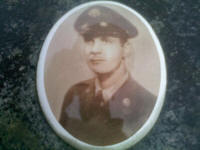
(Click picture for a larger view) |
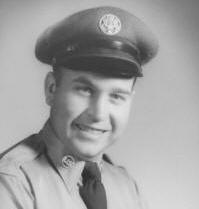
(Click picture for a larger view) |
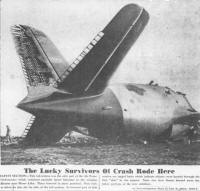
(Click picture for a larger view) |
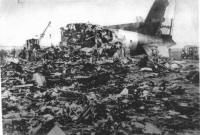
(Click picture for a larger view) |
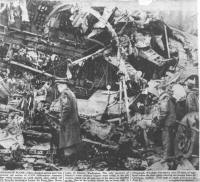
(Click picture for a larger view) |
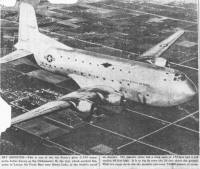
(Click picture for a larger view) |
Back to Page Contents
Obituaries
Johnny McBride
|
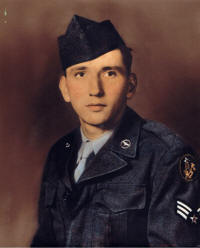
(Click picture for a larger view)
|
The name and information about one of the crash victims was located on the Internet on the Southern
Standard newspaper website. The victim was Johnny McBride of McMinnville, TN. The names of
five more victims from the 637th AC&W Squadron were supplied by Dee Lovingood of Alcoa, TN. He also
supplied the names of almost all of the other deceased military personnel, and the rest of the names were
found in a report from Maxwell Air Force Base.
Rites Held Sunday For Crash Victim
Johnny McBride - Funeral rites for S/Sgt. Johnny F. McBride, 23-year-old Air Force soldier who
was one of the 86 victims of the worst airplane crash in history on December 20 at Moses Lake, Wash., were
conducted Sunday afternoon at 2 o'clock at Liberty Cumberland Presbyterian Church. John W. High officiated
and burial was in Liberty cemetery. An honor guard of members of the American Legion and VFW posts
escorted the body in the last rites. Pallbearers were Joe Buckner, Phillip Buckner, Donald Smith, Gene
Woodlee, Dalton Hoover, T.C. Andes and Clifton O'Neal. Sgt. McBride, a veteran of two tours of duty with
the Air Force and 2 ½ years of recent service in Korea, was en route home to spend the Christmas holidays
with his family when the Air Force's giant C-124 Globemaster "Christmas Special" crashed and burned
shortly after taking off from Larson Air Force Base about 6:30 a.m. on the December 20 date.
The McMinnville airman's body arrived at Tullahoma Saturday afternoon at 12:55 o'clock and was brought
here by High Funeral Home. It was escorted by S/Sgt. William F. Walsh of the Washington base. A native of
McMinnville, Sgt McBride was born October 23, 1929, the son of the late Fulton and Emma Louella Bolt
McBride. He attended the public schools and completed two years at Central high school before volunteering
for duty with the Air Force. During his grammar and high school days he was employed at the Serv-all and
Travis, local restaurants, during after-school hours. Entering the service in November 1946, the airman
received his basic training at Keesler Field, Miss., and was stationed in New Hampshire prior to an
assignment in Alaska, where he was on duty at Grennier Air Force Base. Completing his first tour of duty,
Sgt. McBride was at home for a period of three months before re-enlisting. In his second enlistment period
he was stationed at Stewart Air Force Base, near Nashville, for five months prior to his recent
assignment. As a hydraulic specialist with the Air Force in the Far East, the deceased airman made
frequent trips over the front lines as elements of his unit hauled supplies to the combat troops. Sgt.
McBride returned to the states in late November and had been stationed at the Larson base, pending
completion of his second tour of duty, which have expired in March. The Airman is survived by two
brothers, Dewey and Edwin McBride, McMinnville, and four sisters, Mrs. Gladys Keel and Mrs. Nan Cantrell,
McMinnville, Mrs. Lola Stanton, Oak Ridge, and Miss Dora McBride, Nashville. High Funeral Home was in
charge of arrangements.
Southern Standard newspaper, McMinnville, TN, Thursday, January 1, 1953
[Contributor: Maxine Reggio, 2000]
My Uncle Johnny McBride
"I have been researching my mother’s family genealogy and in doing so I ran across this website about
the Korean War and the information on the Moses Lake plane crash in December of 1952. I saw the obituary
of my uncle, Johnny McBride, from McMinnville Tennessee, on your pages. He was the second from the
youngest of seven children born to Fulton and Ella McBride. They both preceded him in death.
I was almost four years old when this happened, but I have vivid memories of that painful Christmas and
of my mother receiving the phone call and waiting for his remains to be returned for burial. This family
of seven children was very close since they lost both parents at an early age and were kept together
through the years with the help of friends and their oldest sister. This tragedy hit especially hard for a
family that had already suffered extreme loss in their short years. From what I know from aunts still
living, they said he was not expected home on leave that Christmas, but received a call from him only a
few days before, that he had gotten a spot to come home by lottery or draw at the last minute. He was
planning on arriving into Smyrna, Tennessee air force base. They went from extreme, unexpected excitement
to despair in a few short days. Holidays were always difficult and he was remembered often by family. He
was not married.
Thanks for this website and remembering the many lives that were lost on that day."
[Contributor: Gayle Croyle, Plano, Texas. Posted
1/17/10]
Wall, A-2C Jerry N.
From: January 11, 1953 Winn Parish, PA Enterprise
Funeral Dec. 31 For Victim of Plane Tragedy
Funeral services for A-2c Jerry N. Wall are scheduled Wednesday, December 31 at 3 p.m. in the Tioga
Baptist Church. Wall, brother of A. D. Wall of Dodson, was killed in the tragic crash of the C124
Globemaster in Washington last Saturday.
A telegram sent to his parents said his body was shipped at 4 a.m. Monday and was due in Tioga at 8
a.m. In addition to his parents he is survived by three brothers, A. D. of Dodson, Joseph M. of Tioga, and
Charles L. of Port Arthur, Texas. A2c Wall, 21, was a veteran of almost two years with the Air Force. He
was aboard the huge transport from the base in Washington Kelley AFB in San Antonio, Texas, for the
Christmas holidays. A total of 86 were killed.
Back to Page Contents
Swift Boating the Crash Investigation of C-124A, Serial Number 50-100
Author - Jacques Evans
Posted 5/16/08
"Now well into my eighties, memories of the airplanes and crews I flew with during World War II, Korea
and Vietnam occasionally enter my mind. I have lots of pleasant memories, some that aren’t so pleasant,
and others I’d rather forget.
Until a few days ago, I haven’t thought about the C-124 crash at Moses Lake, Washington in over fifty
years. The crash killed over eighty people and occurred on December 20, 1952. For some reason the name of
the flight engineer, Wendell Burton, popped into my mind. As I had known and thought highly of Burton, I
fired up my computer and googled him. When I perused the
http://www.thekwe.org/topics/airplane_crashes/globemaster_larson/p_globemaster.htm web site, I learned
that the dead crew members were blamed for the crash because they didn’t unlock the flight controls and it
made me mad as hell. There aren’t many people who care about a crash that happened over fifty years
ago---but there are a few and I’m one of them.
In December 1952, I was a C-124 flight engineer assigned to the 8th Troop Carrier Squadron based at
Larson Air Force Base that was located five miles northwest of Moses Lake. At the time, I had 8,000 hours
of flight time with over eleven years of service and held the rank of master sergeant. Only years later
were grades higher than master sergeant authorized for the armed forces.
The cable operated, C-124 flight control locking mechanism was completely internal to the aircraft;
there were no pins or other devices installed externally to lock the control surfaces. The design was
flawed and nothing the crew did, didn’t do, or should have done would have prevented the crash---the
faulty design was the cause of the crash. As I recall, no one that had any extensive technical knowledge
of the C-124 disagreed. Intensive flight training and a thorough knowledge of the aircraft systems was
required of all C-124 flight engineers. M/Sgt. Burton was well thought of and an experienced flight
engineer---he also held an instructor’s rating.
But I digress; the C-124’s rudder, elevator and ailerons were cable operated as were their respective
trim tabs. Only the ailerons had hydraulic assist through an electrically operated pump. When the controls
were locked, a micro switch prevented the aileron boost pump from operating. The first inkling that the
controls were locked came when the aileron boost motor was recovered. When the damaged brush cover was
removed, only a few of the cooling fan blades were bent. Had the pump been running when the crash occurred
all, or nearly all, of the fan blades would have been bent.
Suspecting that the controls were locked, the theoretical flight path of the aircraft with locked
controls, twenty degrees of flaps and full power was calculated and it coincided closely with the actual
flight path. There was no doubt that the controls were locked and that engine operation was normal for a
‘wet’ take-off. Wet refers to using the water injection system to get the full 3,500 horsepower from each
engine. Only 3,250 horsepower was available for a ‘dry’ take-off.
The handle to lock and unlock the flight controls was located behind the pilot’s seat in plain view of
anyone on the flight deck. While the flight control locking mechanism was not recovered, there is no doubt
that the crew placed the handle in the unlock position before take-off. There were other interlocks
designed into the system that would have prevented the throttles from going to full power plus a warning
horn.
The C-124 had what we called flying (trim) tabs. You could move the yoke when the controls were locked
and the trim tabs would move giving the pilot a false indication that the controls were unlocked. A well
designed locking system would have assured that the yoke could not be moved when the controls were locked.
Another design flaw was that the locking mechanism should have been coerced into a fail safe (unlocked)
position as soon as the handle was moved. Spring loading the mechanism could have achieved this result.
These are the most serious design flaws that doomed the crew and passengers of tail number 100 and
inspired the cover up by those who knew better."
From other posts on your site, some viewers are under the impression that the C-124 preflight check (at
the time of the crash) required that a scanner verify the position of the flight controls visually.
This requirement was added after the Moses Lake crash; before then, pilots checked that the controls were
unlocked by moving the yoke and rudder pedals through their entire range.
As I pointed out earlier, the flawed lock design gave the pilot an artificial indication that the
controls were unlocked. Scanners were not required to visually check the controls until after the
Moses Lake crash. In fact, on some occasions we flew with a three-man crew and didn't have a
scanner. Again I have to repeat, nothing the crew did, didn't do, or should have done would have
prevented the crash--the faulty design was the cause of the crash.
The author’s web site is at: http://JacquesEvans.com.
Back to Page
Contents
Forgotten Heroes Memorial Under Construction
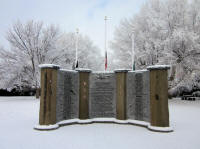
The Finished Memorial
(Click picture for a larger view) |
A memorial in honor of the victims of the C-124A Globemaster crash at Larson Air Force base in Moses Lake
is under construction. On April 24, 2012, the Job Corps poured the cement to the footings of the
memorial. The construction is on schedule.
Committee member Calvin Sylvester made two dog tags with the names of A1C Van Buren Nickens, Jr. and A1C
Paul Eugene Vaden on them and the dog tags were placed into the cement of the memorial yesterday (April 24).
The memorial will be dedicated on June 9, 2012 at 1 pm at the Grant County International Airport in Moses
Lake. There will be a Honor Guard, Taps, and 21-gun salute. The committee requested a fly-over by the Air
Force, but it is yet to be approved.
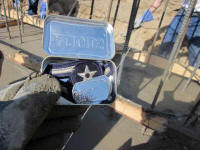
(Click picture for a larger view) |
(Click picture for a larger view) |
(Click picture for a larger view) |
If anyone has any questions or comments about the memorial, e-mail committee chairman Mike Bellgardt at:
87forgottenheroes@gmail.com
Back to Page Contents
Reader Comments
Cathy Felver
I have a newspaper article about the crash. My dad was
stationed there in 1952 and wrote to his parents about the
crash. [See article below.]
Soldier Tells of Air Tragedy in Letter
Holland Meyer, son of Mr. and Mrs. Norbert Meyer
of Delphos, formerly of Minster, was called in the line of duty
to the plane crash which took the lives of from 80 to 90
soldiers at Larson AFB, Washington, a few days before Christmas.
Holland described what he saw in letters to his
parents and to his grandparents, Mrs. Regina Meyer and Ben
Hunstead of Minster. The letter to his parents, written
December 20, follows:
"Dear Folks:
I just came back from the scene of one of the
worst air crashes in aviation history. This morning I was
sleeping peacefully when the C.O. woke me and told me to dress
warm and hurry. This was around 7 a.m. and then I was
rushed to where a big C124 loaded with military personnel going
home for Christmas had crashed. I've never seen such
destruction.
The wreckage was strewn over such a wide area it
was almost incredible. The bad thing was that bodies were
strewn all over--or what you could call bodies, because most of
them were just smoking hulks. I stood about 10 feet from a
pile of rubble before I recognized it after a while to be what
used to be three human beings. But now they were nothing
but charred hulks.
Everyone worked at their jobs with grim
determination, for most of us had buddies on the plane,
including my two buddies. I saw one of my buddies--or
should I say what was left of him. Some bodies that were
not burned were broken beyond recognition and everywhere you
looked were bodies with clothes and shoes blown clear off them,
and amidst the wreckage were photographs of loved ones and
charred bits of gifts that the guys were taking home to their
loved ones for Christmas.
Words cannot express what I have seen.
Although I have never been in a combat zone, I feel I've seen a
little bit of the destruction that can be wrought by mankind.
On a battlefield a man rather expects it, but what hurts
is the fact that these men anticipated nothing to happen.
Well, I must close for now to get some sleep
before going out again. We are working special shifts
through this emergency.
Love, Rolly
P.S. - Between 80 and 90 lives were lost."
[KWE Note: Roland Joseph "Rolly" Meyer graduated
from Minster, Ohio High School in 1949 and enlisted in the US Air
Force on December 26, 1950. Born July 09, 1931, he died July
22, 2007. He was buried in St. Augustine's Cemetery, Minster.
His full obituary is located on the Death Notices page of the KWE.]
Raymond J. Schoffstall Jr., SMSgt., USAF (Ret.)
Just finished reading the web site on the crash at Larson AFB, Washington. I was the shop chief and
part of the investigating board. Brought back many memories as I was also on the C-124 project at
McChord when we got the first two aircraft. Know it like the back of my hand. Also lost some
of my men from the Maintenance shop. When the incident happened, I was awakened by a loud noise as if
there was an explosion. A little later our Maintenance officer came and got me and said I had to go
to the shop as there was an emergency. I saw and walked the crash site and served on the board.
The most glaring fault was poor or no pre-flight physical check of the tail surface controls. Also,
the tail was intact on the ground and yielded partial engagement of the locked mechanism. I knew the
Flight Engineer, having been on the Korean Airlift at McChord with the 8th TC. I was an electrician
arriving there in 1950. Hard to believe it was so long ago. I loved the C-124 "old shaky." We
flew all the Radar equipment into Tule with the project. It was Top Secret until workers there blabbed
about it. Lots of memories.
I believe that aircraft was the first one of two we received for evaluation, 100 and 102. I disagree
with the idea the fault of the crash was found too quick. Being on the investigating board and
having worked with Douglas tech reps on the C-124 project all of us worked long hours to unravel the
cause. Sometimes one small thing can lead to a major disaster, such as the scanner arriving late and not
asking the pilot to move the tail controls for confirmation--just one of many things at the last moment.
Who knows. Flight crews must be well disciplined in their responsibilities.
Harry C. Nickens (brother to Airman 1/C Van Buren Nickens)
I was an eight-year old living with my family in Monterey, Tennessee (population 2,000) when my
brother, Airman 1/C Van Buren Nickens (Hq Sq AB GP), or “Bud”, as we called him, boarded the “Operation
Santa Claus” ill-fated C-124 A at Larson Air Force Base, Washington. He and his best friend, Airman 1/C
Paul E. Vaden (Hq Sq AB GP), or “Boob”, as we referred to him, had entered the Air Force earlier that year
under what I recall was ‘the buddy plan’. They were best of friends throughout their boyhood and schooling
years and entered the Air Force under a plan that would keep them together throughout their basic training
and beyond, so they hoped. Their planning for being home at Christmas, 1952 found them seated side-by-side
on the C-124 A.
After a joint memorial service in the high school auditorium, their remains were interred in Welch
Cemetery, Monterey, Tennessee in side-by-side graves. They were afforded the highest honor of a military
funeral. I can still recall the impression made on me by the playing of Taps, the 21-gun salute and the
presentation of the folded American flag to my mother. Even today, when I see remains of an American
service person being returned home through Dover, Delaware or hear Taps being played, my mind reflects
immediately to that December day in 1952.
Bud was the first of four sons born to Martha Jane and Van Buren Nickens. He also had four sisters. All
other than Bud survive at this time.
Our mother was a saintly soul that cared for a household of ten. All eight children were raised with an
appropriate portion of love and caring, were well-founded in our religious faith and felt a commitment
toward success. For a coal mining and timber community, Monterey offered little opportunity beyond high
school. For many, the military was an opportunity to see the world and secure job skills for future
employment. Once Bud entered the Air Force, his younger brother volunteered for the Navy. This left a
12-year old sister, a 6-year old brother, a toddler sister and me at home with my mother and gravely ill
father, Van Buren Nickens.
We knew Bud and Boob would be traveling home together for Christmas. Their original plans were to
travel by train, taking a northern route coming home and a southern route returning. That train ride would
afford them the opportunity to ‘see the whole country’; however, because they had so few leave days, they
opted to board the Operation Santa Claus plane.
My mother was one that admonished all of the children: “Don’t tell your dream before breakfast or it
will come true.” Early on Sunday morning, December 21, 1951, my mother revealed that she had had a
terrible dream the night before but would not share it when prompted to do so. You see, we had not yet had
breakfast.
There was snow in our home town that morning. This resulted in the Sunday morning paper not being
delivered timely. There was no CNN, Fox News or even television in our home. We all looked forward to the
Sunday paper for an update on the Korean War, world news and the comic strips. After breakfast and when
the paper finally arrived, my mother went out to retrieve it. She returned to the house distraught and in
tears, for you see, the headlines in the paper reflected what she had dreamed that Saturday night,
December 20, 1951. She saw in her dream a plane had crashed into the Monterey lumber yard. She recounted
seeing flames and ‘molten lava’ everywhere, and men in blue uniforms that kept her from getting close the
site. She knew then the molten lava was the metal from the plane, the men in blue were Air Force personnel
and that her son was on that plane. We were not officially informed of that fact until the following
Tuesday. To add to the tragic experiences that be-felled my mother, if losing her 20-year old son in a
plane crash was not enough, two months later my dad passed.
Bud, by all accounts, was a genteel, loveable young adult that had much potential. He was a gifted
carver of wood, had a church solo quality voice and a great work ethic. The experience of my family was no
different than that of 86 others—a tragic loss.
It is with gratitude that I and others within my family commend your efforts and that of the Forgotten
Heroes Memorial group. We are not certain if anyone from our family will attend the dedication of the
memorial on June 2. That is still being debated. In any case, you are commended.
Blessings,
Harry C. Nickens, Ed.D.
Dean of Health and Human Sciences
St. Catharine College
St. Catharine, KY 40061
Dan Quinn (nephew of Airman 2/C Joseph E. Quinn)
My uncle was on board that plane. His name was Joseph Quinn. My dad and uncle were very close and
went into the Air Force together. I asked my Dad about that day and he gets very emotional. He told me
how he walked thru the snow to tell Joey's fiancé about the accident and his passing . He said it was
one of the hardest things he ever had to do . My Dad said he and the Quinn family was told by the
government that the plane went down because of a snow storm. I showed him this site and he was surprised
by what he read about the crash. My Dad is still alive and I don't think Christmas was ever quite the
same for him. He is now 81 yrs. old and still works full time.
Bob Quinn (brother of Airman 2/C Joseph E. Quinn)
This is a subject that has lived with me since December 20, 1952. My brother Joe and I were in the
National Guard together and we discussed our Battery would be activated for Korea. We both decided to
enter the Air Force together. Since we had ROTC training in High School and Artillery training in the
guard we had an easy time in basic training. I led the flight when the training instructor was away. Joe
was my 1st squad leader and our other buddy from Gloucester was the 2nd squad leader.
Joe went through Auto mechanics training at Oklahoma A&M college and I went through Ground
Electronics school at Scott Field in Illinois. He was stationed at Moses Lake coming home to get
married. I was home on leave before being transferred to Sedalia AFB in Missouri when my parents got a
telegram that Joe died in a C-124 accident. The crash details were much different than the report I read
on the Internet a few years ago. The latest story was "Pilot Error". They forgot to remove the
flaps chocks and the rudder chocks.
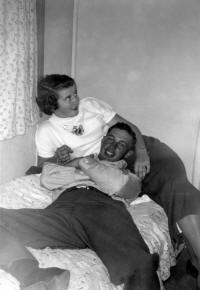
Joe and his fiancé Lorraine Rose
(Click picture for a larger view) |
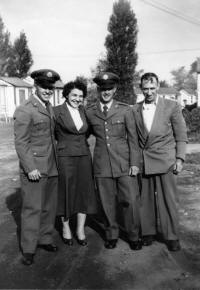
Joe and Bob Quinn's mother and father visiting them at basic training
(Click picture for a larger view) |
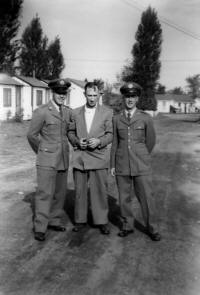
Bob on left with Joe on right with their dad in the middle
(Click picture for a larger view) |
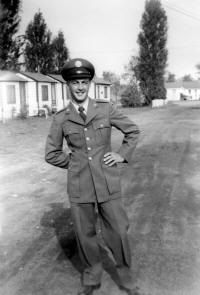
Joe Quinn
(Click picture for a larger view) |
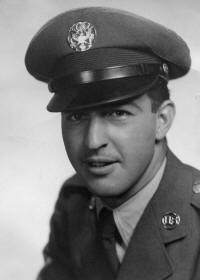
Joe Quinn
(Click picture for a larger view) |
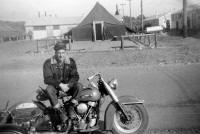
Joe Quinn on his motorcycle
(Click picture for a larger view) |
|