|
|
|
|||||||||
 |
|
|||||||||||||||||||||||||||||||||||||||||||||||||||||||||||||||||||||||||||||||||||||||||||||||||||||||||||||||||||||||||||||||||||||||||||||||||||||||||||||||||||||||||||
|
|
Links Pertaining to POW/MIA Issues
The Army's Survivor Outreach ServicesDifferent than the POW/MIA organizations, this organization supports survivors from all conflicts - there is no end state. There are local offices around the country (generally at Army installations), so family members can generally find one pretty close to home. There are often events scheduled to bring families together. This is the link to their official website: http://www.sos.army.mil/.
|
POW/MIA Accounting
|
|||||||||||||||||||||||||||||||||||||||||||||||||||||||||||||||||||||||||||||||||||||||||||||||||||||||||||||||||||||||||||||||||||||||||||||||||||||||||||||||||||||||||
Prisoner of War & POW Camp FactsGeneral Information:
|
||||||||||||||||||||||||||||||||||||||||||||||||||||||||||||||||||||||||||||||||||||||||||||||||||||||||||||||||||||||||||||||||||||||||||||||||||||||||||||||||||||||||||||
Civilian POWsWar touches the lives of innocent civilians who are sometimes unexpectedly caught up in the violence of war because they just happened to be in the "wrong place" at the time war broke out. Veterans were not the only ones to be held captive in the Korean War. The following civilians—many of whom died in captivity—were also prisoners of war in Korea. The Korean War Educator posts their names in tribute to those who endured and survived, as well as those who endured and died. The following list is taken from a list of Tiger Survivors compiled by Timothy Casey. Mr. Casey is a strong advocate for and supporter of Korean War ex-prisoners of war and their families.
|
||||||||||||||||||||||||||||||||||||||||||||||||||||||||||||||||||||||||||||||||||||||||||||||||||||||||||||||||||||||||||||||||||||||||||||||||||||||||||||||||||||||||||||
|
Non-Repatriated: 23 (until two chose to come back to the USA--see below), making 21 non-repatriated POWs in the Korean War. All but three eventually returned to the USA.
All of these former POWs returned to the United States eventually, with the exception of Rufus Douglas, who died in China, James Veneris, who still lives in China, and John Dunn who lives in Czechoslovakia. At least three of the 23 are now deceased. On two occasions, James Veneris returned to the United States to visit relatives in California. Former POW Howard Adams just came back to the United States a few years ago. On the 26th of April 1953, Operation Little Switch ended. Both sides were given additional time for those who refused to go home to think it over. On 21 October 1953, Ed Dickenson decided to come over to the UN lines. Batchelor came over on 2 January 1954, just before the final deadline. Both were under the impression that if they came over the line there would be no disciplinary action taken against them. Instead, they were court-martialed, found guilty, and sentenced to 20 years hard labor for Batchelor and 10 years for Dickenson. Neither of them completed their sentences; they were both paroled after four or five years. One non-American also refused repatriation. He was Andrew Condron, a Scot who was serving in the 41st Royal Marines and was captured at the Chosin Reservoir in November 1950. Like the Americans, he eventually returned home to the United Kingdom. The British government did not court-martial him, nor did they take any disciplinary action against him. It is believed he died a few years ago. On March 30, 2002, the Associated Press ran a story that traced the whereabouts of many of the 23 former POWs who originally refused to be repatriated, and some of the AP research is reflected below. The AP story was entitled, "Where Are They Now? A Roster of American Defectors From the Korean War." Bios of 21 Americans Who Refused Repatriation
Returned Army POW's Tried in Court
|
||||||||||||||||||||||||||||||||||||||||||||||||||||||||||||||||||||||||||||||||||||||||||||||||||||||||||||||||||||||||||||||||||||||||||||||||||||||||||||||||||||||||||||
| Rank and Name | Charge | Disposition | Notes |
| Alley, Maj. Ronald | Collaboration | 5 years in prison | Camp 5, personally unpopular, uncommunicative, refused to take stand at court-martial |
| Banghart, Sgt. William | Collaboration | 1 year in prison | |
| Batchelor, Cpl. Claude | Collaboration | Paroled after 4 1/2 years | "Non-repatriate" leader |
| Bayes, Cpl. Thomas | Collaboration | 2 1/2 years in prison | |
| Dickenson, Cpl. Edward | Collaboration | Paroled after 3 1/2 years in prison | Had been among 23 "non-repatriates" who agreed to stay with Communists, but changed his mind. |
| Dunn, Cpl. Harold | Collaboration | 1 1/2 years in prison | "Progressive" |
| Erwin, Lt. Jeff | Collaboration | Acquitted | Camp 12 |
| Fleming, Lt. Col. Harry | Collaboration | Dishonorable "dismissal" from service | Camp 12 |
| Floyd, PFC Rothwell M. | Striking an officer, murder, mistreatment of fellow prisoners | Acquitted on murder charge. 10 years in prison. | |
| Gallagher, Sgt. James | Collaboration/murder | Paroled after 11 years | |
| Likes, Lt. Col. Paul | Collaboration | 24 month suspension in rank | Camp 12, "Traitors' Row" |
| Nugent, Maj. Ambrose | Collaboration | Acquitted | Camp 12, president, "Central Peace Committee" |
| Olson, MSgt. William | Collaboration | 2 years in prison | Made pro-Communist speeches, though no worse than many others |
| Tyler, Sgt. John | Collaborator | Acquitted | Low credibility of accuser |
Note: Collaboration usually meant signing anti-American
documents, making anti-American speeches, or holding administrative
posts in the indoctrination program. [Source: Broken
Soldiers by Raymond B. Lech, University of Illinois Press,
Urbana and Chicago, Illinois, 2000, pg. 212.]
Reprinted from pages 27 and 28, U.S. News & World Report, December 18, 1953
Hundreds of Americans still are being forcibly held in Communist prison camps, the real forgotten men of the Korean War. Evidence, now piling up, shows this: Americans positively identified as being in Communist hands, but unreported and not returned, total 944—most of them GIs. Some are known to have marched in a "victory" parade in Manchuria. Others are reported in Siberia, a few near Moscow. Most vanished from North Korean camps during the closing weeks of shooting war. What’s being done about it? Very little so far. Tendency by officials is to soft-pedal."
"Behind the Yalu River, the evidence now indicates, are hundreds of American soldiers and airmen, known to be alive in Communist hands but unreported—left as pawns of the Communist Chinese.
These Americans were positively identified as being in North Korean prison camps before the shooting ended. Most disappeared from those camps during the tense weeks just before the truce. Some were taken away at night, ostensibly for questioning. They never returned. Others were members of work parties sent from one camp to another. Work parties "lost" one or two members each, before they returned to their base camps. That attrition was virtually unnoticed during the high excitement of impending repatriation.
Altogether, there are 944 Americans now identified as being alive in North Korean camps, but not returned or reported. These are in addition to the 22 Americans who elected to stay behind. They are Americans who urgently wanted to come home, prisoners known to others who have since been repatriated, or whose names or pictures have been definitely identified in Communist propaganda releases. Most of them are almost certain to be still alive, spirited away across the Yalu by Communist guards.
The United States did not win the war in Korea. As a result, it cannot demand and expect to receive any reliable accounting for those still missing. Americans can only protest. But so far there has been no protest, except for an Army communique last September. There is a seeming reluctance by American officials to press the case of the GIs who are still missing. Emphasis, instead, is on finding a way to make a deal with the Communist Chinese on terms of peace. There is even pressure to speed a United Nations membership for Communist China. Any emphasis on the missing Americans, apparently, could complicate those proceedings.
Military men, unable now to exert pressure on the Communists under terms of the truce, refer to the missing as a diplomatic problem. State Department diplomats, in turn, say the problem of missing Americans is not yet under their jurisdiction, and won’t be until a political conference with the Communists either begins or is definitely abandoned. So they are doing nothing.
Meanwhile, new reports about the missing continue to flow in.
There is substantial evidence now, for example, that a number of American prisoners were marched through the streets of Mukden, deep inside Manchuria, in a "victory" parade. As far as is known here, none of those men has returned. No repatriated prisoner has said he participated in that parade.
Officials here know for certain that some Americans were sent to Manchuria. Capt. Lawrence V. Bach, a 29-year-old fighter pilot from Grand Forks, North Dakota, spent four days in Manchuria, where he was questioned by the Chinese, North Koreans, and the Russians. He was followed by Maj. Gen. William F. Dean, who spent some time in the Communist sanctuary in Manchuria. Both of these Americans were repatriated. Others who were sent there were not.
Most of the evidence, however, comes from reports, now evaluated, of American prisoners repatriated during Operation "Big Switch" here at Panmunjom. En route to the United States, former prisoners were questioned intensively about men who had died or disappeared either during the lengthy forced marches northward or while they were in camps.
During the long sea voyage, when the repatriates, in the comparative comfort of hospital ships and transports, could relax and tell coherent stories of what they saw, trained intelligence men checked and rechecked each report. A pattern finally emerged, out of this long and intensive probing, that showed not only systematic atrocities and deaths but slavery as well.
The Chinese Communists did not merely want Americans to work in salt beds of Shantung or the uranium mines of Sinkiang. They primarily wanted—and got—Americans who could handle the sensitive and complex instruments of modern war such as radar, airborne and ground, and infrared instruments for night combat. They were particularly interested in airmen with technical training, and in artillery men who knew the secrets of intricate fuses.
Communists offered General Dean command of a division or corps if he would fight for them. They could do nothing when he refused. But the lower-ranking technicians were not listed as prisoners, as General Dean was known to be. The Chinese were under no compulsion to explain what happened to these men. Communist records on prisoners of war were slipshod. When U.S. asked the whereabouts of specific Americans known to have been alive in Communist camps, the Chinese merely replied that they had no records to show these men were ever prisoners.
Reports of returned prisoners are that many U.S. enlisted technicians disappeared from communist camps in the final weeks of the war. The fact that they vanished indicates that the Communists could not persuade them to co-operate willingly. The Chinese could not afford to turn these technicians over to the Neutral Nations Repatriation Commission and hope that they would refuse repatriation. Instead, those Americans became nonexistent as far as the Communist prisoner-of-war records were concerned.
Not all of the missing were specialists, however. Of the 944 Americans identified in Communist camps and not returned, 610 were ground-force troops with a wide variety of backgrounds. Air Force fliers numbered 312; 19 served as Marines and 3 as Navy men. Some were captured as far back as 1950, others as recently as this year. Most of those from the Army and Marine Corps were enlisted men, representing all major ground-force units.
Just where they are now is less certain. There are reports from returning Japanese prisoners, repatriated this month from Russia, that some Americans have been seen in a prison not far from Moscow. War prisoners of many Western nationalities are reported to be working in a huge underground project in Siberia. Prison compounds in Manchuria are closed to neutral inspection. So are Communist research and development centers in that part of the world. Some of the 944 may be dead, victims of the torture techniques for "persuasion" widely reported by repatriated prisoners.
But U.S. intelligence officers believe that most of those missing Americans are probably somewhere in Manchuria. Chinese authorities carefully supervise all travel between Manchuria and the rest of China. Their bases along the Yalu River, at Port Arthur, Changchun, Mukden and Harbin are closely guarded and restricted for all but the military. There are enough Russians in these areas to make several hundred Americans inconspicuous. Elsewhere in China, Americans would be noticed and the grapevine would pass the news on quickly. But Manchuria is a closed military area and the Americans could live there, guarded, for years, with no opportunity for escape.
Behind the disappearance of these Americans are reasons that can be inferred, too. The need for technicians in expanding Communist forces accounts for most of the missing specialists, as U.S. military officials see it. There is conjecture that many of the others, resisting Communist persuasion methods, will be used for an experiment in long-term "brain washing," to see how Americans react. And there are big opportunities for Communists, in withholding some Americans, to enhance their bargaining position or to obtain ransom, as was done with American fliers forced down in Hungary.
What U.S. will do about Communist withholding of American prisoners, in direct violation of the truce
agreement in Korea, is the big question now. Families of the missing men are beginning to wonder if 944 more
Americans must be added to the price of going into a war without winning it."
On May 23, 1991, the United States Senate Committee on Foreign Relations Republican Staff released a publication entitled, "An Examination of U.S. Policy Toward POW/MIAs." Verbatim text for pages 4-1 to 4-13 (the Korean War) is as follows (with footnotes at the end of the text):
"Unlike the result in World War II, Allied forces did not achieve a military victory in Korea. The Korean War ended at the negotiating table between Communist North Korean representatives and United Nations representatives.
With regard to POW repatriation, the North Koreans initially demanded an "all-for-all" prisoner exchange. In other words, the North Koreans wanted an agreement similar to the Yalta Agreement of World War II. The United States was reluctant to agree to this formula based on its World War II experience with mandatory repatriation, knowing that thousands of those forced to return to the Soviet Union were either shot or interned in slave labor camps, where most of them died. After two long years of negotiations, the North Koreans agreed to the principle of voluntary or "non-forcible repatriation." This agreement stated that each side would release only those prisoners who wished to return to their respective countries.
Operation BIG SWITCH was the name given to the largest and final exchange of prisoners between the North Koreans and the U.N. forces, and occurred over a one-month period from August 5, 1953 to September 6, 1953. (1) Chinese and North Korean POWs were returned to South Korea. Approximately 14,200 Communist Chinese POWs elected not to return to the Peoples Republic of china; but only 21 American POWs elected to stay with the Communist forces, and likely went to China. These 21 Americans are defectors and obviously are not considered as un-repatriated U.S. POWs.
However, U.S. government documents state that nearly 1000 known captive U.S. POWs—and an undetermined number of some 8,000 U.S. MIAs—were not repatriated at the end of the Korean War. Three days after the start of operation BIG SWITCH, the New York Times reported that ‘General James A. VanFleet, retired commander of the United States Eighth Army in Korea, estimated tonight that a large percentage of the 8,000 American soldiers listed as missing in Korea were alive. (2)
A report by the U.N. Combined Command for Reconnaisance Activity, Korea, five days into operation BIG SWITCH, stated: ‘Figures show that the total number of MIAs, plus known captives, less those to be US repatriated, leaves a balance of 8,000 unaccounted for." (Emphasis added). (3)
The report mentions numerous reports of U.N. POWs who were transferred to Manchuria, China, and the USSR since the beginning of hostilities in Korea. (4) Specifically, the report stated ‘many POWs transferred have been technicians and factory workers. Other POWs transferred had a knowledge of Cantonese and are reportedly used for propaganda purposes. (5)
The number of known U.S. POWs not repatriated from the Korean War was cited by Hugh M. Milton II, Assistant Secretary of the Army in January, 1954, in a memorandum he wrote four months after the conclusion of operation BIG SWITCH. Section 3, Part B reads:
B. The Unaccounted for Americans Believed to Be Still Held Illegally by the Communists (Secret)
1. There are approximately 954 United States personnel falling in this group. What the Department of the Army and other interested agencies is doing about their recovery falls into two parts. First, the direct efforts of the UNC Military Armistice Commission to obtain an accurate accounting, and second, efforts by G2 of the Army, both overt and covert, to locate, identify, and recover these individuals. G2 is making an intensive effort through its information collection system world-wide, to obtain information on these people and has a plan for clandestine action to obtain the recovery of one or more to establish the case positively that prisoners are still being held by the Communists. No results have been obtained yet in this effort. The direct efforts of the UNC [United Nations Command] are being held in abeyance pending further study of the problem by the State Department….
2. A further complicating factor in the situation is that to continue to carry this personnel in a missing status is costing over one million dollars annually. It may become necessary at some future date to drop them from our records as ‘missing and presumed dead." (6)
In fact, the Defense Department did in fact "drop them" from DOD records as "missing and presumed dead," as were the non-repatriated U.S. POWs from the American Expeditionary force in World War I and World War II. In a memorandum to Milton from Major General Robert Young, the Assistant chief of Staff, G-1 of the U.S. Army, Young updates Assistant Secretary Milton on the progress on dropping the U.S. POWs from DOD records:
2. Under the provisions of Public Law 490 (77th Congress), the Department of the Army, after careful review of each case and interrogation of returning prisoners of war, has placed 618 soldiers, known to have been in enemy ands and unaccounted for by the Communist Forces in the following categories: 313 – Finding of Death – administratively determined, under the provisions of Public Law 490, by Department of the Army; 275 – Report of Death – reported on good authority by returning prisoners; 21 – Dishonorable Discharge; 4 – Under investigation, prognosis undecided. Missing in Action for over one year; 2 – Returned to Military Control. (7)
The number had already been dropped from 954 to 618 through a series of presumed findings of death for the "unaccounted-for Americans believed to be still held illegally by the Communists." Presumed findings of death were also used to whittle down the number of U.S. soldiers listed as MIA.
According to the "Interim Report of U.S. Casualties," prepared by the Office of the Secretary of Defense, as of December 31, 1953 (Operation BIG SWITCH ended September 6, 1953), the total number of U.S. soldiers who had been listed as Missing in Action from the Korean War was 13,325. Still listed as MIA in January 1, 1954 were 2,953, and the figure for died, or presumed dead, was 5,140. 5,131 MIAs had been repatriated and 101 were listed as "Current captured." (8)
On June 17, 1955, almost two years after the end of operation BIG SWITCH, the Office of the Secretary of Defense, issued an internal report titled, "Recovery of Unrepatriated Prisoners of War." The report admitted that,
After the official repatriation efforts were completed, the U.N. Command found that it still had slightly less than 1000 U.S. POWs [not MIAs ‘unaccounted for’ by the Communists. (9)
Although frank and forthright, this report—written by staff of the Office of Special Operations—provides a glimpse into the thinking of those involved in the Korean POW issue. Sections of the report follow:
At the time of the official repatriation, some of our repatriates stated that they (the Communists) were holding ‘some’ U.S. flyers as ‘political prisoners’ rather than as prisoners of war and that these people would have to be ‘negotiated for’ through political or diplomatic channels. Due to the fact that we did not recognize the red regime in China, no political negotiations were instituted, although [the] State [Department] did have some exploratory discussions with the British in an attempt to get at the problem. The situation was relatively dormant when, in late November 1954, the Peking radio announced that 13 of these ‘political prisoners’ had been sentenced for ‘spying.’ This announcement caused a public uproar and a demand from U.S. citizens, Congressional leaders and organizations for action to effect their release. (10)
The eleven U.S. "political prisoners," were not the only U.S. servicemen the Chinese held after the Korean War. The New York Times, reported:
Communist China is holding prisoner other United States Air Force personnel besides the eleven who were recently sentenced on spying charges following their capture during the Korean War. This information was brought out of China by Squadron Leader Andrew R. MacKenzie, a Canadian flier who was released today by the Chinese at the Hong Kong border. He reached freedom here two years to the day after he was shot down and fell into Chinese hands in North Korea….Held back from the Korean War prisoner exchange, he was released by the Peiping [sic] regime following a period of negotiations through diplomatic channels…Wing Comdr. Donald Skene, his brother-in-law who was sent here from Canada to meet him, said guardedly at a press conference later that an undisclosed number of United States airmen had been in the same camp with Squadron Leader MacKenzie….Wing Commander Skene said none of the Americans in the camp was on the list of eleven whose sentencing was announced by the Chinese November 23 [,1954]. (11)
Despite some political inconvenience to the Department of Defense, the government felt that the issue and controversy had been controlled. A concluding report, "Recovery of Un-repatriated Prisoners of War," stated:
Such as they are, our current efforts in the political field, plus the ‘stand-by’ alternatives developed by the military, represent the full range of possible additional efforts to recover personnel now in custody of foreign powers. On one hand, we are bound at present by the President’s ‘peaceful means’ decree. The military courses of action apparently cannot be taken unilaterally, and we are possessed of some rather ‘reluctant’ allies in this respect. The problem becomes a philosophical one. If we are ‘at war,’ cold, hot or otherwise, casualties and losses must be expected and perhaps we must learn to live with this type of thing. If we are in for fifty years of peripheral ‘fire fights’ we might be forced to adopt a rather cynical attitude on this for political course of action something like General Erskine outlined which would (1) instill in the soldier a much more effective ‘don’t get captured’ attitude, and (2) we should also push to get the military commander more discretionary authority to retaliate, fast and hard against these Communist tactics. (12)
Reports of the fate of these Americans continued to come to the attention of the United States government. One such report, a Foreign Service Dispatch (cable) by Air Pouch dated March 23, 1954, sent from the U.S. diplomatic post in Hong Kong to the State Department in Washington, sheds some light on the fate of hundreds of U.S. POWs captured during the Korean War. The report reads:
American POWs reported en route to Siberia
A recently arrived Greek refugee from Manchuria has reported seeing several hundred American prisoners of war being transferred from Chinese trains to Russian trains at Manchouli near the boarder of Manchuria and Siberia. The POWs were seen late in 1951 and in the spring of 1952 by the informant and a Russian friend of his. The informant was interrogated on two occasions by the Assistant Air Liaison Officer and the Consulate General agrees with his evaluation of the information as probably true and the evaluation of the source as unknown reliability. The full text of the initial Air Liaison Office report follows:
First report dated March 16, 1954, from Air Liaison Office, Hong Kong, to USAF, Washington, G2.
‘This office has interviewed refugee source who states that he observed hundreds of prisoners of war in American uniforms being sent into Siberia in late 1951 and 1952. Observations were made at Manchouli (Lupin), 49 degrees 50’-117 degrees 30’ Manchuria Road Map, AMSL 201 First Edition, on USSR-Manchurian border. Source observed POW’s on railway station platform loading into trains for movement into Siberia. In railway restaurant source closely observed three POWs who were under guard and were conversing in English. POWs wore sleeve insignia which indicated POWs were Air Force noncommissioned officers. Source states that there were a great number of Negroes among POW shipments and also states that at no time later were any POWs observed returning from Siberia. Source does not wish to be identified for fear of reprisals against friends in Manchuria, however is willing to cooperate in answering further questions and will be available Hong Kong for questioning for the next four days.’
Upon receipt of this information, USAF, Washington, requested elaboration of the following points:
- Description of uniforms or clothing worn by POWs including ornaments.
- Physical condition of POWs.
- Nationality of guards.
- Specific dates of observations.
- Destination in Siberia.
- Presence of Russians in uniform or civilian clothing accompanying movements of POWs.
- Complete description of three POWs specifically mentioned.
The Air Liaison Office complied by submitting the telegram quoted below:
"FROM USAIRLO SGN LACKEY. CITE C4. REUR 53737 following answers submitted to seven questions.
(1) POWs wore OD outer clothing described as not heavy inasmuch as weather considered early spring. Source identified from pictures service jacket, field, M1943. No belongings except canteen. No ornaments observed.
(2) Condition appeared good, no wounded all ambulatory.
(3) Station divided into two sections with tracks on each side of loading platform. On Chinese side POWs accompanied by Chinese guards. POWs passed through gate bisecting platform to Russian train manned and operated by Russians. Russian trainmen wore dark blue or black tunic with silver colored shoulder boards. Source says this regular train uniform but he knows the trainmen are military wearing regular train uniforms.
(4) Interrogation with aid of more fluent interpreter reveals source first observed POWs in railroad station in spring 1951. Second observation was outside city of Manchouli about three months later with POW train headed towards station where he observed POW transfer. Source was impressed with second observation because of large number of Negroes among POWs. Source states job was numbering railroad cars at Manchouli every time subsequent POW shipments passed through Manchouli. Source says these shipments were reported often and occurred when United Nation forces in Korea were on the offensive.
(5) Unknown.
(6) Only Russian accompanying POWs were those who manned train.
(7) Three POWs observed in station restaurant appeared to be 30 or 35. Source identified Air Force non-commissioned officer sleeve insignia of Staff Sergeant rank, stated that several inches above insignia there was a propeller but says that all three did not have propeller. Three POWs accompanied by Chinese guard. POWs appeared thin but in good health and spirits, were being given what source described as good food. POWs were talking in English but did not converse with guard. Further information as to number of POWs observed source states that first observation filled a seven passenger car train and second observation about the same. Source continues to emphasize the number of Negro troops, which evidently impressed him because he had seen so few Negroes before.
….Comment Reporting Officer: Source is very careful not to exaggerate information and is positive of identification of American POWs. In view of information contained in Charity Interrogation Report No. 619 dated 5 February 54, Reporting Officer gives above information rating of F-2. Source departing Hong Kong today by ship. Future address on file this office.’
In this connection the Department’s attention is called to Charity Interrogation Report No. 619, forward to the Department under cover of a letter dated March 1, 1954, by Mr. A. Sabin Chase, DRF. Section 6 of this report states, "On another occasion source saw several coaches full of Europeans who were taken to USSR. They were not Russians. Source passed the coaches several times and heard them talk in a language unknown to him." (13)
The report from Hong Kong was specifically discussed in Major General Young’s April 29, 1954 memorandum to Assistant Secretary of the Army, Hugh Milton II. Young, responding to Milton’s request to "consolidate information on prisoners of war which may remain in Communist hands," states that the Hong Kong report:
Corroborates previous indications UNC POWs might have been shipped to Siberia during Korean hostilities….reports have now come [to the] attention [of the] U.S. Government which support earlier indications that American prisoners of war from Korea had been transported into Soviet Union and are now in Soviet custody. Request fullest possible information these POWs and their repatriation earliest possible time. (14)
One CIA intelligence report, which had an information date as of October 1950-February 1951, confirmed that hundreds of Negro troops were held by the North Koreans. The CIA report stated:
(1) One Republic of Korea soldier who was captured by the Communists on 29 October 1950 was sent to a war prison camp at Pyoktong (125-26, 40-36) in North Pyonman. This camp in early November had about 1,000 American war prisoners, of whom about 700 were Negroes, approximately 1,500 ROK prisoners, and about 300 civilian employees of the United Nations forces. (15)
A different three page CIA intelligence report, on Prisoner of War Camps in North Korea and China, with information dated January-May 1952, described the Chinese Communist system of camps for U.N. POWs.
War Prisoner Administrative Office and Camp Classification
1. In May 1952 the War Prisoner Administrative Office (Chan Fu Kuan Li Ch’u) (2069/0199/4619/2810/5710) in P’yongyang, under Colonel No-man-ch’I-fu (6179/7024/1148/1133), an intelligence officer attached to the general headquarters of the Soviet Far Eastern Military District, controlled prisoner of war camps in Manchuria and North Korea. The office, formerly in Mukden, employed 30 persons, several of whom were English-speaking Soviets. LIN Mai (2651/6701) and NAM IL (0589/2480) were deputy chairmen of the office.
2. The office had developed three types of prisoner-of-war camps. Camps termed ‘peace camps,’ detaining persons who exhibited pro-Communist leanings, were characterized by considerate treatment of the prisoners and the staging within the camps of Communist rallies and meetings. The largest peace camp, which held two thousand prisoners, was at Chungchun. Peace camps were also at K’aiyuan Ksien (124-05, 42-36) and Pench’I (123-43, 41-20).
3. Reform camps, all of which were in Manchuria, detained anti-Communist prisoners possessing certain technical skills. Emphasis at these camps was on re-indoctrination of the prisoners.
4. Normal prisoner-of-war camps, all of which were in North Korea, detained prisoners whom the Communists will exchange. Prisoners in peace camps will not be exchanged.
5. Officials of North Korean prisoner of war camps sent reports on individual prisoners to the War Prisoner Administrative Office. Cooperative prisoners were being transferred to peace camps. ROK (Republic of Korea) officers were being shot; ROK army soldiers were being reindoctrinated and assimilated into the North Korean army. …
The report also stated (#13) that:
On 6 January four hundred United States prisoners, including three hundred negroes, were being detained in two buildings at Nsiao Nan Kuan Chaih, at the southeast corner of the intersection, in Mukden. One building, used as the police headquarters in Nsiso Nan Knan during the Japanese occupation, was a two-story concrete structure, 30 meters long and 20 meters wide. The other building, one story high and constructed of gray brick, was behind the two-story building. Both buildings had tile roofs. All prisoners held here, with the exception of three second lieutenants, were enlisted personnel. The prisoners, dressed in Chinese Communist army uniforms, with a red arm band on the left arm, were not required to work. Two hours of indoctrination were conducted daily by staff members of the Northeast Army Command. Prisoners were permitted to play basketball in the courtyard. The attempt of three white prisoners to escape caused the withdrawal of permission for white prisoners to walk alone through streets in the vicinity of the camp. Two Chinese Communist soldiers guarded groups of white prisoners when such groups left the buildings. Negroes, however, could move outside the compound area freely and individually. Rice, noodles, and one vegetable were served daily to the prisoners in groups of 10 to 15 men. One platoon of Chinese Communist soldiers guarded the compound. (16)
In an attempt to resolve the un-repatriated U.S. POW problem from the Korean War, by diplomacy, the United States officially communicated with the Soviet government on May 5, 1954. The official U.S. request to the Soviet Union stated:
The Embassy of the United States of America presents its compliments to the Ministry of Foreign Affairs of the Union of the Soviet Socialist Republics and Has the honor to request the Ministry’s assistance in the following matter.
The United States government has recently received reports which support earlier indications that American prisoners of war who had seen action in Korea have been transported to the Union of Soviet Socialist Republics and that they are now in Soviet custody. The United States Government desires to receive urgently all information available to the Soviet Government concerning these American personnel and to arrange their repatriation at the earliest possible time. (17)
On May 12, 1954, the Soviet Union replied:
In connection with the note of the Embassy of the United States of America, received by the Ministry of Foreign Affairs of the Union of Soviet Socialist Republics on May 5, 1954, the Ministry has the honor to state the following:
The United States assertion contained in the indicated note that American prisoners of war who participated in military actions in Korea have allegedly been transferred to the Soviet Union and at the present time are being kept under Soviet guard is devoid of any foundation whatsoever and is clearly far-fetched, since there are not and have not been any such persons in the Soviet Union. (18)
The Soviet response predicates denial of access to the men on its refusal to characterize the U.S. personnel as "prisoners of war." In fact, the Soviets made it a practice to refuse to acknowledge the U.S. citizenship of the U.S. soldiers; as a result—from the Soviet’s standpoint—the Soviet denial is accurate.
Nor was this lesson ever learned. According to a April 15, 1991 press advisory issued by the United States Department of State, the United States once again requested that the Soviets "provide us with any additional information on any other U.S. citizens who may have been detained as a result of World War II, the Korean conflict or the Vietnam War," (19) a request that repeated the mistake of asking for information only about U.S. citizens that the State Department made 37 years earlier.
The State Department also made a point of including in its recent press advisory the government’s usual statement that "in the interest of following every credible lead in providing families of U.S. service members with information about their loved ones." (20) Furthermore, according to the press advisory, the State Department specifically asked the Soviets only about "two U.S. planes shot down in the early 1950’s," (21) and did not ask the Soviets any specific questions about any non-repatriated POWs from World War II, the Korean War, and the Vietnam War. It seems apparent that if the Department of State had expected to get solid information from the Soviet government, then the State Department would have sent a much more comprehensive and appropriately phrased request.
The sincerity of the State Department’s declared intention to follow "every credible lead in providing families of U.S. service members with information about their loved ones" is, therefore, suspect. One U.S. government document dated January 21, 1980, a memorandum from Michael Oksenberg to Zbigniew Brzezinski, the National Security Advisor under President Carter, reveals the cynical view and attitude of at least one U.S. government official with regard to the non-repatriation issue,
A letter from you is important to indicate that you take recent refugee reports of sighting of live Americans ‘seriously.’ This is simply good politics: DIA and State are playing this game, and you should not be the whistle blower. The idea is to say that the President [Carter] is determined to pursue any lead concerning possible live MIAs (22)
The executive branch’s disinformation tactics against concerned mothers and fathers extended to Congressmen and Senators. One case is found in a December 21, 1953 letter sent to the Secretary of State from Senate Majority Leader Lyndon B. Johnson with regard to a constituent letter from Mr. Paul Bath of Marshall, Texas, who wrote Senator Johnson about a U.S. News and World Report article titled "Where are 944 Missing GI’s?"
The first reaction of the Secretary of State’s office was to call Johnson and dispose of the matter by phone. However, as a written reply was requested, Thruston B. Morton, the Assistant Secretary of State for Congressional Relations, was tasked to reply. The evolution of the text of Morton’s letter to Johnson—which took four rewrites to complete—definitively illustrates the ambivalence with which the United States government has approached the non-repatriation issue. The four drafts still exist today, and they illustrate how the State Department artfully sought to mislead the most powerful leader in Congress at the time.
The first draft of the State Department’s response contained the following text:
On September 9, the United Nations Command presented to the Communist representatives on the Military Armistice Commission a list of approximately 3,404 Allied personnel, including 944 Americans, about whom there was evidence that they had at one time or another been in Communist custody. The kinds of evidence from which this list was drawn included letters written home by prisoners, prisoners of war interrogations, interrogations of returnees, and Communist radio broadcasts. The United Nations Command asked the Communist side for a complete accounting of these personnel.
On September 21, the Communists made a reply relative to the list of names presented to them by the United Nations Command on September 9, in which they stated that many of the men on the list had never been captured at all, while others had already been repatriated. (23)
This entire section was crossed out by Morton, but a persistent foreign service officer sent Morton back the second draft, with the section quoted above unchanged, as well as a new sentence at the end of the introductory paragraph which read:
He [Mr. Paul Bath of Marshall, Texas] can be assured that efforts are being made to obtain the release of all our men in Communist custody and may be interested in having the following information about this matter. (24)
The second draft also contained a new page which followed the paragraphs used in the first draft. The second page of the second draft read:
General Clark, in a letter of September 24 [1954, two and a half weeks after Operation BIG SWITCH ended] to the Communist side, stated that he considered their reply [that the 944 U.S. men were never captured or had been repatriated] wholly unacceptable, and pointed out that by signing the armistice agreement the Communists had undertaken a solemn obligation to repatriate directly or to hand over to the custody of the Neutral Nations Repatriation Commission all of the captured persons held by them at the time the armistice was signed. He pointed out that this obligation was binding upon them and applied to all United Nations Command persons regardless of where captured or held in custody. I am enclosing a copy of General Clark’s letter of September 24 which you may wish to send to your constituent.
On November 21, the United Nations Command provided the Communist side with a revision of its original list of unaccounted for Allied personnel which it had presented to the Communists on September 9. The revised list contained a total of 3,400 names, and the figure for United States prisoners of war unaccounted for was increased by eight to a total of 952.
On November 21, the United Nations Command protested in the Military Armistice Commission to the Communists that they had still failed to give a satisfactory reply concerning the list of unaccounted for United Nations Command personnel, and pointed out that additional evidence provided by three Korean prisoners of war who recently defected to the United Nations side corroborated the United Nations Command statements that the Communists were withholding prisoners of war. The United Nations Command demanded that the Communists ‘hand over to the custody of the Custodian Forces of India all those prisoners that your side still retains.’
Ambassador Arthur Dean has also referred to this problem in the course of his negotiations with the Communists at Panmunjom.
Your constituent may be assured that it continues to be our determined purpose to obtain the return of all personnel in Communist custody and the United Nations Command will make every effort to accomplish the objective. (25)
Assistant Secretary Morton rejected all the proposed changes in the second draft by crossing them out. The third draft of the letter to Johnson was so disagreeable to Morton that he typed out two sentences and attached it to the draft and crossed out all others that related to the State Departments reply. As a result, the final letter read:
My dear Senator Johnson:
I refer to your letter of December 21, acknowledged by telephone on December 30, with which you enclose a letter from Mr. Paul Bath of Marshall, Texas concerning an article in the December 18 issue of ‘U.S. News and World Report.’ It is believed that Mr. Bath refers to the article ‘Where are 944 Missing GI’s?’ on page 27 of this publication.
I am enclosing copies of a statement recounting the efforts being made to secure the return of American prisoners of war who might still be in Communist custody which I believe will be of assistance to you in replying to your constituent. As the statement points out, it continues to be our determined purpose to obtain the return of all personnel in Communist custody and we will do everything possible to accomplish this objective. [emphasis added]
With regard to questions as to whether there are military personnel or other United States citizens in the custody of the Soviet Government, a few of the prisoners-of-war of other nationalities recently released by the Soviet Government have made reports alleging that American citizens are imprisoned in the Soviet Union. All of these reports are being investigated by this Department with the cooperation of other agencies of the Government.
You are probably aware that representations from the United States Government recently made to the Soviet Government resulted in the release in Berlin on December 29 of Homer H. Cox and Leland Towers, two Americans reported by returning [German] prisoners-of-war as being in Soviet custody. The Department will investigate, as it has done in the past, every report indicating that American citizens are held in the custody of foreign governments.
Sincerely Yours,
For the Secretary of State,
Thruston B. Morton (26)
It is noteworthy that Morton’s letter contained no specific or accurate information, as contrasted with the three rejected drafts which had such information. The rhetoric of the State Department could not go beyond the word "might" to describe the possibility of U.S. soldiers being held by Communist forces. On the one hand, the State Department was taking credit for having released two Americans from the Soviet gulag and for investigating, "every report indicating that American citizens are held in the custody of foreign governments," but on the other it was dismissing any real possibility that there could be more POWs in Communist prisons.
The People’s Republic of China, as noted earlier, released a Canadian Squadron Leader thirteen months after the last U.N. POW was repatriated by the Communist forces. In 1973, Chinese Communists released two American POWs who had been captured during the Korean War, along with a pilot, Philip smith, who was shot down over the Gulf of Tonkin during the Vietnam war. During Smith’s seven years in solitary confinement in a PRC jail, he had been shown the two U.S. POWs from the Korean War whom the Chinese Communists were still holding. Smith said the Chinese told him:
They wouldn’t release me, and would hold me like they’d done these other guys until I recanted. (27)
Most Americans would find it incomprehensible that the Chinese would hold U.S. POWs from the Korean War, and release them two decades later; yet, to the Chinese Communists, this policy had some rationale.
At the conclusion of operation BIG SWITCH, the United States Government failed to pursue vigorously credible reports and left U.S. citizens, held against their will, in custody of the North Koreans, the mainland Chinese, and the SSR. Whether any of these men are still alive is—tragically—unclear.
The fate of the more than 8,000 men listed as MIA who were administratively found to be "presumed dead" is a mystery. No rebuttal was ever made to General Van Fleet, who stated in the fall of 1953 his belief that a large percentage of the 8,000 American soldiers listed as missing in Korea were alive. (28) "A large percentage" translates into thousands of U.S. soldiers who were never repatriated by the Communist forces after the Korean War.
Seven years after operation BIG SWITCH, one Foreign Service Dispatch to the State Department in Washington contained the names of two U.S. Korean POWs working in a Soviet phosphorus mine. (29) The cable, recently "sanitized" by the United States government, originally contained the names of the two U.S. POWs, but the names were blacked out in the sanitized version. According to the United States government, the names were blacked out to protect the abandoned POWs "privacy." It is absurd that the U.S. government, having abandoned soldiers to a life of slave labor and forced captivity, is attempting to protect the same abandoned soldiers’ "privacy." (30)
Footnotes
- Korean War Almanac, Harry G. Summers, Jr., Colonel of Infantry, Facts on File, pp. 33, 62.
- "8,000 Missing, Van Fleet Says," The New York Times, August 8, 1953.
- Report, U.N. Combined Command for Reconnaissance Activity Korea, (CCRAK). CCRAK SPECIFIC REQUEST Number 66-53.
- The United States had not recognized the People’s Republic of China and, as a result, the U.S. did not deal directly with the Chinese throughout the negotiations.
- (CCRAK) Report, REQUEST Number 66-53.
- Memorandum, classified Secret, "TO: Secretary of the Army, Subject: The Twenty-One Non-Repatriates and the Unaccounted-For Americans Believed to Be Still Held Illegally by the Communists, From: Assistant Secretary Milton," January 16, 1954.
- Memorandum, classified Secret, "To: Hugh Milton, the Assistant Secretary of the Army, (M&RF) Subject: United States Personnel Unaccounted for by Communist Forces, From: Major General Robert N. Young, Assistant Chief of Staff, G-1," April 29, 1954.
- See "Interim Report of U.S. Battle Casualties," as of December 31, 1953 (Source: Progress Reports and Statistics, OSD, as of January 25, 1954).
- Report, classified Confidential, prepared by Defense Advisory Committee on Prisoners of War, Study Group III, titled "Recovery of Unrepatriated Prisoners of War, a document presented by the Office of Special Operations, Office of the Secretary of Defense, written by James J. Kelleher, Report No. CPOW/3 D-1, June 8, 1955.
- Ibid.
- "Freed Flier Says Peiping is Holding More U.S. Airmen, Canadian Now in Hong Kong Brings News of Americans Other than 11 Jailed," The New York Times, December 6, 1954.
- Report, classified Confidential, prepared by the Defense Advisory Committee on Prisoners of War, Study Group III, "Recovery of Unrepatriated Prisoners of War," a document presented by the Office of Special Operations, Office of the Secretary of Defense, written by James J. Kelleher, Report No. CPOW/3 D-1, June 8, 1955.
- Cable, Foreign Service Dispatch "From: AMCONGEN, Hong Kong, To: The Department of State, Washington, by Air Pouch, signed Julian F. Harrington, American Consul General, cc: Taipei, Moscow, London, Paris, No. 1716," March 23, 1954.
- Memorandum, classified Secret, "To: Hugh Milton, the Assistant Secretary of the Army, (M&RF) Subject: United States Personnel Unaccounted for by Communist Forces, From: Major General Robert N. Young, Assistant Chief of Staff, G-1," April 29, 1954.
- Report, CIA, No. SO 6582, Country: Korea/China; Date of Info: October 1950-February 1951.
- 16 Report, CIA, "Subject: Prisoners-of-War Camps in North Korea and China," No. SO 91634, July 17, 1952.
- See diplomatic note.
- U.S. State Department press release 249, May 13, 1954.
- See United States Department of State press advisory, Office of the Assistant Secretary/Spokesman, "USSR: Allegations of U.S. POWs in the USSR," April 15, 1991.
- Ibid.
- Ibid.
- Memorandum, National Security Council, "To: Zbigniew Brzezinski, From: Michael Oksenberg," January 21, 1980.
- Letter, first draft "To: Senator Johnson, From: Assistant Secretary of State for Congressional Relations, Thruston B. Morton," file number SEV 611.61241/12-2153.
- Letter, second draft "To: Senator Johnson, From: Assistant Secretary of State for Congressional Relations, Thruston B. Morton," file number SEV611.61241/12-2153.
- Ibid.
- Letter, final "To: Senator Johnson, From: Assistant Secretary of State for Congressional Relations, Thruston B. Morton", file number SEV611.61241/12-2153, January 20, 1954.
- "ExPOWs Recall Psychological Terror, Coercion," The Free Press Enterprise, January 22, 1991.
- "8,000 Missing, Van Fleet Says," "The New York Times," August 8, 1953.
- Cable, "From: the American Embassy in Brussels, To: the State Department in Washington," September 8, 1960.
- "Men Who Never Returned," Editorial, The Washington Times, March 13, 1991.
Edward Lee Daily of Clarksville, Tennessee pleaded guilty in 2002 to falsifying information about his alleged status as Korean War Prisoner of War. Daily spent most of his time in the Korean War as a mechanic and clerk far away from the front lines. But when a fire destroyed documents at the National Personnel Records Center in St. Louis, he took advantage of the situation by forging paperwork to show that he had been wounded in Korea by shrapnel, given a battlefield promotion to 1st Lieutenant, and that he had been a prisoner of war. According to the Associated Press, Daily collected $35,000 a year in tax-free VA benefits, and was made eligible for Social Security disability benefits, full health coverage, and significant educational benefits for himself and his family. As of 2009, the US government had recouped only about $7,000 by garnishing a portion of his Social Security check.
Daily is doubly disgraced due to the fact that he lied to Associated Press reporters about his presence at Nogun-ri, where he purported that a massacre of Korean civilians by American soldiers took place.
"To live in the hearts of those left behind,
is never to have died."
Information provided by Bill Evans, Jr. of Richardson, Texas.
My father was an American civilian who was rounded up only because of his nationality, interned and killed in Ah Jan Ri, North Korea on December 13, 1950. He marched in the now infamous "Death March." And there were other civilians. Official commemorations never honor them or even remember them.
Dedicated to Sgt. Philip V. Mandra, my beloved brother, my friend, my playmate, my protector, till we meet again. – Contributed by Irene Mandra (reprinted from Vol. 3, Issue 1, 2000 of the newsletter of the Coalition of Families of Korean and Cold War POW/MIAs)
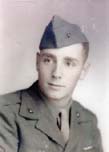
Born May 2, 1931, Philip was my older brother. We attended Catholic grammar school and had the good fortune to belong to a closely-knit Italian family. Phil was an altar boy. He was deeply religious throughout his life. There was a three-year difference in our ages, yet we double dated together and had mutual friends. When the Korean War broke out, Philip joined the Marines in September 1950. Our first cousin and uncle was a Marine; and when you earned the title "Marine" upon graduation from basic training, you deserved it. It wasn’t willed to you. It isn’t a gift. The title "Marine" is a title few can claim. No one may take it away. It is yours forever. Phil loved the Marine Corps.
Phil landed in Korea January 1952 as part of D Company, 2 Battalion, 5th Regiment, First Marine Division. In July 1952, Phil was involved in fierce fighting. He was hit in both his arms with shrapnel, yet he wrote home telling us not to worry. He was awarded the Purple Heart with a cluster. It wasn’t until years later, that my family was notified that on that July 5th and 6th, Phil bravely maintained his position in the face of intense enemy artillery, mortar and small arms fire. Phil seized an automatic weapon and delivered effective counter-fire on the hostile troops, inflicting heavy casualties on the attackers. Encountering one of the enemy, armed with an automatic gun, Phil maneuvered his fire team in a tight defensive perimeter around the outpost, and immediately charged and killed the intruder with his bayonet. Phil rendered invaluable assistance to the outpost commander, constantly encouraging the men and administering first aid to the wounded. For his leadership, conspicuous gallantry, and courage in helping other wounded Marines, Phil was awarded the Silver Star. I accepted that medal on Phil’s behalf, telling myself that Phil will be surprised when he comes home.
On August 7, 1952 a day that is emblazoned in my heart till I die, my brother disappeared. I did not find out until much later that four other Marines also disappeared during the battle on Bronco Hill with my brother. Bronco Hill is the outpost for a larger hill called Hook. The four other Marines who disappeared with my brother are Sgt. Junior J. Nixon, Sgt. Robert H. Malloy, Cpl. Thomas L. Edwards and Pvt. Thomas Montoya. Some of these men were wounded due to concussion grenades thrown by Chinese forces. My brother was one of the men that was hit and knocked unconscious.
I was fortunate to find a Marine who witnessed what happened on that day. I was told that within fifteen minutes, my brother’s unit got reinforcements and charged the hill again and learned all the wounded men "disappeared." I don’t think I have to tell MIA family members about the anguish and tears, when you don’t know where a loved one is and how a loved one is surviving.
In September of 1993, a Russian Colonel contacted the American Embassy in Russia. He heard a radio broadcast that the U.S. government was looking for Americans who were brought into Russia as prisoners of war. Anyone with information was asked to contact the USA Task Force. In the meanwhile, Task Force Russia was absorbed into Defense POW/Missing Personnel Office (DPMO) and this reorganization essentially dismantled the task force as we knew it. The S task force visited a Colonel Malinin in the Soviet Union, who spoke of seeing an American POW in a prison in Magadon, Siberia in 1962. When the task force showed Colonel Malinin an album of approximately 100 pictures of missing men, the Colonel picked my brother’s picture out twice--two different pictures, one when he was young and a computerized age enhanced picture of Phil at age sixty. Colonel Malinin told the story of visiting a prison which was part of his job and going into the Commodore’s office and looking out the window. The Colonel observed a man who was brought out of his cell and walked in the court-yard. The Colonel asked the Commandant, "Who is this man?" The explanation given was that "he is an American", sent to him "from the Gulag". This took place in 1962, and Colonel Malinin saw the same American in 1965 when visiting the prison again.
When I learned this news, I packed and left for Russia. I met with Colonel Malinin and he told me that as he was leaving the prison, he heard three prisoners yelling out the window, "I’m American." He couldn’t see their faces, but he heard what they were yelling. The Colonel again identified my brother’s face as the prisoner that he saw in that courtyard. I showed him other pictures of my brother and his reply was he could never forget that lone prisoner who was kept in solitary confinement and not allowed to be with other prisoners walking in that courtyard. I also visited the Commandant, who claimed he didn’t remember my brother and denied that there were any Americans in that prison. I spent two weeks in Russia searching for answers, but hitting many a brick wall. My oldest brother Sal accompanied me to this frozen land. Sal and I gave interviews, visited prominent people, and made a video. Our story appeared in the local newspapers in Moscow. The major newspaper, Izvestiya, promised to write our story but never published it. The media claims that Russia is no longer communist. I disagree. The Russians were polite but gave no information except the names of people involved in my brother’s case (which I might add my government refused to give me).
While I was in Russia, Vice President Gore was there. I visited his hotel and left a note for him asking for his help and explaining who I was and what my mission was about. I never heard from our Vice President. I wrote Vice President Gore a letter when I got back to the States, asking for his help in finding my brother again and getting cooperation with Russia. I received a letter back from him that was so cold and heartless, it enraged me so, that I sent it to my Congressman. I wish I could find a copy of that letter now that Gore wants to be President. I would turn it over to the media.
There is much to be done for the MIAs from Korea and Cold War. The most important of which for many family members is the cooperation of Russia and China. These countries still refuse to admit to us that they did indeed transfer Americans from North Korea into China and the Soviet Union. These files are with the GRU. We need a White House who genuinely has an interest in the POW/MIA issue and will pressure these nations to give us an honest accounting.
I still hope and pray that some day soon I will receive the answers I so truly desire. I heard a saying the other day that applies to each and every unaccounted for MIA: "TO LIVE IN THE HEARTS OF THOSE LEFT BEHIND, IS NEVER TO HAVE DIED." Although I can no longer hug you, the tears have never ceased. Till we meet again, my beloved brother."
Contributed by his son, John Zimmerlee
My Dad, 1st Lt. John Henry Zimmerlee, AO-1998932, is missing in action from a B-26C aircraft of the 730th Bombardment Squadron, 452nd Wing, on 21 March 1952. On that date, at 1918 hours, he departed Pusan East Air Base (K9) as a navigator (radar observer) aboard B-26C (44-34417) with four other crew members. They flew a single-aircraft reconnaissance mission along supply route Green Seven, from Sin’gye to Samdung, to Sunch’on. At 2020 hours, the pilot reported that he was approaching the target. At 2105, the navigator of another aircraft in the area asked the pilot about the weather over the target, to which he responded, "I’ve just broken out into the clear on the upper half of Green Seven. Good Hunting!" That was the last contact with 44-34417.
Air Force Manual 200-25 cited a North Korean farmer who claimed that he heard that UN bomber, possibly twin engine, had crashed about the same time. He heard that four crew members bailed out and that one was killed when his chute failed to open. Later on the same day the farmer observed three Caucasians in tan uniforms being marched past his home under guard.Air Force Manual 200-25 identifies Wayne Edwin Lewis (gunner on 44-34417) as being seen in POW Camp 2, but this info has not been verified. I am trying to find information on any of the crew members: Cpt. Cecil W. Brandsted (AO-721953), pilot; 1st Lt. Raymond J. Bennett (AO-703928), 1st Lt. Wilford T. Cook (AO-2065517), 1st Lt. John H. Zimmerlee (AO-1998932), and A2C Wayne E. Lewis (17306085). I’ve contacted all government agencies. Hoping to find vets who know something."
Soldier Missing in Action from the Korean War is Identified (Department of Defense News Release)
The Department of Defense POW/Missing Personnel Office (DPMO) announced today that the remains of a U.S. serviceman, missing in action from the Korean War, have been identified and returned to his family for burial with full military honors.
He is Cpl. Jimmie L. Dorser, U.S. Army, of Springfield, Mo. He will be buried tomorrow in Lake Forest, Ca.
Representatives from the Army met with Dorser’s next-of-kin to explain the recovery and identification process, and to coordinate interment with military honors on behalf of the Secretary of the Army.
Dorser was a member of I Company, 3rd Battalion, 31st Infantry Regiment, 7th Infantry Division (organized into the 31st Regimental Combat Team). The RCT was engaged against the Chinese People’s Volunteer Forces along the Chosin Reservoir, North Korea from Nov. 27-Dec. 1, 1950. The unit was forced to retreat to the south and many men were reported missing in action under the intense enemy fire.
In 2002, a joint U.S.-Democratic People’s Republic of North Korea (D.P.R.K.) team, led by the Joint POW/MIA Accounting Command (JPAC), excavated a mass grave on the eastern side of the Chosin Reservoir. The remains of five individuals were recovered.
Among other forensic identification tools and circumstantial evidence, scientists from the Joint POW/MIA Accounting Command (JPAC) and the Armed Forces DNA Identification Laboratory also used mitochondrial DNA and dental comparisons in Dorser’s identification. The additional remains cannot be attributed to specific individuals at this time and will undergo further analysis.
For additional information on the Defense Department’s mission to account for missing Americans, visit the DPMO web site at http://www.dtic.mil/dpmo or call (703) 699-1169.
[KWE Note: The following is information about what is available about POW records through the National Archives. See also the NARA website.]
Repatriated Korean Conflict Prisoners of War, 7/5/1950 - 10/6/1954 (info)
Title: Records of Repatriated Korean War Prisoners of War, created, 1978 - 1980, documenting the period 7/5/1950 - 10/6/1954
Creator: Veterans Administration. Department of Veterans Benefits. DVB Administrative Service. System and Security Division. (Most Recent)
Type of Archival Materials: Data Files
Textual Records
Level of Description: Series from Record Group 15: Records of the Veterans Administration
Location: NWME Electronic and Special Media Records Services Division National Archives at College Park, 8601
Adelphi Road, College Park, MD 20740-6001 (phone) 301-837-0470 (fax) 301-837-3681 (e-mail)
cer@nara.gov
Inclusive Dates: 1978 - 1980
Coverage Dates: 7/5/1950 - 10/6/1954
Date Note: The coverage date range is July 5, 1950 - October 6, 1954 for the records. The inclusive dates 1978 - 1980 span the time period when the agency created and maintained the database.
Part of: Record Group 15: Records of the Veterans Administration
Function and Use: The agency created this file for their 1978 "Study of Former Prisoners of War" to fulfill
requirements of the Veterans' Disability Compensation and Survivor Benefits Act of 1978.
Scope & Content Note: This series contains information about 4,447 former prisoners of war (POWs) from the Korean War. POWs were considered battle or war casualties. There is one record per repatriated soldier. Each record includes the following information: serial or service number; Social Security number; personal name; year, month, and day of capture; year, month and day of release; and the POW internment camp.
Access Restrictions: Restricted - Partly. FOIA (b)(6) Personal Information. This series consists of one partially restricted file. NARA created a public-use version of the restricted file with the Social Security Number masked.
Finding Aid Type: Technical Information
Finding Aid Source: NARA and Veterans Administration
Finding Aid Note: There are thirteen pages of documentation.
Extent: 1 data file and 13 pages of documentation
Index Terms - Subjects Represented in the Archival Material
Korean War, 1950-1953
Names, Personal
Prisoners of war
Repatriation
War casualties
North Korea (Asia) nation
South Korea (Asia) nation
A B C D E F G H I J K L M N O P Q R S T UV W XYZ
A Historical Survey prepared for the Subcommittee to Investigate the Administration of the Internal Security Act and Other Internal Security Laws of the Committee on the Judiciary, United States Senate, U.S. Government Printing Office, Washington: 1972; pp. 13-17.
"During the Korean War, of the 75,000 U.N. and South Korean soldiers captured by Communist forces, more than 60,000 were unaccounted for while 12,000 were allowed to go home. Investigations established that several thousand American prisoners died or were executed in prisoner-of-war camps. According to the report of the Congressional Committee on Government Operations titled Korean War Atrocities, during the 3-year period covered by the Korean War, the North Korean and Chinese Communist armies were guilty of the following war crimes: murder; assaults; torture--perforation of the flesh of prisoners with heated bamboo spears, burning with lighted cigarettes, etcetera; starvation' coerced indoctrination; and other illegal practices. Virtually every provision of the Geneva Convention governing the treatment of war prisoners was violated or ignored by the North Koreans and Chinese Communists. More than 5,000 American prisoners of war died because of Communist war atrocities and more than a thousand who survived were victims of war crimes. Furthermore, several thousand American soldiers who had not been repatriated were believed to have been victims of war crimes, had died in action, or were still confined in Communist territory. According to the committee, Communist forces violated the agreement providing for the repatriation of sick and wounded prisoners in accordance with the Panmunjom truce. Finally, the committee charged, the Korean Communists, by false propaganda, attempted to portray the treatment accorded by them to American POW's in an accurate and misleading fashion.
In the field of interrogation and indoctrination, the Senate Government Operations Committee's investigation of "brainwashing" concluded that the popular conception of this practice was not correct. While it was true that the Communists had considerable skill in the extraction of information from prisoners, the investigation rendered the opinion that the Communists did not possess new and remarkable techniques of psychological manipulation. In connection with these practices, the Chinese Communists and North Koreans, according to the committee, violated articles 13, 14, 15, 17 and 38 of the Geneva Convention with their use of isolation techniques, their shackling of prisoners, their exposure of prisoners to the curiosity of local populations, their inadequate medical attention, poor clothing, gross inadequacy of foods, improper hospital facilities, and physical mistreatment of prisoners. Coercive interrogation and extraction of false confessions were other practices employed."
Pages 14-15 of this document discuss the Indochina War (1946-54): Vietminh Treatment of French Union Force POW's. On page 15 is found the following information relating to political indoctrination:
"As in Korea, political indoctrination of POW's was standard operating procedure. According to Bernard Fall the Vietnam People's Army (VPA) was better equipped to deal with various national minorities of the French Union Forces than its North Korean counterpart had been in dealing with captives from the United Nations Command. Propaganda in the form of broadcasts and leaflets was directed at the French Union troops in French, German, Arabic, and African dialects. Political cadres in each POW camp directed the "reeducation" programs and attempted to pit one national group against another. The practice of separating the officers from the NCO's served to further reduce morale.
Recalcitrant prisoners were subjected to severe treatment and, if they were particularly resistant to the program, they were transferred to the feared "reprisal camp" which was in reality little more than a death camp. The "reeducated" prisoner became a "new man" and violations of the camp rules by him were considered a relapse into reactionary thinking--a crime punishable by death. Punishments for acts such as escape attempts were of much greater severity when committed by a "reformed" prisoner than by a recently captured POW. The former were adjudged to have had their eyes opened to the truth so that they were no longer granted the measure of "irresponsible" conduct that might have been tolerated before "reeducation."
Communist methods of indoctrination of POW's in Indochina and Korea, which carry the principle of prisoner reeducation several steps further, is elaborated on by Father Paul Jeandel, a prisoner for three years in Communist camps:
'Medieval tortures are nothing in comparison to the atomic-age torture of brainwashing...It amputates your soul and grafts another one upon you. Persuasion has taken the place of punishment. The victims must approve and justify in their own eyes the measures which crush them. They must recognize themselves guilty and believe in the crimes which they have not committed...I have seen men leave camp who were dead and did not know it, for they had lost their own personality and had become slogan-reciting robots...I myself nearly lost my reason."
The basic principle employed is the evolution of the discussion from the verifiable true fact taken out of context to the unsubstantiated large-scale lie. It began, for example, with the true statement that the Communist forces were a regular force of excellent fighters. This was an obvious fact that could not be denied and would be followed by another statement more in the form of a value judgment which nonetheless contained an element of truth: that the Vietnamese non-Communist government was a puppet regime of the French. From here the approach would lead to the premise that the regime was unpopular and to the apparently logical conclusion that the Communist government was popular. Other aspects of the brainwashing process involved "criticism and self-criticism" or spying on one's comrades and denouncing one's own sins in public. The goal was ultimately to create a "collective conscience" wherein the individual prisoner became as much a captive of his own comrades and fellow prisoners as of the enemy. Father Jeandel summed up the experience of indoctrination in a single phrase saying, "The worst wasn't to die, but to see one's soul change."
IV. A Comparison of Chinese/Korean (Korean War) and Soviet (World War II) Practices
"At this point several generalities might be made regarding basic differences in techniques of indoctrination and interrogation as practiced on prisoners of war by the Soviet and Chinese/Korean Communists. Under the Chinese/Korean system, the general timetable for interrogation and extraction of a confession was quite different from the Russian practice, as in the former there was an attempt to produce a long-lasting change in the basic attitude and behavior of the prisoner. Thus, indoctrination played a very important role in the Chinese/Korean system. Prolonged isolation as used in the U.S.S.R. was not used in these Asian Communist countries. The Chinese/Korean emphasis was on group interaction as distinct from from private confinement. In these Asian countries a prisoner was usually in a cell with six to eight other prisoners. This method emphasized public self-criticism and group criticism for indoctrination and the use of diary writing as distinct from verbal discussions as the method for the prisoner's giving his autobiography. Chinese/Korean interrogators were generally less experienced and less knowledgeable about Americans and Europeans than the Russians.
In "Soviet Indoctrination of German War Prisoners," Wilfred O. Reiners points out that there were certain fundamental differences between the situation of American POWs in Korea and European POWs--especially Germans--in the U.S.S.R. First, the overwhelming majority of American POWs had no basic quarrels with their government or American political and social institutions. By comparison, there were, among the Europeans, distinct groups opposed to their political regime at home, or at least to certain aspects of that government. Again, the European belligerents during the Second World War were locked in a life-and-death struggle, while the Korean War remained throughout a local conflict. This difference implied major differences in the waging of war and, as a part of this activity, the treatment of POWs. Further the American soldier who collaborated with the enemy knew he had to accept full responsibility for this action after repatriation, whereas the European was not necessarily faced with that problem. Finally, the vast numbers of POWs held by the Soviet Union precluded the kind of intensive indoctrination that American soldiers received from the Chinese during the Korean War.
The Soviets mounted their indoctrination program for POW's with two basic objectives in mind. After appropriate training, POW's were used as propaganda instruments and later as political tools in occupied countries. The propaganda division of the Red army utilized individual POW's for the production and dissemination of propaganda leaflets and radio broadcasts. Prisoners were sometimes persuaded to render such service almost immediately after their capture, prior to being sent to permanent camps. Others were put through an "anti-Fascist" school and then assigned to psychological warfare duties. Such propaganda activities were aimed at both the military and civilian populations and were designed to reduce fighting spirit and the will to resist. Another objective to be achieved through POW indoctrination was the cration inside the U.S.S.R. of a group of anti-Nazi Germans--friendly to the U.S.S.R., which could either be the nucleus of a future German government or could exert influence on a possible coup d'etat. After the war many of these indoctrinated Germans were transferred to the Soviet-occupied area of Germany to occupy key positions in the administration and bureaucracy."
V. The Pueblo Incident - COMING SOON
Read John Zimmerlee's commentary on government untruths about our missing men. Click HERE.
 |
||
|
|
||
|
| Contact | What's New | About Us | Korean War Topics | Support | Links | Memoirs | Buddy Search | |
||
|
© 2002-2016 Korean War Educator. All rights reserved. Unauthorized use of material is prohibited. |
||

| . |